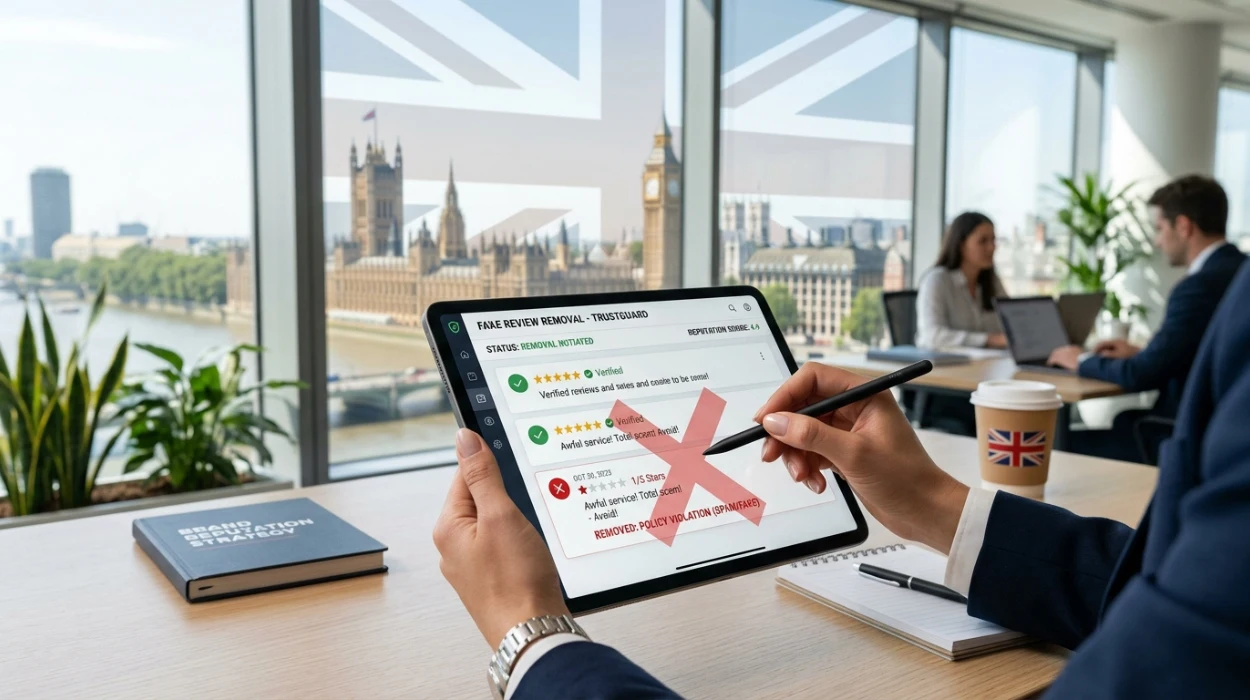
Removing fake Trustpilot reviews requires evidence, policy knowledge and search visibility control. Reputation signals directly influence customer trust, making review management an important part of protecting digital credibility and maintaining accurate public perception.
Search behaviour demonstrates that online reviews influence purchasing decisions and shape entity credibility. Effective reputation management services reduce risk by addressing misleading information, improving search perception influence and restoring confidence in digital information.
Why Does Professional Help Deliver Better Results for Fake Review Removal?
Professional support delivers better results because fake review disputes involve platform policies, evidence requirements and reputation management principles that operate together. Reporting a review without understanding policy standards often leads to delays or unsuccessful outcomes.
Fake Reviews Removal Services analyse whether content breaches review guidelines, whether evidence exists to support a challenge and which mechanisms are most effective for resolving the issue. This structured process improves clarity and ensures that actions are based on objective information.
Professional evaluation also reduces unnecessary risk. Inaccurate reporting and unsupported allegations can prolong disputes and leave harmful reviews visible for extended periods. A process-driven approach strengthens review challenges by aligning them with platform requirements.
Which Risks Do Fake Trustpilot Reviews Create for Online Reputation?
Fake reviews create reputational risk because review platforms influence both public perception and search visibility. Negative fabricated reviews introduce misleading reputation signals that alter trust and affect decision-making behaviour.
Review pages frequently rank highly for branded searches, making them an important component of digital identity. A fake review can therefore influence entity credibility beyond the review platform itself and become a lasting part of an organisation’s online footprint.
The reputational impact also extends to search perception influence. Search users often interpret visible ratings as indicators of reliability, meaning misleading reviews can distort purchasing decisions and weaken trust in legitimate businesses.
Which Reputation Management Approach Delivers Measurable Results?
A policy-based removal process delivers measurable results because it addresses the source of the problem rather than merely managing its visibility.
Removing reviews that breach platform standards reduces misleading information and improves the accuracy of reputation signals.
Reducing the presence of fabricated reviews strengthens digital credibility and improves how entities are interpreted across search ecosystems.
Addressing false information prevents distorted sentiment distribution and contributes to more balanced online representation.
Professional fake reviews removal services operate by combining evidence analysis, policy evaluation and reputation management principles. This integrated approach delivers clearer outcomes than reactive reporting alone.
Why Is a Policy-Based Removal Service More Effective Than Independent Reporting?
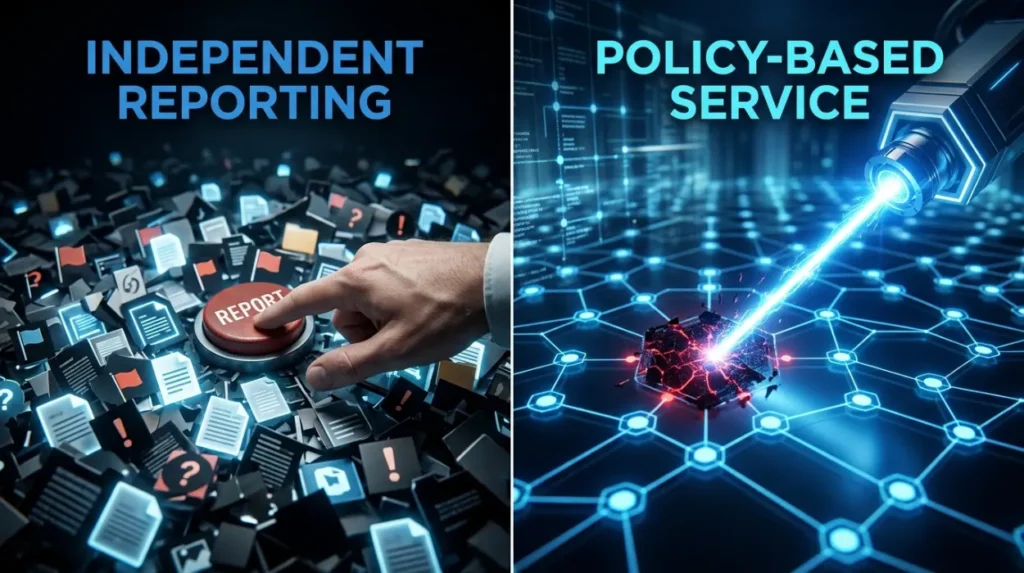
A policy-based removal service is more effective because review platforms act on evidence and policy alignment rather than on dissatisfaction with negative feedback.
Independent reporting often focuses on the consequences of the review rather than on whether it breaches platform standards. This approach can overlook important factors such as reviewer authenticity, account behaviour and transaction evidence.
Professional evaluation identifies the specific policy issues that increase the likelihood of action. Services provided by Clear Your Name focus on evidence-driven assessments that align with review platform requirements and support more structured outcomes.
How Does the Fake Review Removal Process Work?
The removal process follows a defined framework designed to improve efficiency and reduce uncertainty.
- Identify policy breaches by examining whether the review violates authenticity requirements.
- Collect supporting evidence by gathering transaction records, communications and account information.
- Prepare submissions by presenting evidence in a format that aligns with platform guidelines.
- Monitor outcomes by assessing review status and measuring changes in reputation signals.
- Evaluate visibility impact by reviewing changes in search perception and digital credibility.
This process improves control and ensures that review disputes are handled through evidence rather than assumptions.
Dive Deeper With Our Expert Guides:
Remove Your Information From UK People Search Sites With Our Privacy Service
Remove Fake Google Reviews in the UK Using Our Policy-Based Expert Process
Which Benefits Do Fake Reviews Removal Services Deliver?
Fake Reviews Removal Services provide benefits that extend beyond individual review disputes.
Removing fabricated content improves the reliability of public information and creates more accurate trust signals.
Addressing misleading reviews decreases the long-term influence of false information on purchasing decisions and online perception.
Review platforms contribute significantly to branded search results. Managing false information therefore improves broader search visibility and digital trust.
Reducing misleading reviews creates a more balanced representation of genuine customer experiences and protects online credibility.
These benefits demonstrate why professional management of review disputes forms an important part of reputation control.
Why Is Evidence More Important Than Opinion When Challenging Reviews?
Evidence is more important because review platforms rely on objective information to maintain fairness and consistency. A review can appear suspicious while remaining compliant with platform rules.
Evidence demonstrates whether a reviewer had a genuine customer relationship, whether identity information is misleading or whether platform policies have been breached. Objective information therefore provides the foundation for successful review challenges.
Understanding how fake reviews operate and why they are difficult to identify also explains why evidence remains central to authenticity assessments. Platforms prioritise verifiable information because assumptions alone do not protect review integrity.
How Quickly Can Fake Review Removal Influence Reputation?
The speed of impact depends on review platform processing times and the visibility of the disputed content.
Successful removal often produces immediate changes in public perception because misleading ratings and comments no longer influence customer evaluations. Search engines can subsequently update indexed review information, improving search perception influence over time.
Negative content suppression and reputation management strategies can also support long-term improvements by reducing the prominence of misleading information. However, direct removal remains the most effective method when reviews clearly breach platform rules.
Why Does Long-Term Value Matter More Than Short-Term Reputation Repair?
Long-term value matters because digital reputation is cumulative. Information visible online continues shaping trust signals and customer expectations over time.
A policy-based approach improves sustainability by addressing the causes of reputational harm rather than only managing symptoms. Removing misleading content reduces ongoing risk and strengthens the integrity of digital information.
The cost of leaving fake reviews unresolved often extends beyond temporary dissatisfaction. Persistent misinformation can affect conversion rates, customer trust and overall entity credibility for prolonged periods.
Which Information Helps Validate a Decision to Seek Professional Support?
Decision-making improves when organisations understand how fake reviews are created and how review platforms evaluate authenticity.
Understanding fake Trustpilot review mechanisms and evidence challenges provides insight into why fabricated reviews remain difficult to identify and why evidence plays a central role in moderation decisions.
Likewise, understanding Trustpilot requirements for removing fake reviews in the UK explains why policy alignment and supporting information determine the success of review disputes.
These informational resources provide context that supports more informed reputation management decisions.
Why Is Clear Your Name a Credible Choice for Fake Review Disputes?
Clear Your Name focuses on evidence-based reputation management that combines policy understanding, digital trust analysis and search perception control. This approach delivers process clarity and reduces uncertainty in review disputes.
Professional reputation management is effective because it evaluates both the immediate issue and its broader impact on search visibility and public perception. Clear Your Name applies structured methodologies that focus on review authenticity, policy compliance and measurable reputation outcomes.
The objective extends beyond removing individual reviews. The process improves control over reputation signals, strengthens entity credibility and contributes to more accurate digital representation.
Fake Trustpilot reviews create long-term reputational challenges because review platforms influence search visibility, public trust and digital credibility. Addressing these issues requires evidence, policy alignment and structured reputation management processes.
Policy-based review removal provides measurable benefits by reducing misleading information and improving the accuracy of online reputation signals. Professional assessment delivers process clarity, reduces risk and creates sustainable improvements in search perception influence.
Clear Your Name provides an evidence-driven approach that combines reputation management expertise with practical review removal strategies. By focusing on policy compliance and digital trust signals, the process delivers reliable outcomes that support long-term reputation protection and stronger online credibility.
Can fake Trustpilot reviews be removed in the UK?
Yes, fake Trustpilot reviews can be removed if they breach Trustpilot’s policies, such as using false identities or lacking a genuine customer experience. Removal generally requires evidence that supports the claim that the review is inauthentic.
What evidence is needed to remove a fake Trustpilot review?
Evidence can include transaction records, customer databases, communication histories or information showing that the reviewer had no legitimate interaction with the business. Trustpilot uses this information to assess whether a review violates its guidelines.
How long does it take to remove a fake Trustpilot review?
The timeframe depends on the complexity of the case and the evidence submitted. Reviews may remain visible while Trustpilot completes its investigation and evaluates the information provided.
What are Fake Reviews Removal Services?
Fake Reviews Removal Services assess suspicious reviews, gather evidence and determine whether content breaches platform policies. Companies such as Clear Your Name provide support for businesses dealing with misleading or fabricated online reviews.
Why do fake Trustpilot reviews affect online reputation?
Fake reviews influence reputation signals, customer trust and search perception by creating inaccurate information about a business. Because review platforms often appear prominently in search results, misleading reviews can have a long-term impact on digital credibility.