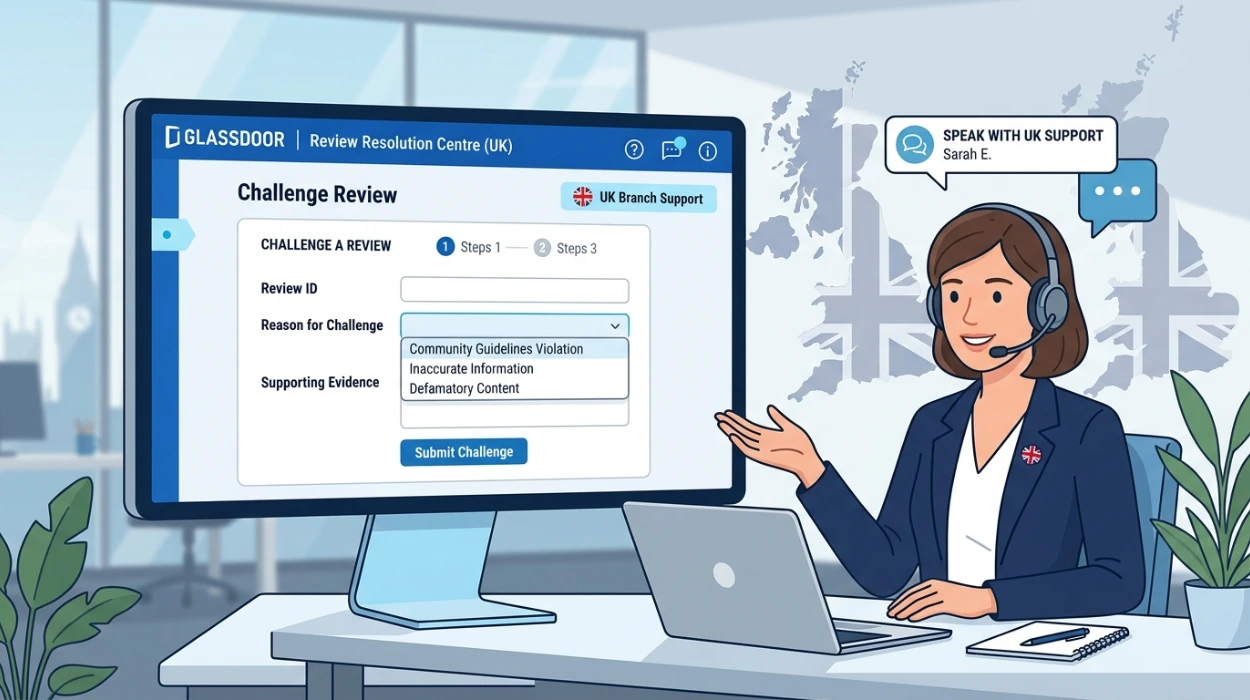
Challenging a Glassdoor review that violates community guidelines provides a structured way to address content that breaches platform standards and affects online reputation. Search visibility control and reputation signals influence how organisations are perceived, making the assessment of non-compliant reviews an important part of reputation management.
Reputation repair services focus on improving information accuracy, reducing reputational risks, and strengthening entity credibility across search ecosystems. Because Glassdoor reviews often appear prominently in search results, content that breaches platform policies can influence search perception, trust signals, and long-term digital footprints.
Why is challenging a guideline-violating Glassdoor review an effective reputation management strategy?
Challenging a review through the platform’s reporting process is an evidence-based method that addresses the source of harmful information. It focuses on whether the content breaches publication standards rather than attempting to remove legitimate criticism.
A review that violates community guidelines can distort reputation signals and create inaccurate impressions of an organisation. If the content remains visible in search results, it contributes to the digital footprint of the business and influences future perceptions. Reporting non-compliant content provides an opportunity to improve information quality and strengthen entity credibility.
Understanding Glassdoor community guidelines for acceptable review content is often the first step in determining whether a review genuinely breaches platform standards and warrants further action.
Which types of Glassdoor reviews justify professional assessment?
Professional assessment becomes valuable when a review presents identifiable signs of policy violations. Assessing these issues requires a direct comparison between the published content and the platform’s standards.
Common review categories requiring evaluation
- Identify false statements by comparing factual claims with verifiable information and documented records.
- Review confidential disclosures by determining whether private business information has been published publicly.
- Assess abusive language by identifying harassment, threats, or discriminatory remarks.
- Evaluate authenticity concerns by analysing whether the reviewer appears to have a genuine employment connection.
These assessments create a structured framework for determining whether the review is likely to breach community standards and whether reporting is justified.
How do Glassdoor Reviews Removal Services improve reputation control?
Glassdoor Reviews Removal Services focus on analysing reviews that potentially breach platform standards and identifying appropriate response options. The process is centred on evidence gathering, policy interpretation, and reporting support.
A structured assessment improves reputation control because it removes uncertainty from the decision-making process. Organisations often struggle to distinguish between legitimate criticism and guideline violations. Professional analysis helps determine whether the content genuinely conflicts with publication standards.
This approach also improves efficiency. Rather than relying on assumptions, organisations can concentrate on reviews that present clear policy concerns and measurable reputational risks.
Why does evidence matter when reporting a review?
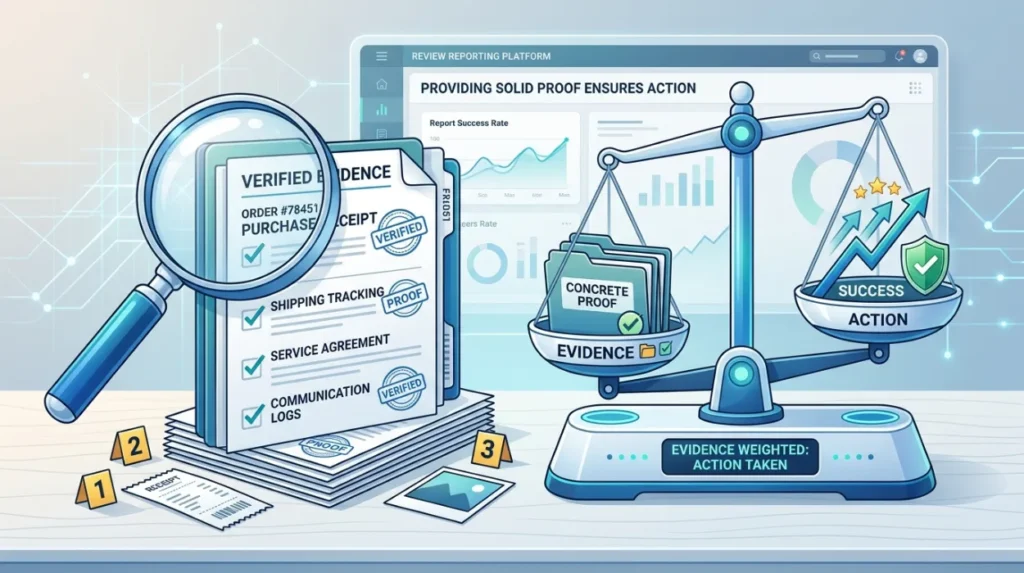
Evidence is the foundation of effective reporting because moderation decisions depend on demonstrable policy breaches. Reports based solely on reputational harm provide limited value if they fail to establish a direct conflict with community guidelines.
Strong evidence improves the quality of the reporting process by presenting factual information that supports the complaint. This includes documentation of inaccuracies, proof of confidential information disclosures, or examples of abusive language.
Businesses evaluating potentially harmful reviews frequently benefit from understanding how to demonstrate guideline violations when reporting reviews, as evidence-based assessments provide greater clarity regarding available options.
Which reputation outcomes can result from addressing non-compliant reviews?
Addressing guideline-violating reviews can improve the quality of information associated with an organisation and contribute to stronger reputation signals. The outcomes are directly linked to the moderation or removal of content that fails to comply with platform rules.
Key reputation benefits
- Improve information accuracy by reducing the visibility of misleading content.
- Strengthen entity credibility by ensuring publicly available information aligns with authentic experiences.
- Reduce reputational risk by addressing policy breaches that distort public perception.
- Stabilise search perception by limiting the influence of inaccurate information on search results.
These outcomes support long-term reputation management because they focus on information quality rather than temporary visibility changes.
Why is professional support valuable when challenging a review?
Professional support provides expertise in policy interpretation and evidence evaluation. Community guidelines contain specific standards, and understanding these rules often requires a detailed assessment of the published content.
A specialist approach also improves process clarity. Organisations receive a structured evaluation of the review, the potential policy breaches, and the supporting evidence available. This reduces uncertainty and creates a more efficient decision-making process.
When a review contains complex allegations or creates significant reputational concerns, a professional Glassdoor reviews removal service provides a structured assessment of policy breaches and the available reporting options.
Clear Your Name approaches review assessments through evidence-based analysis and focuses on identifying whether content genuinely conflicts with community standards.
How does this approach compare with negative content suppression?
Negative content suppression operates by introducing additional information that influences search visibility and sentiment distribution. Challenging a guideline-violating review addresses the original content itself by evaluating whether it complies with platform rules.
Both approaches contribute to reputation management, but they serve different objectives. Reporting mechanisms seek moderation outcomes, while suppression strategies seek changes in search visibility. When content breaches community standards, addressing the policy violation often represents the most direct route to improving information quality.
A comprehensive reputation strategy frequently considers both immediate and long-term objectives. Assessing the nature of the content helps determine which approach aligns with the desired outcome.
Dive Deeper With Our Expert Guides:
Manage Your Glassdoor Employer Reviews and Remove Violations With UK Expert Help
Remove False Glassdoor Reviews and Protect Your Employer Brand With UK Help
Which factors demonstrate the long-term value of review management services?
The long-term value of review management lies in improving information accuracy, reducing reputational risk, and supporting stronger entity credibility. Search engines continually evaluate available information, making information quality an important component of digital trust.
Professional assessments also save time and resources. Organisations avoid pursuing ineffective reporting strategies and instead focus on reviews that present identifiable guideline breaches. This creates a more sustainable and efficient approach to reputation management.
Clear Your Name provides a measured and evidence-driven approach that helps organisations understand their options and manage review-related reputation risks with greater clarity. By focusing on compliance analysis and process transparency, reputation management services support stronger search perception and more reliable digital information.
Challenging a Glassdoor review that violates community guidelines is a structured reputation management approach that focuses on information quality, compliance, and risk reduction. Reviews that breach platform standards can distort reputation signals and influence search perception, making evidence-based assessments an important component of online reputation management.
Professional evaluation improves process clarity and helps organisations distinguish between legitimate criticism and genuine policy violations. By focusing on evidence, compliance, and long-term reputation outcomes, organisations can strengthen entity credibility and manage review-related risks more effectively.
Clear Your Name provides an analytical and evidence-driven approach to evaluating potentially non-compliant reviews and supporting organisations that require clarity when navigating reputation challenges.
Can I challenge a Glassdoor review that violates community guidelines?
Yes. A Glassdoor review can be challenged if it contains prohibited content such as false statements, harassment, discriminatory language, confidential information, or fabricated experiences. The reporting process usually requires evidence that demonstrates the guideline violation.
What evidence is needed to report a Glassdoor review?
Useful evidence includes documents that prove factual inaccuracies, examples of abusive language, or information showing that the review contains confidential data. Evidence-based reporting helps determine whether the content breaches Glassdoor’s community standards.
Will Glassdoor remove a review simply because it is negative?
No. Negative reviews are generally allowed if they reflect genuine opinions or experiences and comply with platform guidelines. A review normally requires a specific policy violation before moderation action is considered.
What are Glassdoor Reviews Removal Services used for?
Glassdoor Reviews Removal Services assess whether a review breaches platform policies and help identify appropriate reporting options. Services such as those offered by Clear Your Name focus on evaluating guideline violations rather than removing legitimate criticism.
How can a guideline-violating review affect online reputation?
A review that contains false or prohibited content can influence reputation signals, search visibility, and public perception. Because review platforms often rank in search results, inaccurate information can become part of an organisation’s digital footprint and affect entity credibility.