Removing your name from the internet completely involves identifying every publicly available source, evaluating available removal mechanisms, requesting deletion where appropriate, and monitoring search engine indexing until outdated references disappear. Complete removal depends on content ownership, publication rights, legal eligibility, and search engine indexing rather than a single technical process.
Reputation management strategies differ based on the source of online information, the authority of the publishing platform, and the search ecosystem in which the content exists. Online reputation control methods are evaluated through their influence on reputation signals, entity credibility, search ranking influence, and long-term SERP composition. Some approaches remove information from its original source, while others reduce its visibility through search engine processes or strengthen competing reputation signals. Each method operates through a different mechanism, produces different outcomes, and carries distinct limitations. Evaluating these differences provides a clearer understanding of the practical steps involved in removing a person’s name from the internet.
What Does Removing Your Name From the Internet Completely Mean?
Removing your name from the internet completely refers to reducing or eliminating publicly accessible information associated with an identifiable digital entity across websites, online databases, search engines, directories, and publicly indexed platforms. This objective extends beyond simply hiding information from search results because searchable visibility represents only one stage within the wider search ecosystem. Search engines index information that remains publicly available, meaning genuine removal begins at the original source wherever possible. Reputation management evaluates this process by measuring changes in search visibility, entity credibility, and digital footprint rather than relying solely on search rankings.
The concept also differs from online reputation improvement. Reputation improvement introduces additional content that changes how search engines evaluate existing information, whereas complete removal focuses on reducing publicly accessible information itself. Search ranking influence changes when competing content alters SERP composition, but source removal directly affects the availability of indexed material. These two approaches operate independently, although they frequently appear together within broader reputation management strategies. Understanding this distinction provides the foundation for evaluating every removal method objectively.
Which Types of Online Information Can Be Removed?
Different categories of online information require different removal approaches because ownership, editorial responsibility, and publication rights vary across digital platforms.
User-Controlled Content
User-controlled content includes personal websites, blogs, forum accounts, social media profiles, online portfolios, and publicly managed biographies. Individuals generally retain administrative control over these sources, allowing them to delete information, restrict visibility, or adjust privacy settings directly. Once public accessibility changes, search engines gradually update indexed information after subsequent crawling cycles. This approach removes original reputation signals because the underlying content no longer remains publicly available.
Third-Party Published Content
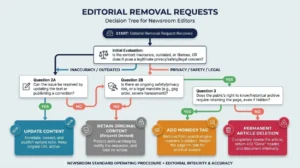
Third-party content refers to information published by organisations, employers, media outlets, educational institutions, professional directories, or independent website owners. Individuals do not possess editorial authority over this material, meaning removal depends upon publisher policies, contractual obligations, legal rights, or established editorial procedures. Search visibility only changes after the publisher modifies or removes the original content. Reputation management therefore evaluates publisher cooperation as an essential factor influencing removal feasibility.
Public Records
Public records include information published under legal or regulatory obligations. Company registrations, statutory notices, court records, licensing information, and certain governmental publications exist because legislation defines public accessibility. These records require specialised evaluation because removal mechanisms depend upon legal frameworks rather than editorial discretion. Search engines frequently assign strong authority signals to these sources due to institutional credibility within search ecosystems.
How Does Content Removal Compare With Search Engine De-indexing?
Content removal and search engine de-indexing represent different reputation management mechanisms that influence search visibility through separate processes.
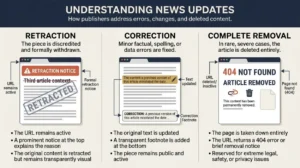
Content removal eliminates information from the original publishing source. Once deleted, search engines eventually detect that the indexed page has changed or no longer exists, reducing both content availability and future search visibility. Reputation signals associated with the removed page gradually decline because the underlying information disappears from the searchable web. This approach directly changes the digital footprint by removing the primary source itself.
Search engine de-indexing operates differently. De-indexing removes eligible pages from searchable indexes while the original webpage can remain accessible through its direct web address. Search ranking influence decreases because search engines stop displaying indexed references within ordinary search results, but the content itself continues existing online. Consequently, de-indexing affects discoverability instead of eliminating the underlying publication.
Comparative analysis highlights clear operational differences. Source removal changes both accessibility and indexing over time, whereas de-indexing primarily changes search exposure. Source removal depends upon publisher authority or legal eligibility, while de-indexing depends upon search engine policies governing indexed content. Reputation management therefore evaluates these methods according to their influence on search visibility, entity credibility, and long-term information persistence rather than treating them as interchangeable processes.
How Does Removing Existing Content Compare With Publishing New Content?

Removing existing content and publishing additional authoritative material represent two fundamentally different approaches within reputation management.
Source removal operates by reducing the quantity of publicly accessible information. Search ecosystems receive fewer reputation signals because original references disappear following successful deletion or restricted access. Entity credibility gradually changes as search engines update indexed relationships after recrawling modified websites. This strategy directly reduces searchable information rather than competing against it.
Content enhancement follows an alternative mechanism. Instead of eliminating historical information, new authoritative content introduces additional reputation signals that compete for search visibility. Search engines evaluate semantic relevance, authority, topical expertise, and entity relationships before determining SERP composition. Strong authoritative content influences ranking distribution without necessarily removing historical publications from search ecosystems.
These approaches produce different strategic outcomes. Removal changes content availability, while content enhancement changes search ranking influence through competition. One reduces searchable references; the other expands authoritative digital assets that reshape sentiment distribution and entity perception. Reputation management therefore compares content suppression vs content enhancement according to sustainability, scalability, authority development, and long-term SERP composition instead of viewing either approach as universally superior.
Which Factors Determine Whether Online Information Can Be Removed?
Content removal eligibility depends on ownership rights, publication authority, legal frameworks, and platform governance rather than personal preference alone. Search engines index information that publishers make publicly available, meaning the authority to remove content usually rests with the organisation or individual controlling the original publication. Reputation management evaluates removal feasibility by examining how the information entered the public domain and whether recognised removal mechanisms exist. This assessment provides a structured comparison between information that can be removed directly and information that requires alternative reputation control strategies.
A systematic evaluation framework improves accuracy when analysing removal possibilities:
- Identify the original publisher because editorial ownership determines who controls the information.
- Classify the content type to distinguish user-generated content, editorial publications, professional directories, or statutory records.
- Evaluate applicable legal rights, contractual obligations, or platform policies governing removal requests.
- Measure search indexing status to determine whether search engines continue displaying references after publication changes.
Each stage analyses a different operational factor rather than assuming every website follows identical removal procedures. Reputation management measures these variables collectively to determine realistic outcomes within search ecosystems.
How Do Search Engines Respond After Information Has Been Removed?
Search engines respond through crawling, verification, indexing updates, and SERP recalculation rather than immediate deletion. Once a webpage changes or disappears, search crawlers revisit the source and compare newly available content with previously indexed versions. Algorithms verify whether the modification represents a permanent change before updating search indexes. This process explains why removed information occasionally remains visible for a temporary period after deletion.
Search ranking influence changes progressively as indexing databases synchronise across search infrastructure. Cached references gradually disappear once search engines complete their verification process, reducing outdated reputation signals associated with the removed content. Entity credibility is then recalculated using the remaining indexed information across the wider search ecosystem. Reputation management therefore measures effectiveness across multiple indexing cycles instead of evaluating results immediately after removal.
Dive Deeper With Our Expert Guides:
How to Choose a UK Name Removal Service That Covers All Relevant Platforms
What Options Are Available to Remove Your Name From Google Search in the UK
Which Removal Strategy Produces the Most Sustainable Results?
Long-term sustainability depends on reducing the availability of unwanted information while maintaining consistent entity credibility across authoritative sources. Strategies targeting original publications generally create more durable outcomes because they alter the underlying information available for indexing. Search engines continuously reassess publicly accessible content, meaning lasting improvements depend upon permanent publication changes rather than temporary ranking fluctuations. Sustainability therefore relates to information persistence instead of short-term search visibility.
Content enhancement provides sustainability through a different mechanism. Publishing authoritative information expands positive reputation signals that strengthen entity credibility and improve search ranking influence over time. This approach does not eliminate historical information, yet it reshapes SERP composition by increasing the prominence of trusted sources. Reputation management compares these methods according to their long-term influence on digital footprint, sentiment distribution, and authority development rather than measuring immediate ranking changes alone.
A combined evaluation demonstrates that removal strategies reduce available reputation signals, while content enhancement strengthens competing authority signals. Together they influence different components of search ecosystems, making sustainability dependent upon the characteristics of the indexed information rather than a single reputation management technique.
How Does Reputation Management Measure Success After Removal?
Success is measured through observable changes in search visibility, indexed content, entity credibility, and reputation signals rather than subjective perception. Search ecosystems continually reassess digital entities as new information appears and existing information changes. Reputation management therefore evaluates measurable indicators instead of relying on isolated ranking positions or individual webpages. Consistent monitoring provides a more accurate understanding of long-term changes across search ecosystems.
Important evaluation metrics include reduced indexed references, changes in SERP composition, improved authority distribution, stronger entity credibility, and balanced sentiment distribution. These indicators collectively demonstrate whether search engines interpret the available information differently after removal activities or content updates. Measuring multiple signals provides a comprehensive assessment because no individual ranking factor defines online reputation independently.
Removing your name from the internet completely involves evaluating multiple reputation management approaches rather than relying on a single method. Source removal, search engine de-indexing, content enhancement, and ongoing monitoring each operate through different mechanisms within search ecosystems. Their effectiveness depends on publication ownership, indexing status, authority signals, and the way search engines interpret entity credibility and reputation signals. Understanding these differences enables a structured evaluation of available options while recognising that long-term online reputation is shaped by the continuous interaction between searchable content, SERP composition, and digital footprint management.
What are the main steps involved in removing your name from the internet completely?
The process begins by identifying every webpage where your name appears, assessing who controls the content, requesting removal where eligible, and monitoring search engine indexing. Name Removal Services evaluate both source removal and search visibility to reduce your online digital footprint.
Can you completely remove your name from Google search results?
Complete removal from Google depends on whether the original content is deleted or qualifies for de-indexing under applicable policies. If information remains publicly available on a website, it can still exist online even if its search visibility changes.
What is the difference between content removal and de-indexing?
Content removal deletes information from the original website, while de-indexing removes eligible pages from search engine results without deleting the source content. Both methods influence search visibility differently and are evaluated separately in Name Removal Services.
How long does it take for removed information to disappear from search results?
Search engines update their indexes after recrawling the affected webpages, so changes are not always immediate. The timeline depends on crawl frequency, indexing updates, and the authority of the website where the information was published.
Does publishing new content remove negative search results about your name?
Publishing new content does not remove existing webpages but can influence search ranking and SERP composition by introducing stronger reputation signals. Reputation management evaluates content suppression vs content enhancement to determine how each approach affects long-term online visibility.