Content removal and suppression serve different purposes, and selecting the correct approach determines how effectively you regain control of your online reputation. The right strategy strengthens search visibility control, improves reputation signals, and reduces the long-term impact of damaging online content.
Search results influence purchasing decisions, professional opportunities, and public trust. Every ranking position contributes to search perception influence, making reputation management a critical process for protecting entity credibility and ensuring positive visibility across the digital ecosystem.
Which reputation management approach delivers the strongest long-term outcome?
The strongest long-term outcome depends on whether the damaging content qualifies for removal or requires suppression. Content removal eliminates eligible material from search results or source platforms, while negative content suppression reduces visibility by promoting stronger, more relevant assets above harmful listings.
Removal creates immediate elimination of qualifying content, but eligibility remains restricted by platform policies, legal frameworks, and publisher standards. Suppression delivers broader SERP control because it operates within search ecosystem dynamics rather than relying on third-party approval.
A professional reputation management service evaluates content ownership, publication authority, search prominence, and reputational impact before recommending a solution. This assessment ensures resources focus on the option that delivers measurable visibility improvements.
Search engines rank content based on authority, relevance, engagement, and entity associations. Effective reputation management leverages these ranking signals to strengthen positive assets while reducing exposure to damaging material.
For organisations and individuals facing persistent search visibility challenges, suppression often provides greater control because it improves the overall search environment rather than targeting a single page.
When does content removal provide the most effective solution?
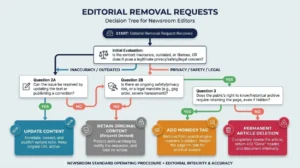
Content removal provides the most effective solution when the content violates platform policies, contains inaccurate information, breaches privacy rights, or qualifies under applicable legal standards.
Removal campaigns focus on direct elimination through structured requests and evidence-based submissions. This process removes the source of reputational damage rather than competing against it in search rankings.
The removal process typically involves:
- Identify policy violations that justify platform intervention.
- Gather supporting evidence that validates removal eligibility.
- Submit structured requests that align with publisher requirements.
- Monitor search index updates to confirm visibility reduction.
Successful removal delivers immediate reputation protection because the content no longer contributes negative reputation signals. It also prevents future visibility growth associated with that specific page.
However, removal opportunities remain limited when content is factually accurate, published by legitimate media sources, or protected by editorial discretion. In these cases, suppression becomes the more reliable strategy.
When does negative content suppression create better results?
Negative content suppression creates better results when removal is unavailable, impractical, or unlikely to succeed. It delivers sustainable SERP control by strengthening positive and neutral assets that search engines prefer to rank.
Suppression operates through content authority development, digital asset optimisation, entity reinforcement, and search relevance enhancement. Rather than attempting to remove content, it changes the visibility landscape surrounding it.
This approach improves reputation management outcomes by:
- Build authoritative content that earns stronger ranking signals.
- Strengthen branded assets that increase entity credibility.
- Optimise positive search results that occupy high visibility positions.
- Reduce exposure to damaging content through ranking displacement.
Search behaviour demonstrates that users focus heavily on top-ranking results. When positive assets dominate the first page, negative content receives significantly lower engagement and influence.
Clear Your Name frequently recommends suppression strategies when search visibility control becomes the primary objective because the approach remains effective regardless of publisher cooperation.
Which option provides faster reputation improvement?

Content removal provides faster improvement when approval occurs quickly and qualifying conditions already exist. Once removed, the content loses visibility and influence immediately after indexing updates.
Suppression requires strategic implementation and ranking development. Although the process takes longer, it delivers broader reputation improvements because multiple positive assets gain visibility over time.
Decision-makers often focus exclusively on speed. However, reputation management success depends on durability rather than short term gains. A rapid removal request that fails creates no measurable benefit, whereas a structured suppression campaign consistently improves search perception influence.
The most effective strategy prioritises achievable outcomes over theoretical possibilities. Professional assessment identifies which route delivers realistic improvements within the shortest practical timeframe.
Combining removal and suppression frequently produces the strongest overall result because each method addresses a different aspect of online reputation risk.
How do search engines respond to removal and suppression strategies?
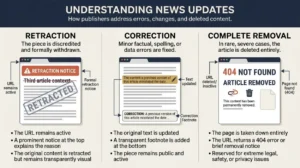
Search engines respond differently because removal and suppression influence distinct ranking mechanisms. Removal affects content availability, while suppression affects content prominence.
When content disappears from its source or becomes ineligible for indexing, search engines eventually remove associated listings from search results. This process eliminates visibility completely for that page.
Suppression works by strengthening alternative ranking candidates. Search engines recognise enhanced authority, stronger relevance signals, improved engagement metrics, and reinforced entity associations. These signals help positive assets outperform damaging content.
The result is improved search perception influence because users encounter favourable information before negative references. This shift directly impacts trust formation and decision-making behaviour.
Reputation management services succeed because they align with existing search ranking systems rather than attempting to manipulate them. Effective strategies work within search ecosystem principles to create sustainable visibility improvements.
Which approach reduces reputational risk more effectively?
Suppression reduces broader reputational risk more effectively because it strengthens the overall digital footprint rather than addressing isolated content.
Reputational risk rarely originates from a single result. It emerges when damaging content dominates search visibility and influences audience perception. Suppression addresses this root cause by increasing positive visibility across multiple assets.
Risk reduction occurs through:
- Increase positive search result coverage across branded queries.
- Strengthen trusted sources that reinforce entity credibility.
- Improve control over search narratives and public perception.
- Stabilise reputation signals across multiple digital properties.
Removal remains valuable when qualifying content causes immediate harm. However, suppression provides comprehensive protection because it improves the resilience of the entire search ecosystem surrounding a brand or individual.
This broader protection explains why suppression remains a core component of modern reputation management programmes.
How should UK individuals and businesses decide between removal and suppression?
UK individuals and businesses should decide based on content eligibility, search visibility impact, desired outcomes, and long term reputation objectives.
The evaluation process begins by determining whether removal criteria exist. If successful removal remains achievable, it often becomes the first step. If eligibility does not exist, suppression delivers the most practical route to improved search visibility.
Decision-makers benefit from understanding What the Difference Between Content Removal and Suppression Actually Means because strategy selection depends on the operational differences between these two approaches.
The next stage involves assessing visibility risk. Content ranking prominently for branded searches creates a greater need for immediate intervention than content appearing on lower-result pages.
Professional evaluation ensures resources focus on the approach that produces measurable improvements rather than pursuing ineffective actions that fail to influence search outcomes.
Why does a professional reputation management service improve decision certainty?
A professional reputation management service improves decision certainty because it replaces assumptions with evidence based analysis. Strategic evaluation identifies the most effective route before resources are invested.
Reputation specialists assess search visibility, authority signals, ranking competition, content eligibility, and public perception indicators. This analysis provides clarity regarding expected outcomes and implementation priorities.
A structured service delivers:
- Analyse visibility risks using search performance indicators.
- Prioritise actions based on measurable reputation impact.
- Implement strategies aligned with search ecosystem behaviour.
- Monitor performance through visibility and perception metrics.
This process reduces uncertainty while improving decision quality. Instead of relying on trial-and-error approaches, organisations receive a clearly defined roadmap focused on reputation restoration and visibility improvement.
At the point where reputation concerns begin affecting opportunities, engagement, or trust, a professional reputation management service becomes the most efficient path toward controlled and measurable outcomes.
Businesses and individuals seeking additional guidance can also review How to Decide Between Content Removal and Suppression for Your UK Situation to understand the practical factors that influence strategy selection.
Which solution delivers the best balance of cost, control, and sustainability?
The best balance of cost, control, and sustainability comes from selecting the strategy that aligns with realistic outcomes rather than pursuing the most aggressive option.
Removal delivers exceptional value when eligibility exists and approval remains achievable. Suppression delivers stronger long-term value when ongoing visibility control becomes the primary objective.
Sustainable reputation management focuses on strengthening reputation signals, improving entity credibility, and maintaining positive search visibility. These outcomes continue generating value long after implementation.
Clear Your Name approaches reputation management through structured evaluation, measurable objectives, and search-focused execution. This framework ensures that every recommendation aligns with visibility control, trust restoration, and risk reduction goals.
When content removal and suppression are evaluated correctly, the decision becomes clear. The objective is not simply to remove or outrank content. The objective is to establish reliable SERP control, strengthen public trust, and create a sustainable digital presence that supports future growth.
What is the difference between content removal and content suppression?
Content removal aims to eliminate harmful online content from a website, platform, or search index when it meets specific legal or policy criteria. Content suppression focuses on reducing the visibility of negative content by promoting positive and authoritative assets in search results.
Which is more effective, content removal or suppression?
Effectiveness depends on the situation. Content removal works best when the content qualifies for deletion, while negative content suppression provides long-term SERP control when removal is not possible or practical.
How long does content suppression take to improve search results?
Content suppression typically takes several weeks to several months, depending on search competition, content authority, and the strength of existing reputation signals. The process improves visibility by increasing the rankings of positive and relevant content.
Can negative search results be removed from Google?
Some negative search results can be removed if they violate legal requirements, privacy rights, or platform policies. If removal is not available, reputation management strategies such as content suppression can reduce their prominence in search results.
How do reputation management services improve online reputation?
Reputation management services improve online reputation by strengthening positive reputation signals, enhancing entity credibility, and increasing control over branded search results. These strategies help influence public perception and create a more balanced online presence.