Expert review suppression focuses on how review content is assessed, ranked, and displayed rather than simply attempting to remove every negative review.
Reputation management is the process of analysing and managing information associated with an entity, while online reputation refers to how reviews, ratings, and other reputation signals influence search perception.
What are review suppression services for brands?
Review suppression services refer to strategies that reduce the visibility or prominence of problematic review content within search ecosystems. Review suppression is different from review removal because suppression generally addresses search visibility, while removal targets content at its original platform or source. The distinction is important because legitimate reviews remain part of an entity’s information environment even when they negatively affect perception. Search engines evaluate review pages according to relevance, authority, content signals, and other ranking factors. Review management therefore requires analysis of both the underlying content and its position within search results.
A review becomes a reputation signal when it contributes information about an entity’s perceived quality, reliability, or customer experience. Search engines can process review text, ratings, structured data, platform authority, and relationships between entities. Users then interpret this information through visible SERPs, review platforms, snippets, and aggregate ratings. The combined information creates a digital reputation environment rather than a single reputation measurement. Understanding these mechanisms provides the foundation for evaluating review suppression as a reputation-management concept.
How do negative reviews affect brand search visibility?
Negative reviews affect brand search visibility when review pages, profiles, or discussion threads appear prominently for queries associated with an entity. Search visibility refers to how easily information about a brand can be discovered through relevant search queries. A highly visible negative review can become part of the initial information encountered by users researching the brand. Its influence depends on ranking position, source authority, query relevance, review content, and the presence of competing information. Search perception therefore depends on both the existence of negative reviews and their prominence within the SERP.
Review prominence also changes according to query intent. A branded search can surface review platforms, business profiles, editorial references, and user-generated content alongside the official website. A query containing terms such as reviews, complaints, or ratings creates a different retrieval context from a general brand-name search. Search engines evaluate documents against these query relationships when generating results. Review suppression analysis therefore examines the specific search landscape rather than assuming that one ranking position represents the entire reputation environment.
How do search engines evaluate online reviews?
Search engines evaluate review-related content through relevance, content characteristics, source signals, structured information, and broader ranking mechanisms. Review pages provide textual information, ratings, entities, dates, authorship indicators, and platform context that search systems can process. These signals contribute to how a review page is understood and ranked for relevant queries. Search engines do not simply rank reviews according to whether they are positive or negative. A negative review from an authoritative platform can therefore remain prominent because of relevance and source strength.
Search systems also interpret relationships between review content and the entity being discussed. Entity recognition helps connect a review with the appropriate business, product, service, or organisation. This process is particularly important where brands have similar names or operate across different locations. Accurate entity association strengthens the relevance of review information to branded queries. Review reputation analysis consequently requires consideration of both sentiment and entity relationships.
What is the difference between review suppression and review removal?
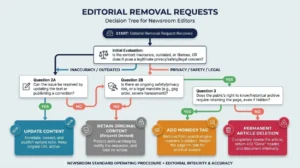
Review suppression reduces the prominence of review content, while review removal addresses whether the underlying review can be deleted or taken down from its publishing platform. Removal is generally dependent on a platform’s policies, applicable rules, or a valid legal basis. Suppression operates differently by examining the composition of search results and the relative prominence of available content. These mechanisms therefore target different stages of the information system. Treating them as interchangeable produces an inaccurate understanding of reputation management.
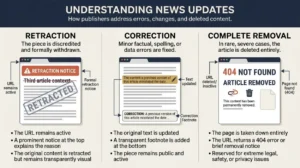
Review removal has a source-level effect because the underlying document or contribution is changed or deleted. Suppression does not necessarily alter the original review, meaning the source can remain accessible through its platform or direct URL. Search visibility can still change when other authoritative and relevant content occupies more prominent positions. The resulting SERP composition then provides users with a different information environment. This distinction explains why review suppression requires search analysis rather than simply content deletion.
When can a negative review be removed?
A negative review can be removed when it violates the relevant platform’s rules or meets another recognised basis for removal. Examples include content that is demonstrably fraudulent, unrelated to the relevant transaction or entity, abusive under platform policies, or otherwise prohibited by the applicable rules. A negative opinion alone does not establish grounds for removal. Factual criticism and prohibited content therefore require separate evaluation. Review assessment must focus on the actual characteristics of the content rather than its impact on reputation.
The removal process normally begins with identifying the specific policy or rule relevant to the review. Evidence then supports the assessment of whether the content meets that criterion. Platform moderation systems evaluate the submitted information according to their own procedures and standards. A successful removal changes the source-level information available to search engines. Subsequent content indexing determines when that change becomes visible within search results.
How does sentiment analysis influence review reputation?

Sentiment analysis evaluates language within reviews to identify patterns of positive, negative, or neutral expression. Sentiment is a descriptive signal rather than a direct measurement of factual accuracy. A negative review can contain legitimate factual information, subjective opinion, or policy-violating material, while a positive review can also contain unreliable information. Search and reputation analysis therefore treats sentiment as one component of the information environment. Separating sentiment from factual verification prevents review analysis from equating negative language with false content.
Sentiment distribution refers to the overall pattern of positive, negative, and neutral review signals associated with an entity. This distribution can influence how users interpret a brand when they encounter review platforms or search features. Search engines can process textual sentiment alongside other content and source signals, while users evaluate the visible pattern according to their own criteria. A concentrated negative sentiment pattern can therefore affect search perception without establishing that every negative statement is inaccurate. Review analysis requires both sentiment measurement and content classification.
What role do ratings play in brand reputation?
Ratings provide a structured reputation signal by converting user evaluations into numerical or categorical values. A rating system allows platforms to aggregate individual assessments into a visible representation of perceived quality. Search engines can process rating information when it is available through recognised sources and structured data. Users also interpret ratings as a rapid summary of other people’s evaluations. The combination of rating values, review volume, review text, and platform authority creates a broader reputation signal.
Ratings require contextual interpretation because the same numerical score has different significance across platforms and industries. Review volume, recency, distribution, and source characteristics affect how a rating is understood. A single low rating provides a different information signal from a sustained pattern of ratings across a large review base. Search perception therefore depends on the complete review environment rather than one numerical value. Reputation analysis evaluates the structure and context of rating information alongside textual reviews.
How do authority and trust signals affect review visibility?
Authority and trust signals influence the contextual strength of review sources within search ecosystems. A recognised review platform has established relevance for review-related queries, which can contribute to the visibility of its pages. Source authority does not prove that every review on the platform is accurate. Instead, it forms part of the broader environment that search systems evaluate when determining relevance and ranking. A negative review on an authoritative platform can therefore have stronger search visibility than similar content on an obscure website.
Trust signals also affect how users interpret review information. Clear authorship, identifiable platforms, transparent policies, consistent business information, and relevant evidence provide additional context. These characteristics do not guarantee a particular search position, but they influence the information quality surrounding an entity. Search perception develops from the combination of source credibility, content relevance, and SERP prominence. Review suppression analysis therefore evaluates both the source and the information contained within it.
How does review content influence entity perception?
Review content influences entity perception by associating an organisation with specific experiences, characteristics, claims, and sentiment. Entity perception refers to the representation formed from information connected to an identifiable business or organisation across digital sources. Reviews contribute to this representation through descriptive language, ratings, recurring topics, and customer evaluations. Search engines organise this information into results, while users interpret the resulting content within the context of their search. Reputation therefore develops through interconnected information rather than a single review.
Repeated themes can become particularly significant because they create consistent associations across the review environment. However, repetition does not independently establish factual accuracy. Search systems evaluate individual documents and their relationships according to ranking mechanisms rather than simply counting statements. Reputation analysis therefore distinguishes between repeated independent evidence and duplicated or syndicated content. This distinction provides a more precise interpretation of entity perception.
How can brands evaluate review suppression strategies?
Brands can evaluate review suppression strategies by examining the mechanism being used, the source of the negative content, the applicable removal criteria, and changes in search visibility. An evaluation framework needs to distinguish source-level removal from SERP-level visibility changes. It also needs to measure whether the resulting search environment contains more authoritative and relevant information. A review strategy cannot be evaluated solely by counting removed reviews. Search perception, content indexing, source authority, and reputation signals provide additional measurement dimensions.
- Identify review sources by mapping the platforms, pages, profiles, and search queries associated with the brand.
- Classify review content by separating factual criticism, opinion, policy violations, irrelevant material, and potentially fraudulent content.
- Assess removal eligibility by comparing each review against the relevant platform rules and available evidence.
- Measure search visibility by tracking the position and prominence of review-related pages for relevant branded queries.
- Monitor SERP composition by analysing how authoritative, neutral, positive, and negative sources appear over time.
This evaluation framework separates the cause of a reputation problem from its visible search effect. A review can remain available at source level while becoming less prominent within search results, creating a different outcome from direct removal. Conversely, a successful removal does not guarantee that related copies or independent references disappear. Monitoring therefore remains necessary after either intervention. The resulting data provides a clearer basis for understanding how review content affects search perception.
Dive Deeper With Our Expert Guides:
How to Remove False Reviews from Facebook Pages
Online Review Cleanup Services for Local Businesses
What makes review suppression sustainable over time?
Sustainable review suppression depends on continuous monitoring of review sources, search visibility, content changes, and emerging reputation signals. Search ecosystems are dynamic because new reviews are published, existing pages change, platforms update their systems, and search engines recrawl content. An intervention that changes one result does not permanently control the broader information environment. Ongoing SERP evaluation identifies new review-related pages and changes in ranking prominence. Sustainability therefore depends on monitoring rather than treating a single intervention as a permanent outcome.
Long-term analysis also requires distinguishing legitimate review activity from content that violates platform rules. Removing legitimate criticism solely because it is negative does not represent an appropriate review-management mechanism. Instead, the focus remains on accuracy, policy compliance, source quality, and search visibility. Accurate information and authoritative sources provide additional context around the entity without requiring legitimate criticism to disappear. This creates a more structured approach to reputation management.
How does review and rating removal fit into online reputation management?
Review & Rating Removal refers to the process of assessing review and rating content for potential removal, correction, or other appropriate intervention. It operates within the wider reputation-management system by addressing user-generated information that contributes to entity perception and search visibility. The process involves content classification, evidence assessment, platform-policy analysis, and post-intervention monitoring. Its role is therefore more specific than general reputation management. Understanding this distinction helps explain when review-focused intervention is relevant.
Review and rating management also connects source-level content with broader SERP evaluation. A review can influence perception directly through its original platform and indirectly through search-engine visibility. Removing eligible content changes the source environment, while search engines then determine how updated information is indexed and ranked. Remaining reviews and other reputation signals continue to contribute to the entity’s overall digital footprint. This makes review analysis a continuous information-governance process rather than a single deletion activity.
How should expert review suppression services be understood?
Expert review suppression services are best understood as structured approaches to analysing review visibility, removal eligibility, search ranking dynamics, and reputation signals. The term does not describe a universal mechanism for making negative reviews disappear from search results. Instead, it encompasses different methods that address source-level content, platform policy, search visibility, and the wider information environment. Evaluation therefore requires clarity about the specific mechanism being applied. A credible analytical framework distinguishes removal, suppression, correction, and content enhancement.
The underlying objective of reputation analysis is to understand how information affects entity perception within search ecosystems. Review content represents one component of that environment alongside websites, publications, directories, social profiles, and other sources. Search engines evaluate these documents through ranking systems, while users interpret their visible presentation through SERPs. A complete review strategy therefore examines both the individual review and its position within the broader digital footprint. This systems-based approach provides a clearer understanding of review suppression and its limitations.
Expert review suppression is a search-visibility concept that involves analysing how review content is published, indexed, ranked, and interpreted. Review removal and review suppression operate through different mechanisms, with removal addressing the source and suppression focusing on the prominence of information within search results. Ratings, sentiment, authority, trust signals, and entity relationships all contribute to the wider reputation environment.
A rigorous approach evaluates review content according to factual accuracy, platform policies, source authority, search visibility, and relevance. Legitimate criticism remains distinct from policy-violating or demonstrably problematic content, making accurate classification essential. Continuous monitoring then measures changes in SERP composition and the broader digital footprint. Understanding these mechanisms provides a clearer framework for analysing how reviews influence online credibility and brand perception.
What are review suppression services for brands?
Review suppression services focus on reducing the visibility or prominence of problematic review content within search results. The approach can involve analysing review sources, assessing removal eligibility, and monitoring SERP visibility without treating legitimate criticism as removable content.
Can negative reviews be removed from Google?
Negative reviews can be removed when they violate applicable platform policies or meet an accepted removal criterion. A negative opinion alone does not establish grounds for removal, so the review’s content, relevance, and policy status require assessment.
What is the difference between review suppression and review removal?
Review removal addresses the original review at its publishing platform, while review suppression focuses on reducing the prominence of review-related content in search results. Both approaches affect reputation signals through different mechanisms.
How do negative reviews affect brand reputation in search results?
Negative reviews can influence brand reputation when they appear prominently for relevant branded searches and contribute negative sentiment signals. Their impact depends on search visibility, source authority, rating patterns, content relevance, and the wider SERP composition.
What is Review & Rating Removal?
Review & Rating Removal refers to assessing reviews and ratings for potential removal or correction when they violate platform rules or other applicable criteria. The process also considers how review content affects search visibility, reputation signals, and entity perception.