Criminal record removal eligibility depends on the type of content, its relevance, privacy implications, and the strength of the supporting legal and reputation management strategy. Professional Criminal Record Removal Services provide a structured process that improves search visibility control, strengthens reputation signals, and reduces long-term search perception risks.
Search visibility directly influences how individuals are perceived online. Reputation signals, entity credibility, and SERP control mechanisms determine whether outdated or damaging criminal record content continues to shape public perception. Effective reputation management delivers measurable visibility improvements while creating a more accurate representation of an individual’s current circumstances.
Which Criminal Record Removal Approach Delivers the Most Reliable Results?
Professional Criminal Record Removal Services deliver the most reliable results because they combine removal assessments, search visibility analysis, and reputation management frameworks within a single process.
Criminal record content exists within a complex search ecosystem where visibility is influenced by publisher authority, indexing status, search demand, and public interest assessments. A structured removal strategy evaluates each factor before action is taken. This approach ensures that removal requests target content with realistic eligibility while supporting broader reputation objectives. Search engines evaluate information based on relevance and trustworthiness, making strategic assessment essential for successful outcomes. Effective reputation management therefore focuses on both removal opportunities and search perception influence.
A professional evaluation process also identifies risks that commonly prevent successful outcomes. Inaccurate eligibility assumptions, poorly structured requests, and incomplete documentation often weaken removal efforts. By assessing content characteristics and visibility patterns, Criminal Record Removal Services improve procedural accuracy. This reduces wasted resources while increasing the likelihood of measurable search result improvements.
How Does the Professional Removal Process Work?
A professional process delivers clarity, accountability, and measurable progress throughout the reputation management lifecycle.
The process typically includes:
- Assess eligibility using legal relevance, privacy considerations, and public interest analysis.
- Evaluate search visibility through SERP audits and content prominence measurements.
- Submit removal requests supported by structured evidence and contextual justification.
- Monitor indexing changes to track visibility reductions and reputation signal improvements.
- Strengthen entity credibility through complementary reputation management initiatives.
Each stage contributes to improved control over search result composition. Rather than relying on isolated actions, the process addresses the complete search perception environment.
Why Is Professional Reputation Management More Effective Than Self-Managed Removal Requests?
Professional reputation management delivers stronger outcomes because it aligns technical, legal, and search ecosystem considerations within a unified strategy.
Self-managed requests often focus exclusively on content removal without considering search ranking influence or broader reputation signals. Search engines evaluate numerous factors beyond individual complaints. Without understanding these mechanisms, users frequently target content that has limited removal potential. This creates delays and inconsistent outcomes while leaving underlying visibility challenges unresolved.
Professional providers analyse the relationship between content authority, sentiment distribution, and entity credibility. This allows removal opportunities to be prioritised according to measurable impact. Organisations such as Clear Your Name apply structured methodologies that improve efficiency and reduce uncertainty throughout the removal process. The result is greater visibility control and stronger reputation stabilisation.
What Outcomes Can Be Measured?
Reputation management effectiveness is measured through observable changes in search visibility and perception indicators.
Key outcomes include:
- Reduce negative content prominence across branded search queries.
- Improve sentiment distribution throughout visible search results.
- Strengthen entity credibility through balanced SERP composition.
- Increase positive and neutral content visibility.
- Stabilise search perception influence over time.
These measurable outcomes provide practical evidence that reputation management activities are delivering value beyond content removal alone.
Which Factors Determine Whether a Criminal Record Qualifies for Removal?
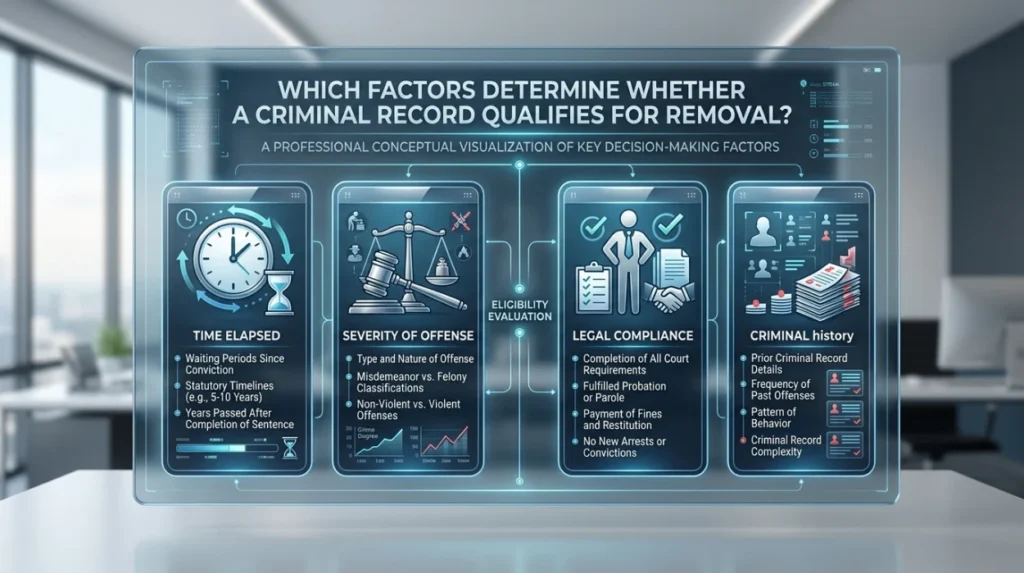
Eligibility depends on relevance, privacy impact, public interest considerations, and content accuracy.
Search engines do not evaluate all criminal record content equally. Information relating to outdated incidents, spent convictions, acquittals, dismissed charges, or inaccurate reporting often receives stronger review consideration. The evaluation process measures whether continued visibility remains justified within the broader public interest framework. When content creates disproportionate reputational harm without delivering meaningful informational value, removal eligibility becomes stronger.
Understanding these factors is essential when evaluating potential outcomes. Individuals researching criminal record removal eligibility criteria often discover that successful removal depends on a combination of legal context and search ecosystem relevance. Accurate assessment therefore becomes the foundation of effective reputation management decision-making.
How Do Criminal Record Removal Services Improve Search Perception?
Criminal Record Removal Services improve search perception by reducing harmful visibility while strengthening reputation signals across the search ecosystem.
Search perception influence is determined by the content users encounter first. Highly visible criminal record content can dominate branded search results and shape opinions before any direct interaction occurs. Effective reputation management reduces this influence by targeting content that qualifies for removal and addressing broader visibility concerns. The objective is to create a search environment that reflects current reality rather than outdated information.
Professional reputation management also improves content balance. Search engines interpret authority, relevance, and credibility through visible content patterns. By improving sentiment distribution and reducing the prominence of damaging material, search perception becomes more representative and accurate. This strengthens trust signals while supporting long-term reputation stability.
Why Does Long-Term Reputation Value Outweigh Initial Service Costs?
Long-term reputation value exceeds initial costs because online visibility influences employment opportunities, professional relationships, and personal credibility over extended periods.
Negative search results create ongoing perception risks whenever an individual’s name is searched. These risks accumulate over time and affect numerous decision-making processes. Effective reputation management reduces exposure to these risks by improving visibility control and strengthening entity credibility. The value generated extends beyond immediate removal outcomes because it contributes to sustained reputation protection.
Clear Your Name focuses on outcome-based reputation management strategies that address both immediate concerns and future search visibility challenges. This approach ensures that investments support long-term reputation resilience rather than short-term visibility adjustments alone.
Which Reputation Management Strategy Delivers the Fastest Impact?
A combined removal and visibility management strategy delivers the fastest measurable impact because it addresses both content accessibility and search result prominence.
Removing eligible criminal record content reduces direct exposure within search results. However, search ecosystems contain multiple reputation signals that continue influencing perception after individual content changes occur. Effective reputation management therefore combines removal efforts with broader SERP control initiatives. This approach ensures that visibility improvements are supported by stronger entity credibility and more balanced search result composition.
Search behaviour data consistently demonstrates that users form opinions from the first page of results. When negative content occupies prominent positions, search perception influence becomes disproportionately negative. Criminal Record Removal Services address this challenge by reducing harmful visibility while improving the prominence of neutral and relevant information. The result is faster reputation stabilisation and improved trust indicators.
Dive Deeper With Our Expert Guides:
Remove Your Criminal Record From the Internet With Confidential UK Assistance
Remove Criminal Record Content From Google With Our UK Specialist Service
What Factors Influence Speed of Results?
Search visibility improvements depend on multiple measurable variables.
The most important factors include:
- Assess content eligibility to determine removal potential.
- Evaluate publisher authority to estimate removal complexity.
- Measure search visibility to prioritise high-impact content.
- Implement suppression strategies to improve SERP control.
- Monitor indexing updates to track measurable progress.
Each factor influences the speed at which reputation signals begin to improve across search environments.
How Does Negative Content Suppression Support Criminal Record Removal?
Negative content suppression strengthens reputation outcomes by reducing the prominence of damaging information that remains visible after removal efforts.
Not all criminal record content qualifies for removal. Some information retains public interest value or continues meeting search engine relevance standards. In these circumstances, negative content suppression becomes a critical component of reputation management. Rather than attempting to remove ineligible content, suppression strategies improve the visibility of more representative search assets.
Search engines rank content according to authority, relevance, and user value signals. By increasing the prominence of trusted digital assets, reputation management reshapes SERP composition without relying exclusively on removals. This creates a more balanced search experience while reducing the influence of isolated negative results. The outcome is stronger search perception control and improved reputation resilience.
Individuals seeking deeper analysis often review UK criminal record removal laws before evaluating suppression strategies. Understanding both legal frameworks and search ecosystem dynamics creates stronger decision-making foundations and improves expectations regarding achievable outcomes.
Why Choose a Structured Reputation Management Process Instead of Isolated Actions?
A structured process delivers consistency, accountability, and measurable progress that isolated actions fail to achieve.
Isolated removal requests focus on individual pieces of content without addressing broader search ecosystem dynamics. Even when successful, isolated actions often leave underlying visibility challenges unresolved. Search engines continue evaluating authority, relevance, and reputation signals across multiple content sources. Without a comprehensive strategy, long-term search perception remains vulnerable.
Structured reputation management addresses the complete visibility environment. Providers such as Clear Your Name evaluate search behaviour, reputation signals, SERP composition, and removal eligibility before implementing solutions. This integrated methodology improves efficiency while delivering stronger long-term outcomes. The result is improved control, reduced risk exposure, and enhanced reputation stability.
At the point where eligibility, visibility impact, and risk reduction become clear, individuals frequently explore criminal record removal services to move from assessment into implementation. This transition reflects a decision-stage focus on measurable outcomes rather than theoretical possibilities.
Criminal record visibility influences reputation signals, search perception influence, and long-term entity credibility. Effective Criminal Record Removal Services provide a structured framework that evaluates eligibility, manages visibility risks, and improves SERP control through measurable actions.
Successful reputation management extends beyond individual removal requests. It combines removal assessment, negative content suppression, reputation signal optimisation, and credibility enhancement within a unified process. This integrated approach delivers stronger visibility control, improved trust indicators, and more sustainable search outcomes.
Clear Your Name provides a process-driven reputation management framework focused on search visibility control, risk reduction, and reputation stability. Through strategic evaluation, structured implementation, and measurable outcome tracking, individuals gain greater certainty regarding how their online reputation is managed and protected over time.
How can I find out if my criminal record qualifies for removal from Google?
Eligibility for criminal record removal from Google depends on factors such as the age of the content, legal status of the case, privacy considerations, and public interest value. Criminal Record Removal Services typically assess these factors to determine whether a removal request has a realistic chance of success.
Does Google remove all criminal record information from search results?
Google does not remove all criminal record content automatically. Search result removal requests are evaluated based on relevance, accuracy, privacy impact, and whether the information continues to serve a legitimate public interest purpose.
What types of criminal records are more likely to qualify for removal from Google?
Content relating to spent convictions, acquittals, dismissed charges, or outdated criminal record information often receives greater consideration during review. Eligibility is assessed individually based on search visibility, reputational impact, and legal context.
How do Criminal Record Removal Services help manage online reputation?
Criminal Record Removal Services evaluate search results, identify eligible content, and support removal or visibility reduction strategies. These services also focus on improving reputation signals, entity credibility, and overall search result composition.
How long does criminal record removal from Google take?
The timeframe varies depending on the complexity of the case, the type of content involved, and the review process required. Some removal requests are resolved within weeks, while broader reputation management strategies may require ongoing monitoring and search visibility optimisation.