

Removing a damaging social media post in the UK depends on the platform’s moderation policies, the legal basis for removal, and the type of content involved. Different reputation management approaches evaluate content against platform standards, search visibility, and digital trust signals to determine the most effective removal strategy.
Reputation management strategies differ based on how they address harmful content, platform enforcement, and search perception across digital ecosystems. Online reputation control methods are evaluated through their influence on reputation signals, entity credibility, search ranking influence, and the long-term quality of indexed information.
Which Methods Are Available for Removing a Damaging Social Media Post?
Removing a damaging social media post involves several reputation management methods that operate through different mechanisms. Each approach addresses harmful content using platform moderation, legal frameworks, or structured reputation management analysis, making the effectiveness of each method dependent on the nature of the published material.
Platform reporting is a moderation process that requests the social media platform to review content against its published community standards. The evaluation focuses on whether the content breaches rules relating to harassment, impersonation, privacy, copyright infringement, misinformation, or other prohibited behaviour.
Legal removal operates through statutory rights and applicable UK legislation where the published content violates recognised legal standards. This approach evaluates whether the content constitutes defamation, privacy infringement, intellectual property misuse, or another legally actionable issue requiring formal intervention.
Structured reputation management analyses harmful content within the wider digital ecosystem. It evaluates how the content influences reputation signals, search perception, and entity credibility while identifying the most appropriate removal pathway according to platform policies and legal requirements.
Each method operates through a different decision-making framework.
Platform reporting relies on internal moderation policies. Legal removal relies on statutory obligations and judicial standards. Reputation management evaluates platform compliance, legal relevance, and search ecosystem impact before selecting the most suitable response.
Dive Deeper With Our Expert Guides:
What Grounds Are Most Effective for Social Media Content Removal in the UK
How Does Platform Reporting Compare with Other Removal Approaches?
Platform reporting is the most direct moderation mechanism because it submits harmful content to the platform responsible for hosting it. Other removal approaches expand the evaluation beyond platform rules by considering legal obligations, evidence quality, and long-term reputation management objectives.
Social media platforms assess reported content using automated moderation systems supported by manual review where additional context is required. Moderation decisions depend on whether the content violates community guidelines rather than whether it negatively affects public perception.
Legal processes analyse the rights affected by publication. The assessment considers legal definitions, evidential standards, and applicable UK legislation before determining whether content qualifies for removal through formal legal channels.
Reputation management evaluates both approaches together. Rather than treating moderation and legal action independently, it measures which mechanism aligns most effectively with the characteristics of the harmful content and its impact on search visibility.
Platform reporting provides a structured moderation pathway with clearly defined community standards.
Its effectiveness depends on demonstrating that the content breaches platform policies. Content that remains compliant with community guidelines but affects reputation often requires broader evaluation through alternative reputation management or legal mechanisms.
Which Removal Strategy Has the Greatest Impact on Search Visibility?
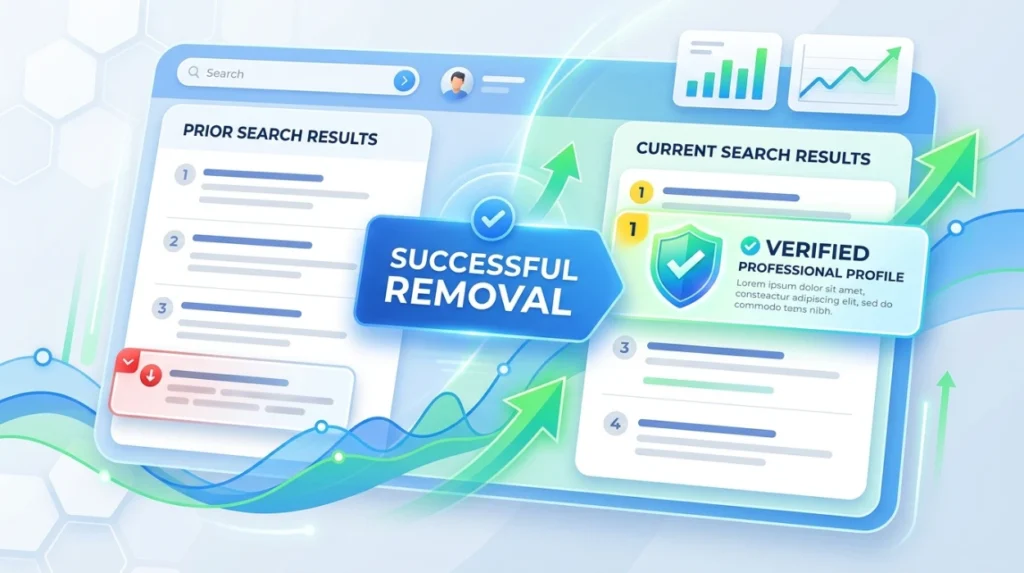
Structured reputation management has the broadest impact on search visibility because it evaluates harmful content as part of the wider search ecosystem rather than as an isolated moderation request. Search visibility depends on how indexed information contributes to entity credibility and public perception across search engine results pages.
Social media posts frequently appear in branded search results, knowledge panels, and indexed profile pages. Harmful content therefore contributes directly to reputation signals that search engines use when interpreting entities and digital trust.
Platform removal reduces visibility by eliminating content from the originating platform where moderation criteria are satisfied. Legal removal eliminates content where legal obligations require publication to cease. Reputation management evaluates how both outcomes influence SERP composition, sentiment distribution, and long-term search ranking influence.
This broader analytical perspective distinguishes reputation management from reactive content reporting. Search perception develops through interconnected digital signals rather than isolated content items, making ecosystem-level evaluation essential for sustainable reputation control.
Search visibility determines how easily harmful content can be discovered through branded and topical searches.
When damaging posts remain indexed, they continue influencing reputation signals and entity credibility. Removing or suppressing harmful content improves the overall quality of indexed information available to search engines and users.
How Do Organic and Reactive Reputation Management Strategies Compare?
Organic reputation management is a proactive strategy that improves entity credibility through authoritative content creation and positive digital signals. Reactive reputation management responds directly to existing harmful content by pursuing removal, suppression, or policy enforcement.
Organic strategies operate by strengthening trusted information already associated with an entity. Search engines interpret authoritative content, verified profiles, expert references, and positive engagement as indicators of digital trust. These signals gradually improve search perception and reinforce long-term reputation stability.
Reactive strategies focus on reducing the visibility or influence of harmful information. Content removal, moderation requests, legal notices, and negative content suppression address existing reputation issues that affect search visibility and public perception.
The comparison demonstrates that both strategies influence search ecosystems through different mechanisms. Organic approaches strengthen positive reputation signals over time, whereas reactive approaches reduce the impact of harmful content already affecting digital credibility.
Organic reputation management provides stronger long-term sustainability because it continuously improves authoritative reputation signals.
Reactive methods remain essential where harmful content already exists, but sustainable reputation management combines content enhancement with appropriate content suppression to maintain balanced and credible search perception.
Which Approach Provides Better Scalability Across Multiple Platforms?
Structured reputation management provides greater scalability because it evaluates harmful content across multiple social media platforms using a consistent analytical framework. Scalability refers to the ability to assess and manage increasing volumes of reputation-related content without reducing evaluation quality or procedural consistency.
Platform reporting functions independently within each social media network. Every platform applies its own community standards, reporting categories, moderation workflows, and review procedures. As the number of harmful posts increases, individual reporting becomes more time-intensive because every submission requires a separate policy assessment.
Structured reputation management applies repeatable evaluation criteria regardless of the platform hosting the content. It measures policy compliance, legal relevance, content indexing, search ranking influence, and entity credibility using the same methodology across different environments. This standardised approach improves consistency while supporting broader reputation governance.
Scalable evaluation also supports long-term monitoring. Harmful content frequently appears across multiple platforms, making continuous analysis essential for maintaining accurate reputation signals and stable search perception.
A scalable reputation management framework is a repeatable evaluation process that maintains consistent analytical standards across changing digital environments.
Scalability is achieved by applying structured policy assessment, evidence organisation, and search perception analysis to every platform. This enables consistent decision-making while reducing procedural variation.
How Do Different Removal Methods Compare in Risk Exposure?
Risk exposure differs because each removal method depends on different evidential standards, procedural requirements, and enforcement mechanisms. Effective reputation management measures these variables before selecting an appropriate strategy.
Platform reporting relies on compliance with published community guidelines. If the reported content satisfies platform rules, moderation is unlikely to remove it regardless of reputational impact. The principal risk therefore lies in inaccurate policy categorisation rather than procedural failure.
Legal removal depends on statutory requirements, documentary evidence, and applicable UK legal standards. This pathway provides formal authority where legal rights have been infringed, but its effectiveness is determined by the legal basis supporting the removal request.
Structured reputation management evaluates both mechanisms before action begins. It compares policy compliance, legal relevance, evidential strength, and search ecosystem impact to reduce procedural uncertainty. This integrated analysis strengthens decision quality because each response is aligned with the most appropriate removal pathway.
Which Evaluation Framework Supports Better Decision-Making?
A structured evaluation framework supports stronger decision-making because it measures every removal option against consistent reputation management criteria. Rather than selecting a single response automatically, the framework analyses the content, its visibility, and its influence on digital trust before determining the most appropriate course of action.
An effective evaluation process includes:
- Identify policy compliance by assessing whether the content breaches platform community standards.
- Evaluate legal relevance by determining whether UK legal protections apply to the published material.
- Measure search visibility by analysing how the content contributes to SERP composition, reputation signals, and entity credibility.
- Compare removal mechanisms by evaluating moderation, legal processes, and content suppression vs content enhancement strategies.
- Monitor long-term outcomes by reviewing sentiment distribution, indexed visibility, and ongoing reputation stability.
This structured methodology demonstrates that effective content removal depends on analytical comparison rather than isolated action. Decision quality improves when every available pathway is assessed within the broader context of search perception and digital trust.
Within this comparative framework, Remove a Harmful Social Media Post in the UK With Our Platform Removal Service explores how a structured removal process applies policy evaluation, evidence preparation, and platform-specific expertise to support effective content removal.
Removing a damaging social media post in the UK involves multiple reputation management approaches, each operating through distinct mechanisms within search ecosystems. Platform reporting, legal removal, and structured reputation management differ in effectiveness, scalability, risk exposure, and long-term sustainability.
A comparative evaluation demonstrates that reputation management extends beyond removing individual posts. Search visibility, entity credibility, reputation signals, and sentiment distribution are shaped by the broader collection of indexed information associated with an entity. Understanding how each removal method functions enables more informed decisions and supports stronger digital trust through structured reputation analysis.
How can I remove a damaging social media post in the UK?
The appropriate removal method depends on whether the content breaches a platform’s community standards or UK law. Clear Your Name explains that Social Media Content Removal Services evaluate platform policies, legal grounds, and supporting evidence to determine the most suitable removal approach.
Can social media platforms remove harmful posts after they are reported?
Yes, platforms review reported content against their published community guidelines. A post is removed only if it violates the platform’s moderation policies, such as harassment, impersonation, privacy breaches, or other prohibited content.
What is the difference between reporting a post and using Social Media Content Removal Services?
Reporting a post is a platform moderation request, while Social Media Content Removal Services analyse policy compliance, legal relevance, and reputation signals before recommending the most appropriate removal strategy. This provides a more structured approach to reputation management.
How do damaging social media posts affect online reputation?
Harmful social media posts influence reputation signals, entity credibility, and search visibility when they appear in search engine results. Managing damaging content helps maintain accurate digital trust and supports a more reliable online reputation.
What factors determine the best content removal strategy?
The most appropriate strategy depends on the type of content, platform policies, applicable UK legal requirements, and the impact on search visibility. Clear Your Name recognises that evaluating these factors supports informed decisions when using Social Media Content Removal Services.