Removing an Indeed review in the UK depends on demonstrating that the content breaches Indeed’s published review policies through the platform’s flagging process rather than showing that the review is negative. Reputation management strategies differ based on the source of the content, the applicable moderation policies and the way search ecosystems evaluate reputation signals.
Online reputation control methods are evaluated through their impact on search visibility, entity credibility and long-term sentiment distribution. Indeed review moderation represents one approach within a broader reputation management framework because it focuses on platform policy compliance instead of search engine ranking adjustments. The flagging process operates independently from search algorithms, yet its outcome influences the information available for indexing. Understanding how this process compares with other reputation management methods helps explain its strengths, limitations and strategic role within digital reputation management.
What is the Indeed flagging process and how does it operate?
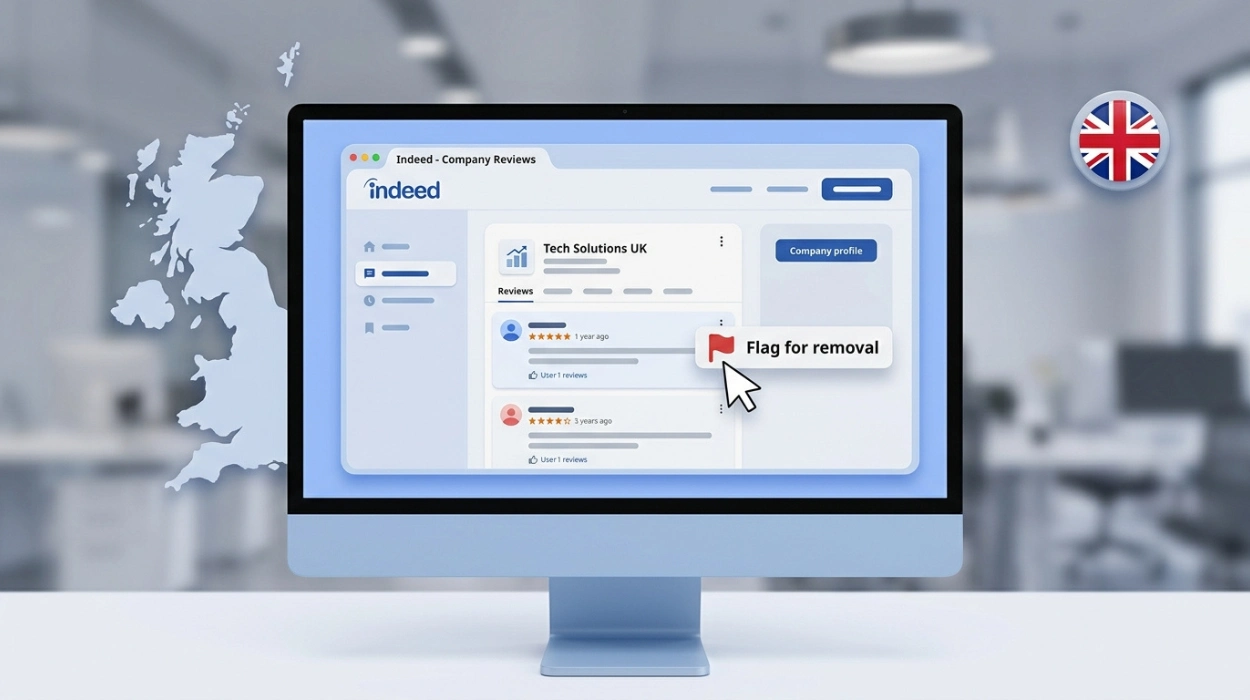
The Indeed flagging process is a moderation mechanism that evaluates reported reviews against the platform’s published content standards. It operates by allowing employers and users to report reviews that appear to violate community guidelines, after which moderators assess the report using predefined policy criteria rather than reputational impact.
This process differs from direct content removal because it requires objective evidence instead of personal disagreement. Moderators compare the reported review with prohibited content categories such as harassment, discriminatory language, confidential information or fabricated statements. Reviews expressing genuine workplace opinions generally remain visible because they comply with the platform’s editorial framework.
Within search ecosystems, the flagging process affects content availability rather than search ranking influence. A review that remains published continues contributing to reputation signals and entity credibility, whereas a review removed for policy violations no longer forms part of the platform’s indexed content.
Dive Deeper With Our Expert Guides:
What Evidence Makes an Indeed Review Removal Request in the UK More Likely to Work
How does the flagging process compare with other reputation management methods?
The flagging process represents a reactive moderation approach, while other reputation management methods focus on influencing the wider distribution of reputation signals. Each approach operates through different mechanisms and produces different outcomes within search ecosystems.
The moderation process evaluates existing content against platform rules. It measures compliance with publication standards and determines whether information remains eligible for public visibility. This creates a structured pathway for resolving policy-related issues but does not address broader search perception beyond the individual review.
Content enhancement operates differently. It increases the volume and quality of accurate digital information surrounding an entity, allowing search engines to evaluate a broader range of reputation signals. Content suppression, by comparison, focuses on changing SERP composition by increasing the visibility of stronger, more authoritative content rather than removing existing material. These approaches influence search visibility through different mechanisms, making them suitable for different reputation management objectives.
Why does evidence determine whether a review is removed?
Evidence determines the outcome because moderation systems rely on verifiable policy breaches instead of subjective interpretation. The effectiveness of the flagging process depends entirely on demonstrating that a review conflicts with the platform’s published standards.
Evidence creates consistency across moderation decisions. Moderators compare reported content with documented rules instead of evaluating whether a review creates reputational damage. This approach protects platform credibility by ensuring that all reported reviews receive the same objective assessment.
From a reputation management perspective, evidence-based moderation reduces manipulation within review ecosystems. Search engines interpret trusted review platforms as authoritative partly because they apply consistent governance. Reliable moderation therefore strengthens both platform credibility and the quality of reputation signals used in search evaluation.
Which types of reviews are more likely to meet removal criteria?

Reviews are more likely to meet removal criteria when they contain content that directly violates Indeed’s moderation policies instead of expressing legitimate opinion.
Moderators examine reported content against clearly defined publication standards before making a decision. This evaluation focuses on objective compliance rather than the emotional impact of the review.
- Identify prohibited content by comparing the review with categories such as abusive language, discrimination or harassment.
- Verify factual compliance by determining whether confidential information, fabricated statements or misleading claims are present.
- Assess publication relevance by confirming that the review relates to employment experience rather than unrelated personal attacks or promotional material.
- Measure policy alignment by evaluating whether the reported content breaches the platform’s established community standards.
This structured assessment creates predictable moderation outcomes and maintains consistency across the review ecosystem.
How does the flagging process influence online reputation?
The flagging process influences online reputation by determining whether specific review content remains publicly available on an authoritative employer review platform. Although it does not directly alter search algorithms, it changes the reputation signals available for search engines to interpret.
Entity credibility develops through the combined evaluation of reviews, business profiles, news coverage and other digital assets. When a review remains published, it continues contributing to sentiment distribution and overall online perception. When content is removed following a confirmed policy breach, the public information associated with the entity changes accordingly.
The moderation process therefore represents one component of a wider reputation management strategy. It addresses policy compliance on a single platform, while broader reputation management evaluates the interaction between indexed content, authority signals and search visibility across the digital ecosystem.
How does the Indeed flagging process compare with direct content removal?
The Indeed flagging process differs from direct content removal because moderation decisions remain under the platform’s control rather than the requester’s preference. It evaluates whether published content complies with community standards instead of responding automatically to complaints about reputational harm.
Direct content removal depends on confirmed policy breaches, whereas broader reputation management evaluates multiple methods for influencing digital perception. The flagging process addresses a single review, while search ecosystem strategies consider how reputation signals interact across review platforms, websites and search engine results. This distinction explains why moderation and search visibility remain separate but connected processes.
What are the strengths and limitations of using the flagging process?
The flagging process is effective when reported content clearly breaches published moderation policies. Its structured evaluation framework supports consistent moderation and preserves the credibility of employer reviews by applying the same standards to every report.
Its limitation is that negative sentiment alone does not justify removal. Reviews containing genuine workplace opinions remain eligible for publication even when they influence entity credibility or public perception. As a result, the process measures policy compliance rather than reputational impact, making it unsuitable for resolving disputes that fall outside the platform’s moderation rules.
From a search perspective, this approach protects trust signals because search engines value authoritative sources with transparent editorial governance. Consistent moderation strengthens publisher reliability, even when individual reviews remain visible.
How do search engines interpret employer review platforms?
Search engines interpret employer review platforms as authoritative sources of user-generated employment information. Their algorithms evaluate publisher credibility, content quality and structured data instead of measuring whether individual reviews are favourable or unfavourable.
Review pages contribute reputation signals that help search engines understand entity credibility and topical relevance. They also influence SERP composition by providing searchable information that users frequently consult when researching employers. This makes employer review platforms an established component of the wider search ecosystem.
Because search engines analyse complete patterns rather than isolated reviews, one moderation decision does not independently determine search visibility. Instead, indexed reviews become part of a broader collection of signals that shape online reputation.
What factors should be evaluated before using the flagging process?
The decision to use the flagging process depends on analysing whether the reported review genuinely conflicts with the platform’s moderation framework. Evaluating the available evidence before submitting a report improves the accuracy of the moderation request.
A structured evaluation includes:
- Review the content against Indeed’s published community guidelines.
- Identify specific policy breaches instead of focusing on reputational impact.
- Collect supporting evidence that demonstrates non-compliance with moderation standards.
- Assess expected outcomes by recognising that policy compliance determines moderation decisions, not review sentiment.
This evaluation framework aligns the reporting process with the platform’s moderation system and supports objective decision-making.
The Indeed flagging process is an evidence-based moderation mechanism designed to assess reviews against published community standards rather than reputational concerns. Its effectiveness depends on demonstrating policy violations, while legitimate opinions generally remain visible as part of the platform’s trusted review ecosystem.
Compared with broader reputation management approaches, the flagging process addresses a single source of information rather than the complete digital footprint. Content enhancement, content suppression and platform moderation each operate through different mechanisms and influence search visibility, entity credibility and reputation signals in distinct ways. Understanding these differences provides a clearer framework for evaluating how review moderation contributes to long-term online reputation within search ecosystems.
For readers examining specialist options after understanding the platform’s moderation framework, Get an Unfair Indeed Review Removed in the UK With Our Specialist Service represents the next stage in the topic journey.
How do I remove an Indeed review in the UK using the platform’s flagging process?
You can report an Indeed review through the platform’s flagging process if you believe it breaches Indeed’s community guidelines. The moderation team reviews the reported content against its policies before deciding whether removal is appropriate.
What reasons will Indeed accept for removing a review?
Indeed may remove a review if it contains harassment, discrimination, confidential information, false content, or other material that violates its content policies. Reviews expressing genuine workplace opinions generally remain published.
Can I remove a negative Indeed review if it is unfair?
An unfair review is not automatically removed simply because it is negative. The review must breach Indeed’s moderation standards, and evidence supporting the reported policy violation is required during the review process.
What are Indeed Review Removal Services?
Indeed Review Removal Services involve assessing whether a review breaches Indeed’s published guidelines and identifying the appropriate moderation or reporting route. Clear Your Name provides information on the review removal process and the evidence required for policy-based requests.
How long does Indeed’s review moderation process take?
The time required for Indeed’s moderation process varies depending on the complexity of the report and the volume of cases being reviewed. Each report is assessed individually against the platform’s community guidelines before a decision is made.