
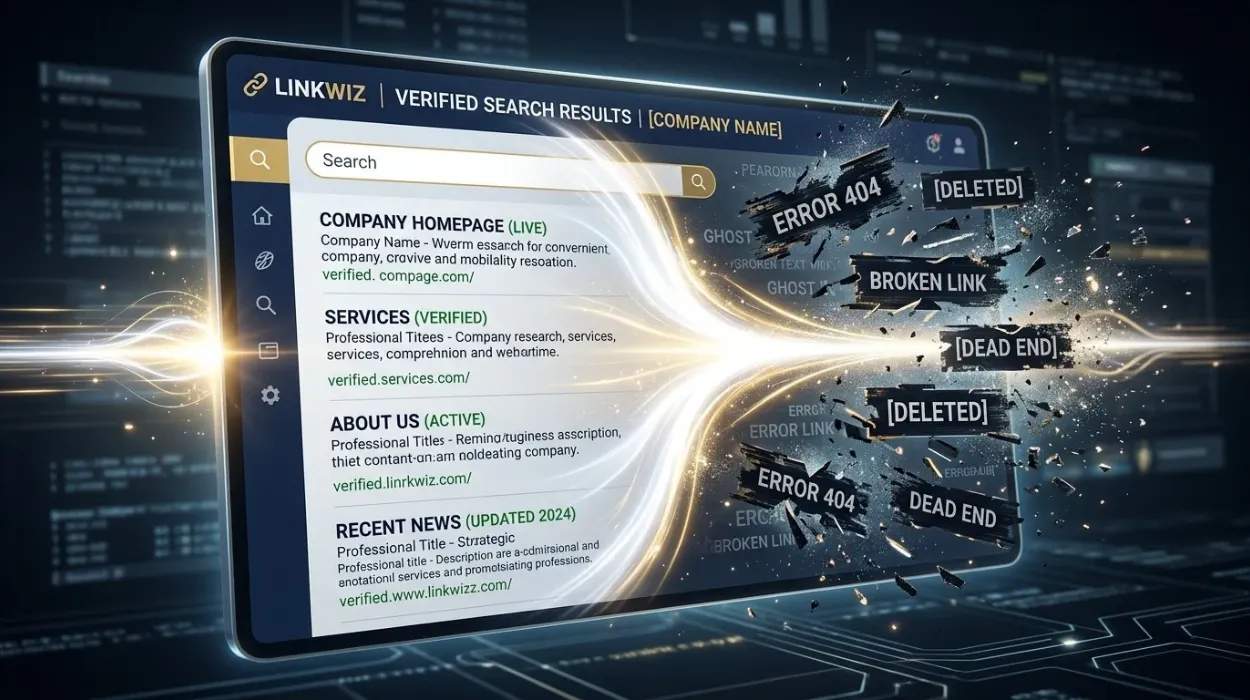
Dead Links Removal Services provide a structured way to address outdated search results that continue exposing deleted or unavailable web content.
Clear Your Name uses source-level analysis and search visibility management to reduce persistent dead links, strengthen SERP control and improve search perception.
Search visibility directly influences how people assess a person, company or organisation before making a decision. A deleted webpage that remains visible through a search result creates a reputation signal that no longer reflects the current digital footprint. The problem becomes more significant when the result contains negative, outdated or misleading information. Searchers often treat prominent results as evidence about an entity, even when the underlying page no longer exists. This disconnect between source availability and search visibility requires a structured removal process rather than repeated manual searches.
Why does a dead search result require professional removal?
A persistent dead result requires professional removal when the underlying page is unavailable but its search footprint continues affecting perception. Search engines maintain indexes that do not disappear at exactly the same moment as source content. A deleted webpage can therefore leave behind a URL, title, snippet or cached reference within search results. This creates a visibility problem because the search engine result remains part of the user’s information environment. Professional dead link removal focuses on resolving the relationship between the unavailable source and its remaining search representation.
The first stage involves identifying the exact result, its source status and its current search visibility. This distinguishes a genuine dead link from an active webpage, redirected URL, duplicate page or third-party copy. The distinction matters because each situation requires a different technical and search-based response. A removal request directed at the wrong source creates unnecessary delay and does not address the actual reputation signal. Accurate diagnosis therefore forms the foundation of reliable SERP control.
Search perception is shaped by what appears in the results, not solely by what remains available on a website. When a negative result occupies a visible position, users can encounter it before reaching current and accurate information. This creates an information imbalance between the entity’s present digital footprint and its historical search representation. A structured removal process addresses that imbalance by targeting the obsolete search reference. The objective is improved visibility control rather than simply deleting a URL from a personal browsing history.
How do Dead Links Removal Services improve SERP control?
Dead Links Removal Services improve SERP control by addressing obsolete search references at the source and search-index level. The process begins with URL identification, source verification and assessment of how the result is represented in search. It then determines the appropriate mechanism for addressing the dead result. This approach separates technical removal from broader negative content suppression because the underlying page is already unavailable. The resulting strategy focuses on removing an inaccurate search representation rather than attempting to alter legitimate active content.
A professional process also examines whether the dead result exists across different search queries and variations of the entity name. Search engines can associate historical URLs with names, brands, locations and other entity attributes. A result that disappears for one query can therefore remain visible for another. Search visibility analysis identifies these relationships and establishes the extent of the remaining search footprint. This provides a clearer measurement of the problem and prevents a narrow removal attempt from being treated as a complete resolution.
Effective SERP control also requires monitoring after the removal process. Search indexes update through crawling, processing and re-evaluation rather than through an instantaneous universal change. A reliable service therefore verifies whether the obsolete result remains indexed after the relevant process has been completed. This creates an auditable distinction between submitting a request and achieving a measurable search-result change. Process verification reduces uncertainty and provides a stronger basis for ongoing reputation management.
What makes professional dead link removal more reliable than manual removal attempts?
Professional dead link removal is more reliable because it begins with evidence, source verification and a defined resolution pathway. Manual attempts often focus on the visible search result without examining why it persists. That approach overlooks indexing status, duplicate URLs, redirects and alternative search representations. A structured service instead maps the result to its underlying source and identifies the appropriate search ecosystem mechanism. This reduces wasted effort and improves the precision of each removal action.
The evidence stage establishes whether the page is genuinely unavailable and whether the search result accurately reflects its current status. Screenshots, URL records, search-query evidence and source-status information provide a documented basis for the process. This evidence also helps distinguish a stale result from content that remains accessible elsewhere. Where third-party copies exist, those sources require separate assessment because removing one dead result does not automatically eliminate every associated reputation signal. Evidence-led analysis therefore improves both accuracy and risk management.
Reliability also depends on recognising the difference between source removal and search-result removal. Deleting content from a website addresses the underlying source, while search engines require their own processes to recognise that change. A dead link removal service works across this distinction rather than assuming that source deletion automatically produces immediate SERP changes. This is particularly important for businesses and professionals whose names carry strong entity credibility signals. The process becomes more dependable when every stage has a defined objective and verification point.
Which outcomes can Dead Links Removal Services deliver?
The measurable outcomes centre on reduced obsolete visibility, clearer search representation and stronger control over reputation signals. Removing a persistent dead result does not rewrite the entire search landscape, but it can eliminate a specific outdated reference that no longer represents the current digital footprint. This improves the accuracy of the information encountered by searchers. It also reduces the risk that users interpret unavailable historical material as current information. The value therefore comes from correcting a specific search visibility problem within the wider reputation ecosystem.
Key outcomes include:
- Remove obsolete search references by addressing URLs that remain visible after source content has disappeared.
- Reduce negative visibility by eliminating qualifying dead results that continue exposing outdated information.
- Improve SERP accuracy by aligning search representations with the current availability of source content.
- Strengthen entity credibility by reducing historical signals that conflict with accurate present-day information.
- Stabilise search perception by monitoring whether addressed results continue appearing across relevant queries.
These outcomes also support broader reputation management because search results function as reputation signals. A prospective customer, employer, partner or stakeholder can form an initial impression from the first results displayed for an entity. Removing an obsolete result does not manufacture positive information; it reduces an inaccurate or outdated element within the search environment. This distinction is important for responsible reputation management. The objective is a more accurate and controlled digital representation.
Is professional dead link removal worth the cost?
Professional dead link removal creates long-term value when a persistent search result repeatedly affects trust, visibility or decision-making. The financial cost needs to be assessed against the ongoing impact of an obsolete result rather than against the cost of submitting a single manual request. A persistent negative result can generate repeated reputational friction across customer research, recruitment, partnerships and commercial due diligence. Each search encounter represents another opportunity for outdated information to influence perception. Addressing the underlying visibility problem can therefore reduce a recurring source of reputational risk.
Cost assessment also depends on the complexity of the search footprint. A single confirmed dead URL presents a different workload from multiple variations connected to the same entity. Why Do Deleted Web Pages Continue to Appear in Google Search Results? This can occur because search engines may retain previously indexed information until they recrawl and update their databases. Source accessibility, indexing status, duplicate results and search-query behaviour all influence the required process. Clear evidence at the beginning prevents unnecessary actions and provides a clearer understanding of the work involved. This makes the investment easier to evaluate against the actual reputation-management problem.
The long-term value extends beyond one removal request when monitoring is incorporated into the process. Search environments change as pages are crawled, indexed, updated and replaced. A sustainable reputation strategy therefore treats removal as a controlled intervention followed by verification rather than a one-off assumption of success. This approach protects the accuracy of the search footprint over time. It also creates a stronger foundation for broader search perception influence where required.
How quickly can persistent ghost results be removed?

Removal speed depends on the source condition, search-engine processing and the specific removal pathway used. A dead result can be identified quickly, but identification does not mean that the search engine updates its index immediately. Search systems need to process the source status and refresh the relevant search representation. The correct objective is therefore measurable progress towards removal rather than an unsupported promise of an instant universal change. Clear Your Name approaches the issue through defined stages so that the status of the result remains identifiable throughout the process.
Speed also depends on whether the source has genuinely disappeared. If the page returns an unavailable status and no replacement source exists, the search ecosystem has a clearer basis for recognising that the result is obsolete. If a redirect, duplicate page or third-party copy remains, additional analysis becomes necessary. This is why source verification precedes removal action. It prevents time being spent on a search result whose underlying content continues to exist elsewhere.
The distinction between immediate action and durable resolution is central to reputation management. A temporary disappearance from one search query does not demonstrate complete removal from the search ecosystem. Verification across relevant queries provides a more meaningful measure of outcome. This process creates realistic expectations while maintaining a clear focus on search visibility control.
How does dead link removal reduce reputation risk?
Dead link removal reduces reputation risk by eliminating obsolete search references that can distort how an entity is perceived. Searchers commonly use visible information as an initial credibility signal when researching a business, professional or organisation. An outdated result can introduce uncertainty even when the original source has already disappeared. This creates a disconnect between factual source availability and perceived online presence. Removing the obsolete reference helps restore consistency between the current digital footprint and its search representation.
The risk reduction becomes stronger when dead-link removal forms part of a wider search perception strategy. For example, an entity can assess whether negative content remains through active sources, duplicate URLs or third-party publications. That assessment distinguishes a dead-result problem from an ongoing negative-content problem. Where active content remains, a different lawful and evidence-based approach is required. This prevents dead-link removal from being presented as a universal solution for every reputation issue.
For businesses, the commercial implications are particularly relevant. Search results influence how potential customers evaluate legitimacy, relevance and credibility before making contact. Persistent outdated material can therefore create avoidable friction in the customer journey. Reducing that friction supports clearer entity recognition and more accurate public perception without relying on artificial manipulation of legitimate search information.
Dive Deeper With Our Expert Guides:
Get a Harmful Google Image Removed in the UK With Our Privacy Removal Service
Remove Your Content From Google Cache With a UK Expert Who Handles This Daily
Why choose Clear Your Name for a structured dead link removal process?
Clear Your Name provides a structured reputation-management approach centred on evidence, search visibility analysis and outcome verification. The service begins by examining the relevant search result and determining the status of the underlying source. This establishes whether the issue qualifies as a dead-link problem and identifies the appropriate route for addressing it. The process then focuses on the search representation rather than making unsupported assumptions about rankings. This creates a clearer relationship between the action taken and the intended visibility outcome.
The service also fits within a broader reputation management framework where search perception, entity credibility and SERP control interact. A dead result can represent only one part of an entity’s search footprint, so its removal needs to be evaluated alongside active pages and other reputation signals. This prevents isolated URL removal from being mistaken for complete reputation repair. For users evaluating a service, that distinction demonstrates process maturity and reduces the risk of choosing an approach that does not address the underlying problem.
Before committing to a removal strategy, businesses can also examine understanding deleted pages in Google Search to establish why obsolete URLs continue appearing and what search-index behaviour means for removal decisions. Understanding Google Search caching and persistent ghost results can provide additional context when assessing why outdated information may remain visible after a page has been deleted or changed. This provides useful decision context before a service intervention begins. For users who have already identified a persistent ghost result, the next step is a documented assessment of the source, visibility and applicable removal pathway. The process remains focused on evidence rather than assumptions.
What should you expect from a reliable dead link removal service?
A reliable service provides a defined process, evidence-based action and measurable verification rather than an unsupported promise of instant results. The initial assessment identifies the URL, source condition, search visibility and reputation relevance. The removal stage then uses the appropriate mechanism for the specific search-result problem. Verification confirms whether the obsolete result continues appearing after processing. This creates a transparent chain between diagnosis, action and outcome.
A decision-ready process should provide:
- Assess the target URL and confirm its current source status before taking removal action.
- Document relevant search-result evidence so the visibility problem has a measurable baseline.
- Select the appropriate removal pathway based on indexing and source conditions.
- Monitor relevant search queries after action to identify continued visibility.
- Verify the resulting SERP changes and distinguish genuine removal from temporary disappearance.
This level of clarity reduces operational risk and helps clients understand what the service is actually addressing. It also prevents exaggerated expectations around search engines, where indexing changes follow their own processing systems. The result is a reputation-management process based on identifiable evidence and measurable search visibility. That foundation supports stronger trust in the service itself.
How can dead link removal support long-term search perception control?
Dead link removal supports long-term search perception control by keeping obsolete information from unnecessarily occupying the search landscape. Search perception develops through repeated exposure to information associated with an entity. When outdated results remain visible, they continue contributing to that perception even when their source no longer exists. Removing qualifying dead links helps ensure that searchers encounter information that better reflects the current digital environment. It therefore forms a targeted component of sustainable reputation management.
Long-term control also requires recognising that search results are dynamic. New pages can appear, old pages can change and search engines can reassess existing URLs. A one-time removal does not eliminate the need for responsible monitoring where reputation risk remains significant. Ongoing search visibility analysis identifies new issues before they become established reputation signals. This creates a more stable approach to entity credibility and digital trust.
For organisations facing persistent outdated results, the decision is ultimately about controlling an identifiable source of search risk through a transparent process. Clear Your Name combines source assessment, removal strategy and verification to address the specific problem presented by dead search results. The approach does not rely on unrealistic promises about controlling every search ranking. Instead, it focuses on correcting obsolete visibility, reducing reputational risk and strengthening the accuracy of the search footprint.
A persistent ghost result deserves a precise response because search visibility directly influences public perception. Dead Links Removal Services provide that response by connecting source verification, search-index action and measurable SERP monitoring. When the process is evidence-led and outcome-focused, businesses and individuals gain clearer visibility into what is being addressed, why the action is appropriate and whether the result has changed. That combination of reliability, process clarity and measurable search visibility makes professional dead link removal a practical component of modern reputation management.
Can dead links be removed from Google search results?
Dead links can sometimes be removed from Google search results when the original webpage has been permanently deleted or is no longer accessible. The outcome depends on whether the search result is genuinely outdated and how Google processes the removal request.
How long does it take to remove a dead link from Google?
The time varies depending on whether Google has already detected that the source page is unavailable. Temporary removal tools may act faster, while permanent changes to search results depend on Google recrawling and updating its index.
What is a dead link removal service?
A dead link removal service helps identify obsolete search results that point to deleted, unavailable, or permanently removed webpages. The process may involve assessing the source status, documenting the issue and using appropriate search-engine removal procedures.
Can Clear Your Name remove deleted pages from Google search results?
Clear Your Name can assess whether a deleted or unavailable webpage qualifies for a search-result removal process. The result depends on factors such as the page’s current status, Google’s index and the applicable removal mechanism.
What is the difference between removing a dead link and removing a live webpage?
Dead link removal concerns search results that lead to unavailable or deleted content, whereas live-page removal involves content that remains accessible online. The appropriate approach depends on the source page’s status and the reason for requesting removal.




