Personal listings can be removed from websites by requesting deletion from the publisher or data controller and addressing indexed search results separately. Search engines generally index publicly available information rather than hosting the original personal listing.
Reputation management is the process of understanding and influencing how information about a person or entity appears and is interpreted across digital environments. Online reputation refers to the collective perception created by indexed content, profiles, reviews, references, and other reputation signals associated with an identifiable person or entity.
What Are Personal Listings On Websites And Search Engines?
Personal listings are web pages or database records that publish identifiable information about an individual. A personal listing refers to information such as a name, address, telephone number, email address, employment information, professional details, or other identifying attributes presented through an online directory, profile, database, or public webpage.
The original website controls the publication of the listing, while a search engine controls how that webpage is discovered, indexed, and displayed in search results. This distinction defines two separate parts of the removal process. Removing information from a source website affects the underlying content, while removing a search result affects its visibility within a search engine’s index. A page can therefore disappear from a website while remaining temporarily visible in search results until indexing systems process the change.
Personal listings also form part of an individual’s digital footprint. A digital footprint refers to the collection of information associated with an individual across online systems. Search engines connect these information points through names, locations, organisations, URLs, structured data, and other entity signals.
How Does Personal Information Become Visible In Search Results?
Personal information becomes visible in search results when a publicly accessible webpage is discovered, crawled, indexed, and evaluated for relevance. Search engines analyse accessible content and create representations of pages within their indexes. When a user submits a query containing a person’s name or related identifying information, the search engine evaluates indexed documents against that query.
Content indexing is the process through which information from accessible webpages becomes available to a search engine’s retrieval system. Crawling discovers webpages, indexing processes their content, and ranking systems determine which indexed pages appear for particular searches. Personal information therefore enters search visibility through a technical sequence rather than through the search result page itself.
Search visibility also depends on how information relates to an identifiable entity. A person’s name functions as an entity identifier when search systems associate it with webpages, profiles, organisations, locations, images, reviews, or other references. Consistent information across sources strengthens the association between content and the relevant entity, making that information easier for retrieval systems to connect with name-based searches.
How Do Search Engines Evaluate Personal Listings?
Search engines evaluate personal listings through relevance, content signals, page characteristics, authority indicators, and the relationship between the query and indexed information. SERP evaluation refers to the process through which a search engine determines which indexed documents satisfy a user’s query and how those documents are ordered.
A personal listing can receive search visibility when its content has a strong relationship with the search query. A page containing a person’s complete name in its title, headings, body content, structured data, or URL provides explicit relevance signals. Additional references from other websites can reinforce the relationship between the webpage and the identified person.
Authority and trust signals also influence how search systems evaluate content. Authority refers to signals associated with the reliability, prominence, and usefulness of a source within a particular information environment. Trust-related signals include the quality of the source, consistency of information, established relationships between entities, and other signals used by search systems to assess content quality.
Search ranking does not represent a definitive judgement about a person’s character or credibility. Ranking systems primarily organise information according to relevance and other measurable signals. Consequently, a highly visible listing represents search visibility for a particular query rather than an objective assessment of the individual described by the page.
Why Do Personal Listings Affect Online Reputation?
Personal listings affect online reputation because search results influence which information users encounter when researching an identifiable person. Online credibility refers to the perceived reliability of an individual or entity based on available digital information and associated reputation signals.
A listing containing outdated, incomplete, or inaccurate information introduces a particular representation of the person into the search ecosystem. When that representation ranks prominently for a name-based query, it becomes part of the information environment surrounding the entity. Users then encounter the listing alongside professional profiles, news coverage, reviews, social accounts, and other indexed sources.
The effect depends on the information contained in the listing and its position within the SERP. A neutral directory record has a different reputational function from a page containing sensitive personal information, inaccurate claims, or negative associations. Search perception therefore depends on the relationship between content, visibility, context, and the identity of the person being searched.
Reputation signals accumulate across sources rather than originating from a single webpage. Search engines process relationships between documents and entities, while users interpret those documents through their own evaluation of credibility and relevance. Removing or changing one listing therefore changes one component of the broader digital footprint rather than automatically altering the entire search ecosystem.
How Do Reviews And Sentiment Influence Search Reputation?

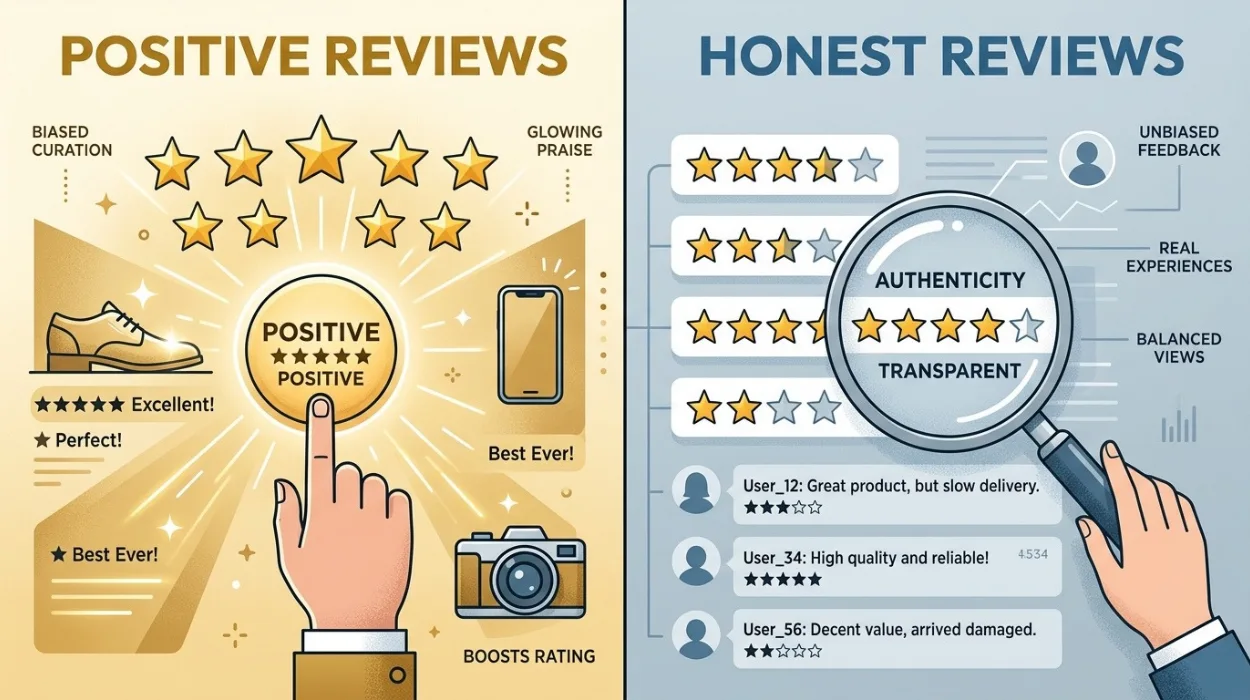
Reviews influence search reputation by providing publicly accessible signals about experiences, opinions, products, organisations, or individuals associated with a searchable entity. Review signals refer to information derived from review content, ratings, reviewer activity, relevance, and contextual relationships within a review ecosystem.
Sentiment interpretation analyses language associated with positive, negative, or neutral expressions. Search systems can process textual characteristics and contextual information, but sentiment classification does not establish whether an individual claim is factually correct. A negative review therefore functions as a piece of indexed content rather than definitive evidence about the entity it discusses.
Review visibility also depends on the authority and relevance of the source publishing the review. A review page with strong relevance to a branded or personal query has greater potential to enter the visible search landscape. Search results then present reviews alongside other content, allowing users to compare multiple reputation signals.
The reputational effect of reviews is therefore connected to both content and visibility. Sentiment becomes more significant when users encounter it frequently or prominently in searches associated with an entity. Search reputation analysis examines these relationships rather than treating individual reviews as isolated reputation measurements.
How Can A Personal Listing Be Removed From A Website?
A personal listing can be removed from a website when the publisher or responsible data controller deletes the underlying record. The removal process begins with identifying the exact source URL, determining who controls the information, and establishing what information the page publishes.
The source webpage is the primary object of removal because it contains the original information. A request directed at the publisher addresses the content itself rather than merely its appearance in search results. Where privacy, data protection, accuracy, or another applicable legal basis is relevant, the appropriate removal or correction process depends on the circumstances and jurisdiction.
Deletion also affects search visibility over time because search engines periodically recrawl webpages. Once the underlying content is removed, the search engine receives a new version of the page or encounters a non-existent resource. Its index then requires updating before the previous information fully disappears from search results.
Website removal and search-result removal therefore represent separate technical and administrative processes. Understanding this distinction prevents the mistaken assumption that contacting a search engine automatically deletes the information from the original website.
What Happens To Search Results After A Personal Listing Is Deleted?
After a personal listing is deleted, search visibility changes when search engines discover and process the updated state of the source page. The original URL can return a different response, redirect elsewhere, display replacement content, or become unavailable.
Search engines use crawling systems to revisit webpages and update indexed representations. If the source no longer contains the personal information, subsequent indexing reflects the changed content. Search results can therefore change after the source has been removed, although the timing depends on crawling and indexing processes.
Cached or previously processed information does not necessarily disappear at the same moment as the source webpage. Search systems maintain large indexes containing representations of webpages, and those representations require processing when source content changes. This explains why an obsolete listing can remain visible for a period after website-level removal.
The search result itself is therefore a representation of indexed information rather than the original data source. Effective analysis separates source-level availability from index-level visibility. This distinction is central to understanding how personal information moves through search ecosystems.
What Is The Difference Between Website Removal And Search Removal?
Website removal eliminates or changes information at its original online source, while search removal addresses the visibility of a result within a particular search engine. These processes target different layers of the digital information ecosystem.
Source removal affects the webpage, database entry, profile, or directory record. Search removal affects retrieval for particular queries or search environments. A search result can therefore become unavailable while the source information remains online, just as source content can be deleted while an outdated indexed result remains temporarily visible.
This distinction also affects reputation analysis. Removing a source reduces the availability of the information itself, whereas reducing search visibility changes how easily users discover that information through a search engine. Both conditions form part of the wider relationship between digital footprint and search perception.
The distinction is particularly relevant to personal privacy because information can exist across multiple websites. Removing one listing does not automatically remove copies, references, syndicated records, or independent publications elsewhere. Each source represents a separate information object within the digital ecosystem.
How Does Personal Data Removal Relate To Digital Footprint Management?
Personal data removal relates to digital footprint management because deleting unnecessary public information changes the amount and type of information associated with an individual online. Digital footprint management refers to understanding, reviewing, and controlling publicly available information connected with an identifiable person or entity.
A digital footprint contains both information deliberately published by an individual and information published by third parties. Professional profiles, public directories, social accounts, reviews, news articles, forum references, and database records can all contribute to the searchable representation of an entity.
Effective analysis begins by identifying the information sources rather than focusing exclusively on individual search results. Mapping URLs, publishers, data fields, duplicate records, entity references, and indexing status provides a clearer picture of how information is distributed. This approach treats reputation as an interconnected information system.
Personal privacy removal therefore operates within a broader digital footprint framework. The objective of analysis is not simply to count search results but to understand which sources contain personal information, how those sources are connected, and how search engines expose them to users.
Dive Deeper With Our Expert Guides:
Online Data Erasure Services for Privacy Control
Remove Private Documents from Search Results
How Should Personal Listings Be Analysed Before Removal?
Personal listings are best analysed by identifying their source, content, ownership, indexing status, and relationship to the relevant entity. This creates a factual record of where personal information exists and how it enters search visibility.
- Identify the exact webpage and publisher, because the original source determines where the information is controlled and how removal is addressed.
- Classify the information published, because names, contact details, addresses, professional records, photographs, reviews, and other data have different informational and privacy characteristics.
- Evaluate search visibility, because an indexed listing appearing for a person’s name has a different search impact from an inaccessible or non-indexed record.
- Check duplication across sources, because syndicated or replicated information can remain available through independent webpages after one listing is removed.
- Document the relationship between source content and search queries, because SERP evaluation depends on how closely indexed information corresponds with the entity being searched.
This analysis creates a structured view of the digital footprint. It also separates factual source information from assumptions about reputation, ensuring that search visibility is evaluated through observable content and indexing behaviour.
What Role Does Personal Data And Privacy Removal Play In Search Reputation?
Personal Data & Privacy Removal refers to the process of addressing publicly available personal information across online sources where an applicable basis for removal, restriction, correction, or de-indexing exists. Within reputation systems, this activity relates to the information layer that contributes to an individual’s searchable digital footprint.
The concept is broader than deleting a single search result because personal information can exist at source level, index level, and across duplicate or connected sources. Analysing these layers establishes whether information remains available, indexed, or associated with a particular entity.
Privacy-related removal also differs from reputation manipulation. Privacy removal focuses on the handling and visibility of personal information, whereas reputation analysis examines how information contributes to search perception and entity representation. Keeping these concepts separate maintains an objective understanding of digital trust systems.
The connection between privacy and reputation therefore operates through information availability. When personal information enters search ecosystems, it becomes part of the observable digital footprint. Understanding how that information is published, indexed, retrieved, and interpreted provides the basis for analysing its role in online reputation.
What Are The Key Principles Of Removing Personal Listings From Search?
Removing personal listings requires understanding the distinction between the original source and the search index. The underlying webpage, its publisher, its content, and its indexing status each represent separate elements of the information ecosystem.
Search reputation is formed through the interaction of content, visibility, entity associations, authority signals, reviews, and user interpretation. A single listing does not independently define an individual’s online reputation, but its position within search results determines how prominently users encounter that information.
Personal listings therefore need to be understood as components of a wider digital footprint. Source removal addresses the underlying publication, while search-related processes address how indexed information is presented to users. Accurate analysis of both layers provides a more complete understanding of personal information within search ecosystems.
What Does Removing Personal Listings Mean For Online Reputation?
Removing personal listings from websites and search results involves two connected but distinct processes: addressing information at its original source and addressing how that information is indexed and displayed by search engines. Website deletion changes the underlying content, while search visibility changes when indexing and retrieval systems process the updated information.
Reputation management is concerned with how these information sources contribute to entity perception and online credibility. Search engines organise information through relevance, authority, content, and other reputation signals, while users interpret the resulting SERPs according to context and available evidence. Understanding content indexing, search visibility, review signals, and digital footprints provides a factual framework for analysing personal information online.
Personal listing removal is therefore best understood as an information-management process within a larger search ecosystem. Separating source publication, indexing, ranking, and user perception creates a clearer model of how personal information becomes visible and how changes to that information affect the searchable representation of an individual.
How can I remove personal listings from websites and search results?
Start by identifying the website hosting the personal listing and request removal or correction from the relevant publisher or data controller. Search-result visibility is a separate issue, so search engine removal processes can also apply in specific circumstances.
Can personal information be removed from Google search results?
Personal information can be removed from search results in circumstances that meet the search engine’s applicable removal criteria. Removing a result from search does not necessarily delete the underlying information from the original website.
How do I remove my name and address from online directories?
Identify each directory publishing the information and use its privacy, removal, opt-out, or correction process where available. Removing the source listing is important because search engines can continue displaying indexed information until their results are updated.
Does removing a website listing remove it from search engines?
Not immediately. Once the source webpage is deleted or changed, search engines need to recrawl and reprocess the page before the outdated listing disappears from their index.
What is Personal Data & Privacy Removal?
Personal Data & Privacy Removal refers to addressing publicly available personal information on websites and search platforms where an appropriate removal, restriction, correction, or de-indexing process applies. It can involve information such as names, addresses, contact details, photographs, or other identifying data.