A combined Indeed and Glassdoor ORM strategy evaluates employer reputation across two major review environments rather than treating each platform as an isolated source. It combines review monitoring, response management, content assessment, search visibility analysis and longer-term reputation development.
Reputation management strategies differ based on the source, visibility, sentiment, content characteristics and search behaviour surrounding an employer. Online reputation control methods are evaluated through their effect on reputation signals, SERP composition, entity credibility and the persistence of employer-related content.
Why does a combined Indeed and Glassdoor ORM strategy differ from managing one platform?
A combined strategy differs because Indeed and Glassdoor generate distinct reputation signals within the wider employer information ecosystem. Indeed is strongly associated with job searches, company information and employee reviews, while Glassdoor provides extensive employer-review and workplace information alongside salary and interview-related content. Treating both platforms as equivalent creates gaps in monitoring because the same employer can receive different types of feedback across each environment. A combined approach therefore maps the relationship between platform-specific content and the wider search presence of the employer. The objective is not to create identical profiles across platforms but to understand how each source contributes to overall perception.
Platform-level monitoring operates by identifying new reviews, recurring themes, ratings, responses and changes in visibility. This process provides a structured record of reputation signals instead of relying on occasional manual searches. A review with limited platform visibility has a different search-risk profile from a review that appears for branded employer queries. Monitoring therefore connects platform activity with search behaviour, allowing reputation analysis to distinguish between content that exists and content that actively influences perception.
How should employers compare Indeed and Glassdoor reputation signals?
The comparison becomes more useful when each platform is assessed according to content type, visibility, sentiment distribution and relevance to candidate decision-making. Indeed review signals frequently sit within an employment-search context, while Glassdoor contains a broader collection of workplace experiences, ratings, salaries and interview information. The same criticism therefore carries different contextual meaning depending on where it appears. A complaint about management, for example, contributes to an employer reputation profile on both platforms but interacts with different surrounding information. Comparing these signals reveals whether a reputation issue is isolated to one source or represents a recurring theme.
Search visibility adds another layer to the evaluation. Search engines organise employer-related pages according to relevance, authority, query intent and other ranking signals rather than simply reproducing platform ratings. A highly visible review page can therefore influence the information environment surrounding branded searches without the review itself determining rankings. Analysis focuses on which pages appear, what information those pages contain and how prominently they occupy the SERP. This distinguishes platform reputation from search reputation while showing how the two systems interact.
What should a platform comparison measure?
A structured comparison measures factors that reveal both immediate exposure and longer-term reputation risk:
- Compare review sentiment by platform to identify whether negative themes are concentrated on Indeed, Glassdoor or distributed across both.
- Measure branded-search visibility to determine which review pages appear for employer-name and employer-related queries.
- Analyse recurring subjects such as management, workload, pay, culture and progression to distinguish isolated complaints from repeated themes.
- Track review frequency and rating changes to identify shifts in sentiment distribution over time.
These measurements create a more useful reputation baseline than relying on a single star rating. They also provide evidence for deciding whether the appropriate response involves content assessment, engagement, search optimisation or broader reputation development.
Is content removal more effective than content creation for employer ORM?
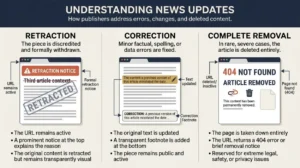
Content removal and content creation address different mechanisms, so effectiveness depends on the reputation problem being evaluated. Removal focuses on reducing or eliminating a specific source of negative information where a legitimate policy, legal or platform-based basis exists. Content creation and enhancement operate differently by increasing the visibility and relevance of favourable or informative assets. Neither mechanism universally replaces the other because removal addresses source-level exposure while enhancement addresses the composition of search results.
Removal strategies operate at the publication layer rather than the ranking layer. When content qualifies for removal under an applicable platform policy or legal framework, eliminating the source can prevent that specific page from continuing to generate the same reputation signal. This approach has a direct relationship with the problematic content but depends on eligibility and platform processes. Content that does not meet removal criteria remains part of the information ecosystem and requires a different management mechanism.
Content enhancement operates through the development, optimisation and distribution of legitimate information that provides stronger contextual signals around an employer entity. This approach does not erase existing reviews or suppress information through artificial means. Instead, it contributes additional search-visible assets that help create a broader SERP composition. Its effect depends on content quality, relevance, authority, indexing and sustained publishing activity.
How does organic reputation management compare with reactive review management?
Organic reputation management develops the wider information environment over time, whereas reactive review management responds to individual reputation events. Organic activity includes publishing authoritative employer information, strengthening owned digital assets and maintaining consistent entity information across relevant sources. Reactive management includes monitoring new reviews, assessing policy issues, responding to legitimate criticism and addressing content that violates applicable rules. Each method operates at a different point in the reputation lifecycle.
Reactive management has a shorter operational cycle because it responds to identifiable events. Its value comes from limiting unresolved reputation issues and preventing individual content from becoming disconnected from the employer’s broader information environment. Organic management has a longer time horizon because search visibility and content authority develop through continued publication and indexing. The distinction between the two is therefore not simply speed but mechanism.
A combined Indeed and Glassdoor strategy uses reactive monitoring to identify immediate reputation signals while organic activity develops the broader search ecosystem. This structure reduces dependence on a single intervention. It also provides a clearer distinction between addressing an individual review and improving the wider composition of employer-related search results.
Dive Deeper With Our Expert Guides:
How HR Teams Should Document Evidence for Indeed Removal
How to Report an Indeed Review That Breaches Confidentiality
How do short-term and long-term ORM strategies differ?
Short-term ORM focuses on immediate exposure, while long-term ORM focuses on the sustainability of reputation signals across changing search conditions. Short-term activity includes identifying prominent reviews, assessing removal eligibility, responding to legitimate feedback and correcting inaccurate employer information. Long-term activity involves strengthening authoritative assets, maintaining accurate company information and developing a consistent digital presence. The two timeframes measure different outcomes and therefore require different performance indicators.
Short-term effectiveness is evaluated through changes in exposure, response activity, content status and search-result visibility. Long-term effectiveness is evaluated through sustained SERP composition, sentiment distribution, content diversity and the stability of positive or neutral reputation signals. A temporary improvement in branded search results does not establish a durable reputation change. Sustainable reputation management requires continued monitoring because new reviews, indexed pages and external discussions continuously alter the information environment.
For Indeed and Glassdoor, this distinction is particularly relevant because review content continues to accumulate. A strategy focused exclusively on existing negative reviews does not address future reputation signals. A sustainable framework therefore combines immediate issue assessment with ongoing monitoring and content development.
How do search engines interpret Indeed and Glassdoor reputation signals?

Search engines interpret pages rather than simply assigning an employer a single reputation score. They evaluate content according to systems that consider relevance, quality, authority, user intent and other ranking factors. Indeed and Glassdoor pages can therefore become part of the SERP composition when they match employer-related searches. Their presence contributes information to the search environment without establishing that search engines independently endorse the opinions expressed within reviews.
Entity credibility develops from the consistency and quality of information associated with an organisation across relevant sources. Search engines encounter employer names, company descriptions, review pages, news coverage, professional profiles and owned content as separate information objects. The relationship between these objects contributes to how an entity is represented in search. ORM analysis therefore examines the entire information structure rather than treating one review platform as the complete reputation profile.
Search ranking influence also differs from perceived reputation influence. A page can have limited ranking prominence while still affecting candidates who visit the platform directly. Conversely, a highly visible page can become a significant component of branded-search perception even when its underlying content represents one individual experience. Separating these effects prevents reputation analysis from confusing search position with the substantive credibility of a claim.
Which ORM approach is more scalable across Indeed and Glassdoor?
Scalability depends on whether the process can consistently monitor, classify and prioritise reputation signals across both platforms. Manual review checking provides detailed contextual understanding but becomes resource-intensive as review volume increases. Structured monitoring systems improve scalability by categorising reviews according to sentiment, topic, visibility and urgency. The resulting workflow allows attention to focus on reputation signals with greater potential search or perception impact.
Scalable ORM also requires a common evaluation framework. Without consistent criteria, Indeed and Glassdoor data becomes difficult to compare because each platform presents reviews and ratings through different interfaces. A common framework can assess source authority, review visibility, sentiment, policy relevance, search presence and recurring themes. This creates comparable data while preserving the differences between platforms.
Automation has practical limits because reputation content requires contextual interpretation. Automated systems can identify phrases, sentiment and changes in volume, but policy eligibility, factual disputes and reputational significance require human assessment. A scalable model therefore combines automated detection with structured human evaluation rather than treating automated sentiment classification as a complete reputation assessment.
What risks exist when combining Indeed and Glassdoor ORM methods?
Risk exposure increases when reputation management treats platform content as interchangeable or assumes that removing one page resolves a wider reputation issue. Each platform has its own policies, review structures and moderation mechanisms, creating different constraints around responses and removal requests. A strategy that relies exclusively on removal also carries a sustainability risk because new reputation signals continue to emerge. A strategy focused exclusively on content enhancement can leave highly visible problematic material unaddressed.
Another risk involves overreacting to isolated negative feedback. A single critical review does not automatically establish a broader employer reputation pattern. Sentiment distribution becomes more meaningful when assessed across review volume, recurring subjects, review dates and independent sources. This prevents individual statements from being treated as representative evidence without contextual analysis.
Search-risk assessment also requires attention to persistence. Indexed pages can remain discoverable after an employer has addressed the underlying issue, while new pages can enter search results through future publication and discussion. ORM therefore evaluates both current visibility and the mechanisms that can generate additional reputation signals.
How can a combined strategy balance removal and content enhancement?
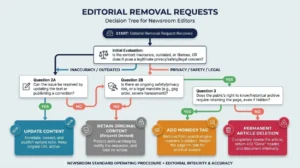
A balanced strategy begins by classifying each reputation issue according to its source, legitimacy, visibility and strategic relevance. Content that breaches applicable policies receives a different treatment from legitimate criticism, while accurate but negative information requires a different response from demonstrably false claims. This classification prevents removal from becoming the default response to unfavourable information. It also establishes a clearer relationship between source-level intervention and search-level reputation development.
The evaluation process can follow a defined sequence:
- Classify each review according to factual accuracy, policy relevance, sentiment and potential search visibility.
- Assess removal eligibility where the content appears to breach an applicable platform rule or legal requirement.
- Compare the affected page with the employer’s wider Indeed, Glassdoor and branded-search presence.
- Develop authoritative content where the search ecosystem lacks sufficient accurate and useful employer information.
- Monitor subsequent SERP composition, review activity and sentiment distribution to measure sustained change.
This framework separates content suppression from content enhancement while allowing both mechanisms to operate within one ORM system. It also creates measurable checkpoints for evaluating effectiveness, risk exposure and sustainability.
What does a sustainable Indeed and Glassdoor ORM strategy look like?
A sustainable strategy combines platform monitoring, search analysis, legitimate content management and continuous measurement. It does not rely on a single intervention because employer reputation changes as new reviews, pages and discussions enter the digital ecosystem. The core system tracks both source-level developments and search-level outcomes. This provides a consistent basis for comparing reputation signals over time.
Sustainability also depends on maintaining accurate entity information. Company descriptions, employer profiles, professional information and owned content need consistency so that search engines and candidates encounter a coherent representation of the organisation. Consistency does not mean controlling every external opinion. It means ensuring that authoritative information remains available alongside independent third-party content.
The long-term objective is therefore a balanced information environment rather than the elimination of criticism. A combined strategy evaluates the legitimacy of individual content, the visibility of reputation signals and the composition of the wider SERP. Where removal is appropriate, it addresses source-level exposure; where content remains legitimate, enhancement and broader information development provide a separate mechanism for managing search perception.
How should the effectiveness of a combined ORM strategy be evaluated?
Effectiveness is evaluated through measurable changes in visibility, sentiment distribution, content persistence and search-result composition. Review ratings alone provide an incomplete measurement because they do not reveal which pages candidates encounter or how frequently specific reputation themes appear. A stronger assessment compares baseline and subsequent data across both platforms and branded search results. This creates a clearer relationship between ORM activity and observable changes in the digital information environment.
Useful indicators include the visibility of Indeed and Glassdoor pages, the frequency of recurring negative themes, the distribution of positive and neutral information, the status of eligible removal requests and the presence of authoritative employer assets. These indicators measure different dimensions of reputation rather than collapsing them into one score. Search ranking influence can then be assessed alongside platform-level sentiment and content persistence. Build a Combined Indeed and Glassdoor ORM Strategy With Us to apply these measures within a structured reputation management process. The result is a multi-dimensional evaluation model.
A combined Indeed and Glassdoor ORM strategy therefore works best as an ongoing measurement system rather than a one-time reputation intervention. Its effectiveness depends on matching the method to the type of reputation signal, distinguishing source-level removal from search-level enhancement and maintaining continuous visibility analysis. The strategic considerations remain centred on effectiveness, scalability, risk exposure and sustainability rather than on any single platform metric.
What is a combined Indeed and Glassdoor ORM strategy?
A combined Indeed and Glassdoor ORM strategy manages employer reputation across both platforms rather than treating each review site separately. It typically combines review monitoring, policy-based content assessment, response management, and search reputation analysis.
How can employers manage negative reviews on Indeed and Glassdoor?
Employers can assess negative reviews against each platform’s review policies and identify content that qualifies for reporting or removal. Where removal is unavailable, reputation management can focus on accurate responses, credible positive signals, and reducing the visibility of damaging content.
Can Indeed and Glassdoor reviews affect an employer’s online reputation?
Yes. Reviews on Indeed and Glassdoor can appear in branded searches and influence how prospective employees perceive an organisation. Their impact depends on factors such as review content, search visibility, recency, volume, and the surrounding reputation signals.
What does Indeed and Glassdoor review monitoring involve?
Review monitoring involves tracking new reviews, ratings, recurring complaints, policy issues, and changes in overall sentiment across both platforms. A structured monitoring process helps identify reputation risks early and supports consistent responses to employee feedback.
Can Clear Your Name manage reputation issues across Indeed and Glassdoor?
Clear Your Name can be used as part of an ORM approach that addresses reputation issues across Indeed and Glassdoor. The process can include reviewing problematic content, identifying applicable platform policies, managing removal requests where appropriate, and strengthening the wider search reputation.