
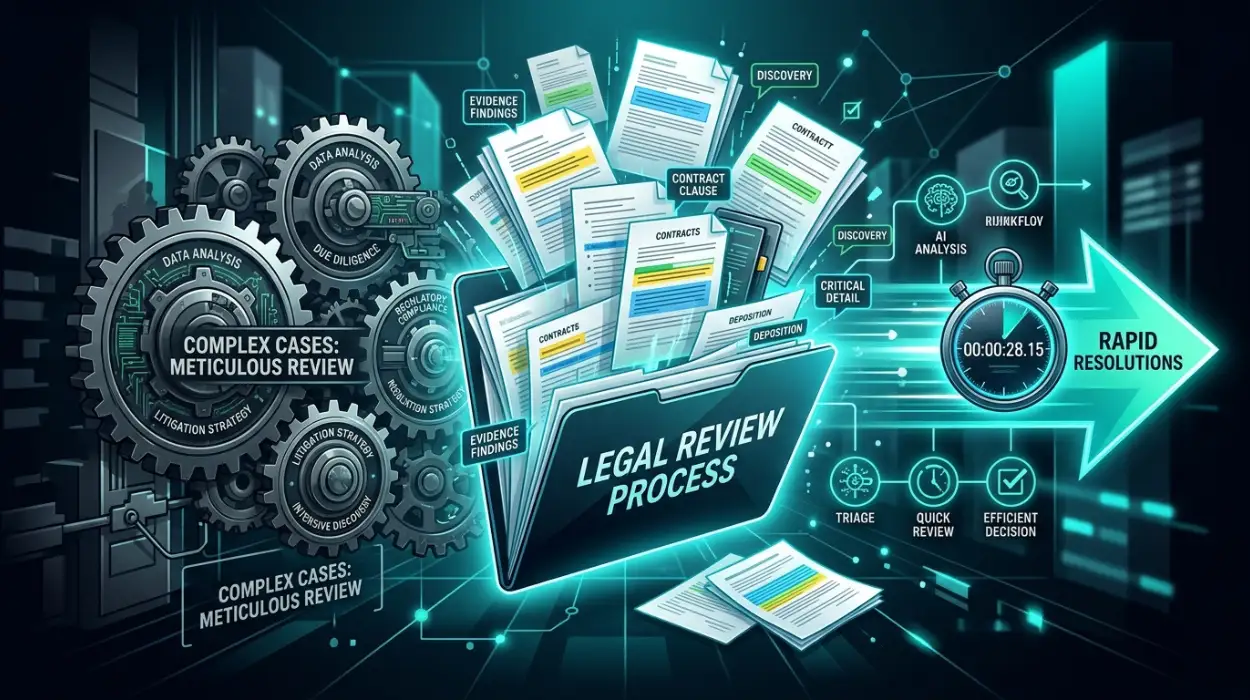
Indeed response times for removal requests depend on the quality of the report, the evidence supplied, the nature of the alleged policy issue, and the complexity of the review. Reputation management strategies differ based on whether the objective is source removal, search visibility control, or broader reputation repair.
Online reputation control methods are evaluated through their ability to address the underlying information while limiting unnecessary search and perception risks. A removal request is a source-level intervention, whereas search suppression and content enhancement operate within the wider search ecosystem. Understanding these differences helps determine which approach is proportionate to the problem.
What factors affect the speed of an Indeed removal request?
The strongest determinants of response speed are report clarity, evidence quality, policy relevance, and the complexity of the disputed content. An Indeed removal request is easier to evaluate when it identifies the exact review, explains the specific concern, and provides evidence supporting the allegation. A vague complaint creates a broader assessment requirement because the platform has less information with which to establish the relevant issue. Evidence therefore functions as an assessment mechanism rather than simply supporting a user’s preferred outcome.
Reputation signals operate differently from platform moderation signals. A review can influence perceptions of an employer or organisation while still complying with platform rules. Its negative sentiment does not independently establish grounds for removal. The critical distinction is between disagreement with the content and evidence that the content breaches an applicable requirement.
How does evidence quality compare with the wording of a removal request?
Evidence quality provides a stronger basis for evaluation than persuasive wording. A concise request that identifies a verifiable issue gives a moderation process a defined subject to assess. A lengthy request containing unsupported allegations adds volume without necessarily adding useful evidence. The most effective documentation therefore connects each allegation with a specific factual basis.
This distinction also applies to reputation management analysis. Reputation repair methods focus on the mechanism producing the reputational concern rather than treating negative sentiment as a problem in itself. If the source contains demonstrably inaccurate or prohibited information, removal addresses the underlying source. If the content remains permissible but ranks prominently, content enhancement or search visibility strategies represent a different mechanism.
Does the type of policy concern affect Indeed response speed?
The type of reported issue directly affects the complexity of the assessment. A clearly identifiable policy concern provides a narrower evaluation path than a dispute requiring interpretation of context, authenticity, employment relationships, or factual accuracy. A report therefore does not receive a predictable response period simply because it concerns a negative review. The substance of the allegation determines the information required for assessment.
This creates an important distinction between content removal and content suppression. Content removal attempts to change the availability of the original source, while suppression focuses on reducing the prominence of information within search results. The two approaches address different mechanisms and produce different measurement criteria. Removal is measured through source status, whereas suppression is evaluated through changes in SERP composition and search visibility.
How does a complete report compare with a reactive removal request?
A complete report provides a structured factual basis before the request is submitted, while a reactive request often develops after a review has already gained visibility. Preparation improves the consistency of the information available for assessment. A complete record includes the review URL, publication details, disputed statements, relevant evidence, and the specific basis for the complaint. This creates a traceable relationship between the reported content and the requested action.
Organic reputation management takes a different approach by developing authoritative and relevant information over time. Content enhancement does not depend on a single moderation decision and instead operates through the accumulation of credible digital assets. Reactive removal addresses an identified source problem, while organic activity addresses the broader distribution of reputation signals. Comparing these approaches requires measuring source-level resolution against longer-term SERP influence.
Is review removal more effective than search-result suppression?
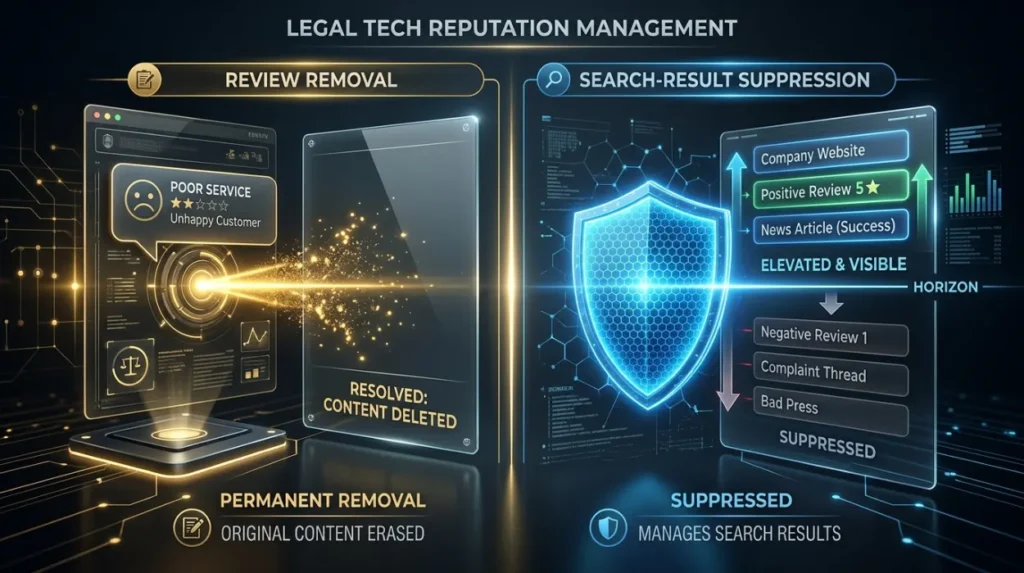
Review removal is more direct when the underlying content has a valid basis for removal. It addresses the originating source rather than attempting to alter the relative prominence of that source. Search-result suppression operates at the visibility layer and does not necessarily change the original content. The appropriate mechanism therefore depends on whether the core issue is eligibility for removal or excessive search visibility.
Search engines independently crawl, index, and rank online content. A platform-level removal decision does not guarantee that every historical representation disappears from search results immediately. Conversely, a page that remains available can experience lower search visibility without being removed from its source. This separation makes source status, indexing status, and ranking position distinct reputation metrics.
How does search indexing affect the apparent response time?
Search indexing can create a delay between a platform decision and a visible change in search results. When source content changes, search engines need to discover and process that updated state before their indexes reflect it. The resulting SERP change therefore represents a separate technical stage from the original moderation response. Measuring only the time between submitting a request and observing Google results can therefore produce an inaccurate assessment of platform responsiveness.
Search ranking influence also depends on the wider information environment. Other pages referencing the review, copied material, discussions, profiles, or cached representations can continue contributing to search perception. Entity credibility is consequently evaluated through a broader collection of indexed sources rather than one URL alone. A complete reputation assessment separates the original review from related content within the digital footprint.
Dive Deeper With Our Expert Guides:
How to Use GDPR to Remove Personal Data From Indeed
How to Build a Defamation Case Around an Indeed Review
Which approach provides better long-term reputation stability?
Long-term stability comes from addressing the underlying source issue while monitoring the surrounding information ecosystem. Removal provides a direct intervention when content qualifies for removal, but it does not automatically address independent references or unrelated negative material. Organic content enhancement creates additional reputation signals that continue influencing the entity’s digital footprint. Combining source-level evaluation with sustained search monitoring provides a broader measurement framework.
Short-term and long-term objectives therefore require different metrics. Short-term evaluation measures report status, source availability, and initial visibility changes. Long-term evaluation measures SERP composition, sentiment distribution, authority signals, and the persistence of relevant information. This distinction prevents a temporary ranking change from being treated as permanent reputation recovery.
How does cost compare between removal and broader reputation management?
Cost evaluation depends on the mechanism being used and the complexity of the information ecosystem. A single source-level issue requires a narrower investigation than a reputation problem involving multiple platforms, duplicated information, and persistent search visibility. Removal-focused work concentrates resources on evidence, policy analysis, and source intervention. Broader reputation management requires ongoing content development, monitoring, and SERP evaluation.
The long-term value of either approach depends on whether it resolves the actual source of risk. Investing in suppression when content qualifies for legitimate removal creates an inefficient mechanism mismatch. Attempting removal when the content does not meet removal criteria creates the same problem in reverse. Effective strategic evaluation therefore begins with eligibility and source analysis before selecting an intervention.
How can an Indeed removal request be evaluated systematically?
A structured evaluation framework compares the evidence, intervention mechanism, response stage, and resulting search visibility. This makes the process measurable rather than relying on assumptions about response speed.
- Identify the exact review and document its URL, publication date, rating, and current visibility.
- Verify the disputed information against available evidence and the relevant content requirements.
- Classify the issue as a potential removal matter, search-visibility matter, or broader reputation concern.
- Submit a precise report that connects the identified issue with supporting evidence.
- Monitor the platform response and record any source-level changes.
- Evaluate search results separately to determine whether indexing and SERP composition have changed.
This framework separates platform moderation from search evaluation. It also creates measurable checkpoints for assessing whether the selected reputation management approach addresses the correct mechanism.
When is an Indeed removal strategy more appropriate than content enhancement?
A removal strategy is more appropriate when the disputed material has a specific, evidence-supported basis for removal. The intervention then targets the underlying source instead of attempting to change its ranking through additional content. Content enhancement becomes more relevant when the material remains accessible but the broader objective concerns search perception and information balance. These approaches therefore operate at different points within the reputation ecosystem.
For users assessing the next stage, Indeed review removal provides a focused way to connect source-level intervention with broader reputation analysis. The important consideration is not simply how quickly a platform responds, but whether the chosen mechanism matches the underlying problem. A removal request addresses source eligibility, while search perception strategies evaluate what users encounter across the wider SERP.
How should response speed be measured after submitting a removal request?
Response speed should be measured through distinct stages rather than one overall timeframe. The first stage is acknowledgement or moderation activity, followed by any source-level decision and then the independent search-indexing process. Each stage has a different mechanism and therefore requires separate measurement. This prevents a search-indexing delay from being incorrectly attributed to the platform’s investigation process.
A useful measurement model records the submission date, evidence status, platform response, source status, indexing status, and subsequent SERP position. These data points establish whether progress occurred at the moderation, source, indexing, or ranking layer. Reputation signals can then be evaluated against the relevant change rather than an assumed deadline. This approach produces a clearer assessment of effectiveness, risk exposure, and sustainability.
How do removal, suppression, and enhancement differ in reputation management?
Removal, suppression, and enhancement represent three distinct mechanisms within online reputation control. Removal targets the availability of an underlying source, suppression targets its prominence in search results, and enhancement introduces or strengthens relevant content that influences the wider information environment. Each mechanism has different eligibility requirements, time horizons, and measurement criteria. Selecting between them requires identifying the exact point at which reputational risk originates.
Removal has the strongest direct relationship with the disputed source when legitimate grounds exist. Suppression focuses on search visibility and therefore measures ranking distribution rather than source availability. Enhancement operates through the creation and strengthening of relevant reputation signals over time. Comparing the three approaches provides a more accurate basis for deciding whether a reported Indeed review represents a moderation issue, a search-perception issue, or a broader digital reputation problem.
Indeed response speed is influenced by report specificity, evidence quality, policy relevance, and the complexity of the content under investigation. The strongest evaluation separates platform moderation from search indexing and ranking because each operates through a different system. Removal addresses an eligible source, suppression addresses search prominence, and enhancement strengthens the wider digital information environment.
The most reliable strategic approach begins by identifying the underlying problem before selecting an intervention. Measuring source status, search visibility, reputation signals, and SERP composition then provides evidence for evaluating effectiveness and sustainability. This framework avoids treating response speed as the only measure of success and instead assesses whether the selected reputation management method produces the intended change at the correct level.
How long does Indeed take to respond to a review removal request?
Indeed’s response time depends on the nature of the review, the information provided, and the reason for the removal request. A clear, evidence-based report gives the platform a stronger basis for evaluating the content.
What factors affect Indeed review removal response times?
Key factors include the type of reported content, the policy issue identified, supporting evidence, and the completeness of the removal request. Accurate information helps create a clearer basis for review.
Can evidence speed up an Indeed review removal request?
Relevant evidence can make a removal request easier to assess by connecting the reported review to a specific policy concern. Documentation also helps distinguish factual disputes from content that breaches platform rules.
Why does Indeed sometimes take longer to investigate a reported review?
Delays can occur when a report requires additional assessment of the review’s context, accuracy, or policy compliance. Requests with unclear claims or insufficient supporting information can require more evaluation.
How can I track an Indeed review removal request?
Keep records of the submitted report, supporting evidence, and any correspondence received from Indeed. Monitoring the request creates a documented timeline for assessing the review removal process and response.