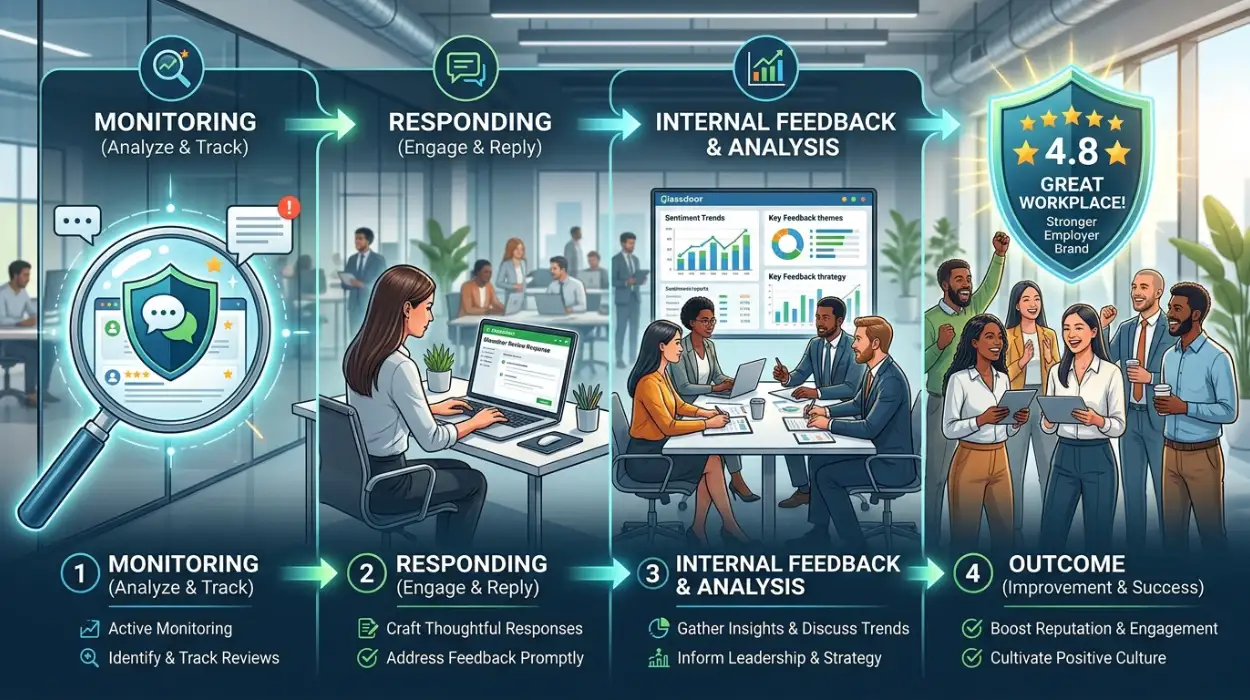
An employer Glassdoor review management strategy involves monitoring reputation signals, evaluating review sentiment, addressing policy concerns, and managing long-term search perception. Effective strategies combine reactive and proactive methods to improve employer credibility and maintain balanced digital representation.
Reputation management strategies differ based on review volume, sentiment patterns, and the authority of review platforms within search ecosystems. Online reputation control methods are evaluated through their impact on search visibility, entity credibility, and long-term perception among candidates and stakeholders.
What Is an Employer Glassdoor Review Management Strategy?
An employer Glassdoor review management strategy is a structured process for understanding and responding to the influence of employee reviews on online reputation. The strategy operates by analysing review content, monitoring sentiment distribution, and evaluating the effects of review visibility on employer perception.
Employer reviews contribute directly to reputation signals because review platforms often rank highly for company-related searches. Search engines interpret these platforms as authoritative sources of information about workplace culture and employee experiences.
A management strategy therefore extends beyond responding to individual reviews. It focuses on understanding how review ecosystems influence search visibility and digital trust over time.
How Does Monitoring Reviews Compare With Reacting to Reputation Issues?
Monitoring reviews and reacting to reputation issues represent different approaches to employer reputation management.
Monitoring operates by continuously evaluating review sentiment, engagement patterns, and changes in employer ratings. This approach identifies emerging issues before they significantly affect reputation signals.
Reactive strategies address reputational concerns after negative reviews have already influenced search perception. These methods focus on mitigating existing issues and reducing reputational impact.
Monitoring offers stronger long-term sustainability because it provides early visibility into sentiment trends. Reactive approaches remain important but generally involve greater risk exposure because reputational effects have already developed.
How Do Search Engines Interpret Employer Review Signals?
Search engines interpret employer review signals by evaluating authority, relevance, and user engagement. Review platforms frequently achieve strong search visibility because they provide extensive user-generated information that satisfies employment-related queries.
Reputation signals refer to indicators that influence trust and credibility within search ecosystems. In review environments, these signals include ratings, review frequency, sentiment patterns, and user interaction.
Search ranking influence is therefore determined by the informational value and perceived credibility of review platforms. This mechanism explains why employer review pages frequently appear prominently in search results.
How Does Sentiment Analysis Contribute to Review Management?
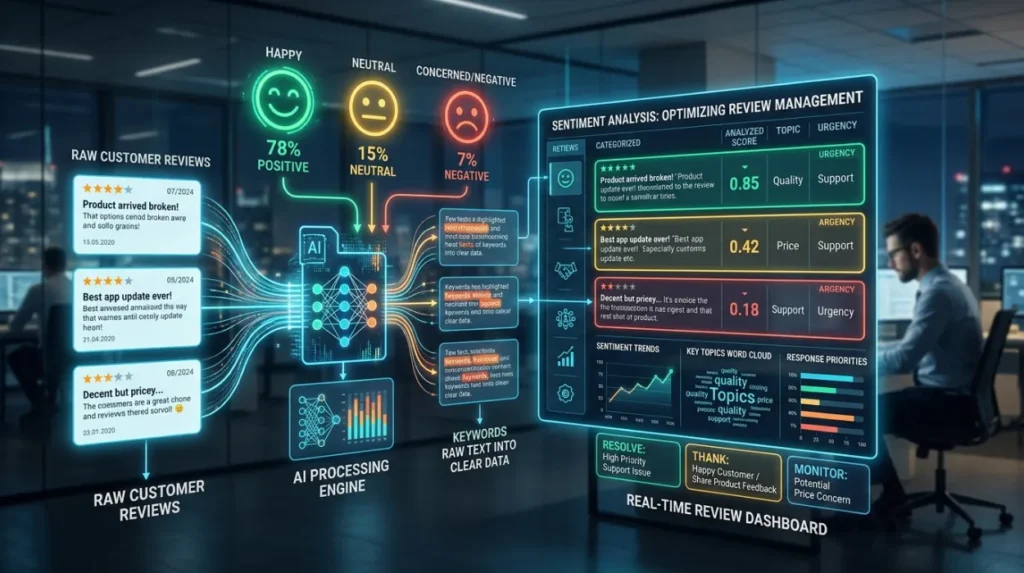
Sentiment analysis is the process of evaluating positive, neutral, and negative themes within review content. It operates by identifying recurring patterns that contribute to employer perception.
Negative sentiment distribution often highlights recurring concerns about workplace culture, management practices, or career opportunities. Positive sentiment can reinforce trust signals and strengthen employer credibility.
Analysing sentiment provides a clearer understanding of how employee opinions shape digital reputation. It also enables organisations to distinguish isolated feedback from broader perception trends.
The effectiveness of review management increases when sentiment is measured consistently and evaluated alongside search visibility.
How Do Policy-Based Approaches Compare With Reputation Improvement Strategies?
Policy-based approaches and reputation improvement strategies operate through different mechanisms and produce different outcomes.
Policy-based approaches focus on identifying reviews that potentially violate platform standards. They seek to reduce the visibility of problematic content by relying on defined rules and review policies.
Reputation improvement strategies focus on broader organisational perception. They address underlying issues that contribute to negative reviews and aim to strengthen long-term trust signals.
Policy-based actions can deliver direct outcomes when violations exist, but they depend on platform criteria. Reputation improvement strategies are generally more sustainable because they influence the factors that shape future sentiment.
How Does Review Volume Influence Employer Credibility?
Review volume refers to the amount of employee feedback available on a review platform. Larger review datasets often appear more representative and therefore carry greater influence over employer perception.
Search ecosystems interpret extensive user-generated content as relevant and valuable. As a result, organisations with substantial review activity frequently receive greater search visibility.
A high review volume can strengthen entity credibility when sentiment remains balanced and informative. Conversely, substantial negative review activity can amplify reputational concerns because users perceive the information as more reliable.Review management strategies therefore evaluate both sentiment and scale when assessing employer reputation.
Dive Deeper With Our Expert Guides:
What Makes a Glassdoor Review False Enough to Support a Successful Removal Request
How to Remove a Glassdoor Review in the UK Using Platform and Escalation Routes
How Does Content Suppression Compare With Review Management?
Content suppression vs content enhancement represents a broader comparison within reputation management.
Content suppression operates by reducing the prominence of negative information through alternative content and visibility strategies. It seeks to influence SERP composition without directly addressing review content.
Review management focuses specifically on understanding, monitoring, and responding to employee feedback. The strategy analyses the causes and effects of review sentiment rather than competing against it in search results.
Review management generally offers stronger sustainability because it addresses the reputation signals that influence employer perception. Content suppression provides supplementary support but does not alter underlying review dynamics.
How Does Employer Reputation Management Affect Search Visibility?
Employer reputation management directly affects search visibility because review platforms often appear prominently in company-related searches. Changes in sentiment and engagement can influence how users interact with review content.
Search ecosystems evaluate relevance and authority continuously. Positive reputation signals often encourage more balanced perceptions and improve the credibility of employer profiles.
Search visibility also affects recruitment outcomes because candidates frequently encounter review pages during their research process. Managing review ecosystems therefore contributes to how organisations are represented online.
The relationship between reviews and search visibility demonstrates why reputation management increasingly intersects with recruitment strategy and digital trust.
How Should Organisations Evaluate Different Review Management Approaches?
Different review management approaches should be evaluated according to effectiveness, scalability, and long-term sustainability.
A structured evaluation often involves:
- Measure sentiment distribution by identifying recurring themes and changes in perception.
- Assess search visibility by analysing the prominence of review platforms within search results.
- Evaluate policy options by identifying reviews that potentially breach platform standards.
- Compare long-term outcomes by measuring how strategies influence reputation signals over time.
This framework provides a systematic method for understanding the effectiveness of different approaches and reducing reputation-related risks.
How Does a Full Review Management Strategy Progress From Start to Finish?
A complete employer review management strategy progresses through several stages that collectively improve understanding and control of digital reputation.
The process generally includes monitoring review activity, analysing sentiment patterns, evaluating policy concerns, and measuring changes in search visibility. It also requires ongoing assessment because employer perception evolves continuously through new reviews and user engagement.
Discussions surrounding Manage Your Glassdoor Employer Reviews and Remove Violations With UK Expert Help often arise because organisations increasingly seek structured approaches to managing employer reputation and maintaining trust within digital environments.
A complete strategy therefore focuses not only on addressing existing issues but also on creating a sustainable framework for understanding and managing reputation signals over time.
An employer Glassdoor review management strategy involves continuous monitoring, sentiment analysis, policy evaluation, and long-term reputation assessment. Different approaches produce different outcomes depending on their focus, scalability, and ability to influence search visibility and employer credibility.
Review ecosystems play an important role in shaping digital trust because employer reviews contribute directly to reputation signals and search perception. Understanding how these systems operate enables organisations to evaluate strategic options more effectively and maintain a balanced approach to online reputation management.
What is an employer Glassdoor review management strategy?
An employer Glassdoor review management strategy is a structured approach to monitoring, analysing, and responding to employee reviews that affect online reputation. It focuses on sentiment trends, search visibility, and long-term employer credibility.
Why are Glassdoor reviews important for employer reputation?
Glassdoor reviews influence how job seekers, employees, and stakeholders perceive a company. Because review platforms often rank highly in search results, employee feedback can significantly affect trust and recruitment decisions.
Can employers remove negative Glassdoor reviews?
Employers cannot remove reviews simply because they are negative, but reviews that violate platform policies may be eligible for removal. Glassdoor Reviews Removal Services assess whether specific reviews breach guidelines or contain prohibited content.
How does review management improve employer branding?
Effective review management helps organisations understand employee sentiment and identify factors that influence reputation signals. By monitoring feedback and addressing recurring concerns, employers can strengthen digital trust and improve their online presence.
Can Glassdoor Reviews Removal Services support reputation management?
Glassdoor Reviews Removal Services examine policy violations, review visibility, and the impact of employee feedback on search perception. Companies such as Clear Your Name evaluate how employer reviews contribute to online reputation and recruitment outcomes.