Group admins face reputation risk when harmful member-posted content becomes associated with the group, its administrators, or the wider entity represented by the community. Reputation management is the process of monitoring, interpreting, and influencing the information that shapes an entity’s perceived credibility across digital environments. Online reputation refers to how published information, user-generated content, reviews, discussions, and search results collectively influence entity perception.
How Does Harmful Member-Posted Content Affect a Group’s Online Reputation?
Harmful member-posted content affects online reputation by introducing negative information into the digital footprint associated with a group and its administrators. A group is a digital entity formed through its name, descriptions, member activity, discussions, and external references. Search engines evaluate publicly accessible content as part of the information ecosystem surrounding identifiable entities. When harmful posts remain visible, they become part of the contextual information through which users interpret the group. The reputation effect therefore relates not only to the individual post but also to the surrounding entity signals.
Content relevance is central to this process because search systems organise information according to topic, context, relationships, and perceived usefulness. A harmful post containing a group’s name, location, organisation, or identifiable administrator information creates semantic associations between those entities and the subject matter of the post. Content indexing then determines whether that information becomes available for retrieval through search queries. If indexed content gains visibility, users encounter the association without necessarily distinguishing between the original poster and the group itself. This creates a distinction between content ownership and reputation association.
Can Group Admins Become Associated With Content Posted by Members?
Group administrators can become associated with member-posted content when the group identity and its public activity are closely connected. An administrator is a management entity responsible for moderating or governing a digital community, while a member is an individual contributor operating within that community. Search users do not always distinguish these roles when interpreting a visible discussion. The group’s name, administrator references, moderation activity, and public discussions can collectively form reputation signals. This makes contextual association an important component of digital reputation analysis.
The strength of this association depends on how information is presented and connected across digital sources. A post appearing inside a named public group provides contextual information about the environment in which the content was published. External references can reinforce that connection if they repeat the group name, topic, or disputed information. Search engines process these relationships as part of their broader understanding of entities and documents. The resulting SERP evaluation therefore concerns the relationship between the content, the group, and the search query rather than simply the identity of the original author.
How Does Harmful Content Become Visible in Search Results?
Harmful content becomes visible in search results when a search engine discovers, processes, indexes, and ranks the relevant page or post for a query. Content indexing is the process through which discovered information is stored and made eligible for retrieval. Ranking systems then evaluate indexed content according to relevance, quality, authority, freshness, and other signals. A public group post can therefore move from being a community-level discussion to becoming part of the searchable information environment. Its visibility depends on technical accessibility and its relevance to particular queries.
Search visibility also depends on the structure surrounding the content. A post containing distinctive names, organisation terms, locations, or topic-specific phrases has identifiable textual signals that search engines can associate with queries. Links, references, engagement patterns, and surrounding pages add further contextual information. Search engines do not simply rank individual words; they evaluate documents in relation to queries and broader information relationships. This means a harmful post can become relevant to branded or entity-specific searches even when its original purpose was limited to a group discussion.
What Reputation Signals Do Harmful Group Posts Create?
Harmful group posts create reputation signals through repeated associations between an entity and specific claims, subjects, or sentiment. A reputation signal is an observable piece of information that contributes to how an entity is interpreted within a digital ecosystem. Textual claims, sentiment, mentions, contextual references, and engagement all contribute to the information environment surrounding an entity. Search systems process these signals alongside information from other sources. The resulting entity perception emerges from the combined evidence available across the search ecosystem.
Negative sentiment represents one component of this signal environment, but sentiment alone does not determine ranking. Search engines analyse language in relation to the query, document context, source characteristics, and other relevance factors. A critical statement therefore functions differently from an independently verified factual source or an authoritative publication. This distinction is important because reputation analysis requires separating content existence from content credibility. Visibility and credibility are related but separate dimensions of SERP evaluation.
How Do Search Engines Interpret Trust and Credibility?
Search engines interpret trust and credibility through multiple information signals rather than relying on a single reputation score. Authority is a concept describing the perceived strength or reliability of a source within a particular information context. Trust signals include source quality, consistency, corroboration, established references, and the relationship between claims and supporting evidence. These signals contribute to how documents and entities are evaluated within search systems. The process is therefore based on information relationships rather than a simple positive-or-negative classification.
Credibility also depends on the distinction between primary and secondary information. A first-party group post provides direct evidence that a statement was published within the community, while an independent publication provides a different type of evidence about the subject. Repeated claims across unrelated sources can create stronger contextual visibility, but repetition does not automatically establish factual accuracy. Search systems evaluate source and content characteristics alongside relevance. Reputation analysis therefore requires examining both what information exists and where that information originates.
Can Reviews and Sentiment Influence Group Reputation?

Reviews and sentiment influence reputation by providing structured and unstructured signals about how people describe an entity or experience. A review is user-generated information that expresses an assessment of a person, organisation, product, service, or experience. Sentiment interpretation analyses the language used to identify positive, negative, or neutral attitudes within content. These signals contribute to the broader digital footprint when they are publicly accessible and associated with an identifiable entity. Their influence depends on relevance, source context, visibility, and the consistency of related information.
The relationship between reviews and search reputation becomes stronger when review content appears prominently for entity-specific searches. Search users often encounter review pages alongside official websites, social profiles, directories, news coverage, and community discussions. This creates a mixed information environment in which individual pieces of content contribute to the overall perception of the entity. A harmful group post can therefore interact with existing review sentiment rather than operating in isolation. SERP evaluation reflects this wider information landscape when users search for the relevant entity.
What Search Visibility Risks Do Group Admins Face?
Group admins face search visibility risks when harmful content becomes indexed and connected to identifiable entity searches. Search visibility refers to the extent to which a document, page, profile, or reference appears within search results for relevant queries. Public posts can become discoverable through exact-name searches, topic searches, location searches, or combinations of identifying terms. When the content ranks prominently, users encounter the information before reaching other sources. This changes the information sequence through which entity perception develops.
Visibility also creates persistence because indexed content can remain discoverable after the original discussion has become inactive. Search engines continuously process existing pages, while users and external websites can create additional references to publicly available material. A post can therefore remain part of the searchable digital footprint beyond its original publication context. The risk is not defined solely by how harmful the language appears but by its accessibility, relevance, and association with identifiable entities. Search reputation analysis consequently focuses on both content characteristics and search behaviour.
How Does Content Ranking Change Perception of a Group?
Content ranking changes perception by controlling which information users encounter first when they investigate an entity. Ranking is the process through which search systems order eligible documents according to relevance and other evaluation signals. Higher-ranking pages receive greater visibility because users generally encounter them earlier within a search journey. A harmful discussion appearing prominently can therefore influence initial impressions before users examine alternative sources. This creates an important relationship between ranking dynamics and reputation formation.
The effect becomes more significant when the search query directly identifies the group or administrator. Entity-specific searches reduce the distance between the query and the content association. If the harmful material contains the same identifying terms, the document becomes more contextually relevant to the search. Other authoritative sources can exist without immediately replacing the visible result because ranking operates at the document and query level. Reputation analysis therefore examines the complete SERP rather than treating one result as an isolated reputation event.
Why Does the Digital Footprint Matter for Group Reputation?
A digital footprint is the collection of publicly accessible information and activity associated with an identifiable person, organisation, group, or entity. It includes websites, social profiles, discussions, reviews, publications, directory records, images, and other indexed references. Each source contributes contextual information to the entity’s wider information environment. A group with a broad digital footprint therefore has multiple sources through which users can form an interpretation. The consistency and authority of those sources influence the overall structure of entity perception.
A harmful group post becomes more significant when it forms part of a recognisable digital footprint rather than existing as an isolated document. Search engines can connect names, topics, locations, profiles, and references across documents. These connections help establish relationships between entities and information. Consistent information strengthens contextual clarity, while contradictory or negative information introduces competing signals. Digital footprint analysis therefore evaluates the entire information network surrounding an entity.
How Can Group Admins Evaluate Harmful Content Within a Reputation System?
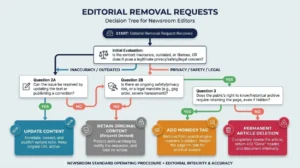
Group admins can evaluate harmful content by analysing its visibility, entity association, source context, indexing status, and relationship with other reputation signals. How Group Admins Should Handle Harmful Member-Posted Content is therefore a question of information governance as well as moderation. The first distinction is between content that exists inside a community and content that has become publicly discoverable. The second distinction concerns whether the content identifies the group, its administrators, or another entity. These distinctions establish the correct framework for evaluating potential reputation effects.
A structured assessment also examines whether the content appears in search results and which queries retrieve it. Administrators can then analyse the surrounding SERP to identify competing sources, authoritative references, review signals, and related discussions. This process separates direct content issues from broader entity perception issues. It also identifies whether the problem concerns visibility, accuracy, context, or source credibility. Reputation management therefore operates as an information-analysis discipline rather than simply a reaction to negative language.
What Is the Relationship Between Moderation and Search Reputation?
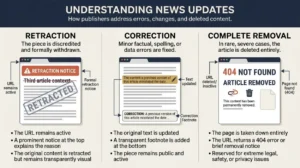
Moderation and search reputation are connected because moderation determines how content is managed within the environment where it is published, while search systems determine how publicly accessible content is discovered and ranked. Moderation refers to the governance of user-generated material according to defined community rules or platform policies. Search reputation concerns the wider information environment created when that material becomes publicly accessible and searchable. Removing or restricting content within a community does not automatically determine how external search systems process previously indexed information. The two systems therefore operate through different mechanisms.
Effective reputation analysis distinguishes platform-level content governance from search-level visibility. A group admin can evaluate whether content violates community rules, whether it identifies an entity, and whether it creates an externally visible association. Search analysis then examines indexing, ranking, references, and entity relationships. This separation prevents moderation decisions from being confused with search outcomes. It also demonstrates why reputation risk requires analysis across both the publishing environment and the search ecosystem.
How Harmful Comments Can Damage a Brand’s Social Media Presence
When DIY Social Media Content Removal Works and When It Fails
What Should Group Admins Understand About Harmful Member Content?
Group admins need to understand that member-posted content can create reputation signals beyond the immediate discussion in which it appears. Public content becomes part of a digital footprint when it is accessible, identifiable, and relevant to an entity or topic. Search engines can process that information through crawling, indexing, retrieval, and ranking systems. Users then interpret the resulting SERPs through the combination of visible content, source credibility, sentiment, and contextual relationships. Reputation formation is therefore a distributed process rather than a single-platform event.
The central distinction is between publication, visibility, and perception. Publication establishes that information exists, visibility determines whether users can find it, and perception concerns how users interpret the information alongside other sources. Harmful member content becomes a reputation concern when these stages connect to an identifiable group or administrator. Understanding the relationship between content indexing, reputation signals, authority, sentiment, and ranking dynamics provides a clearer framework for evaluating that risk. This systems-based view explains why group reputation extends beyond the actions of any individual member.
Group reputation is shaped by the information environment surrounding a digital community, including member posts, reviews, discussions, references, and indexed pages. Harmful content becomes more significant when it is publicly accessible, connected to identifiable entities, and visible within relevant search results. Search engines evaluate content through relationships involving relevance, source characteristics, authority, context, and other ranking signals. Users then interpret these results as part of the entity’s broader digital footprint. Understanding these mechanisms provides a factual basis for analysing how member-generated content can influence search visibility and online reputation.
What risks do group admins face when members post harmful content?
Group admins can face reputation risks when harmful member content becomes publicly visible or associated with the group. Indexed posts can influence search visibility, entity perception, and how users evaluate the group or its administrators.
Can a group admin be responsible for harmful content posted by members?
Responsibility depends on the platform’s rules, the nature of the content, and the admin’s role in managing the group. From a reputation perspective, member posts can still create an association with the group even when the admin did not create the content.
Can harmful social media posts appear in Google search results?
Yes, publicly accessible social media posts can be crawled and indexed by search engines when they meet relevant indexing conditions. Once indexed, harmful content can appear for searches involving the group, administrator, organisation, or related topics.
How does harmful member content affect a group’s online reputation?
Harmful member content can introduce negative reputation signals into the group’s digital footprint. Its impact depends on factors such as search visibility, content context, source credibility, sentiment, and the strength of the association with the group.
How can group admins handle harmful member-posted content?
Group admins can review the content against platform rules, assess its connection to the group, and determine whether it creates a public reputation or search visibility issue. Appropriate moderation and content management help separate individual member activity from the group’s wider online reputation.