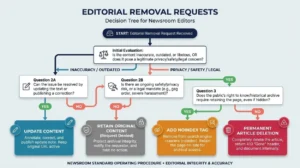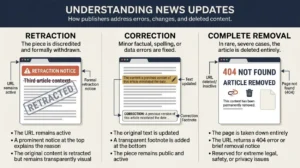
The TripAdvisor review removal process UK involves identifying potentially policy-violating content, evaluating guideline compliance, assessing supporting evidence, and determining whether review visibility should be maintained or restricted. This structured moderation framework helps assess review authenticity, policy adherence, and eligibility for removal under platform guidelines in the UK.
Reputation management strategies differ based on how reputation signals are influenced, evaluated, and interpreted within search ecosystems. Online reputation control methods are evaluated through their impact on entity credibility, sentiment distribution, search ranking influence, and long-term SERP composition.
How Does Review Removal Compare with Content Enhancement as a Reputation Management Strategy?
Review removal and content enhancement represent two distinct approaches to reputation management. Review removal focuses on eliminating policy-violating content, while content enhancement focuses on increasing the visibility of positive, relevant, and authoritative information.
Review removal operates by reducing the presence of content that affects perception negatively. The mechanism relies on policy evaluation, moderation systems, platform governance standards, and evidence-based assessments. This approach directly alters the information available to users and search systems by removing content from the reputation ecosystem.
Content enhancement operates by publishing and optimising additional information that contributes new reputation signals. Search engines evaluate this content alongside existing information to build a broader understanding of entity credibility. Rather than removing existing content, enhancement strategies influence visibility through content indexing and search ranking influence.
From a comparative perspective, review removal affects sentiment distribution more directly because specific content is excluded from public visibility. Content enhancement influences perception indirectly by changing the balance of information available within search results. The distinction between content suppression vs content enhancement is central to understanding how different reputation management methods shape online perception.
What Factors Determine Whether a Review Qualifies for Removal?
Review qualification depends on policy compliance rather than sentiment or opinion. Moderation systems evaluate authenticity, relevance, conflicts of interest, prohibited content, and guideline adherence when assessing removal eligibility.
Review policy frameworks function as governance mechanisms designed to preserve trust signals. Search ecosystems rely on credible review environments because reviews contribute to entity credibility and public perception. Removal qualification therefore focuses on objective policy standards rather than subjective disagreement.
Several evaluation factors influence review assessment:
- Analyse authenticity indicators by reviewing account behaviour, submission patterns, and content consistency.
- Evaluate conflict-of-interest signals through relationship assessments involving competitors, employees, or affiliated parties.
- Assess content relevance by determining whether the review reflects a genuine customer experience.
- Review guideline compliance against platform standards governing language, conduct, and information quality.
This structured assessment process supports moderation consistency while maintaining information integrity across review ecosystems.

How Does the Review Removal Process Influence Search Visibility?
The review removal process influences search visibility by altering the reputation signals available for indexing, evaluation, and sentiment interpretation.
Search visibility refers to the prominence and accessibility of information within search engine results pages. Reviews contribute contextual information that search systems use when evaluating entities, topics, and user perception. The removal of policy-violating content changes the available information set, which affects how reputation-related signals are interpreted.
Review moderation influences content indexing because removed content no longer contributes to searchable information environments. Search systems rely on indexed content to establish relevance, authority, and sentiment patterns. When moderation reduces the presence of misleading or non-compliant information, the resulting reputation profile reflects a different signal composition.
The impact on search ranking influence varies according to the role that review content plays within broader entity evaluation processes. Reviews operate as one component of a larger reputation framework that includes content authority, entity associations, user engagement, and trust signals.
Which Review Management Approaches Deliver More Sustainable Outcomes?
Sustainable outcomes depend on the relationship between policy compliance, content quality, and reputation signal development.
Reactive review management focuses on identifying and addressing existing reputation risks. The mechanism involves monitoring review environments, analysing sentiment distribution, and evaluating content against moderation standards. Reactive approaches produce immediate adjustments when policy-violating content is identified.
Organic reputation management focuses on long-term reputation signal development. This method operates through the creation of authoritative content, improved information quality, and stronger entity associations. Search systems interpret these signals over time, resulting in more stable perception frameworks.
A comparison between short-term and long-term approaches demonstrates different outcomes. Reactive methods influence immediate visibility challenges, while organic methods influence broader reputation architecture. Sustainable reputation management combines signal quality, governance compliance, and long-term information development rather than relying on a single intervention model.
How Can the Review Removal Process Be Evaluated Step by Step?
The review removal process can be evaluated as a structured moderation framework that assesses content against predefined governance standards.
The process generally includes the following evaluation stages:
- Identify potentially non-compliant content through reporting systems or moderation detection mechanisms.
- Compare review content against policy criteria including authenticity, relevance, and prohibited content standards.
- Assess supporting evidence to determine whether policy violations can be substantiated.
- Evaluate moderation findings through guideline-based review procedures.
- Determine publication status based on policy outcomes and governance requirements.
For a deeper analysis of implementation-focused options, Remove a Harmful TripAdvisor Review in the UK With Our Specialist Service Today examines approaches that focus specifically on review removal mechanisms and policy-based assessment frameworks.
The TripAdvisor review removal process operates as a structured moderation system that evaluates reviews according to authenticity, relevance, conflict-of-interest, and compliance standards. Its role within reputation management extends beyond content governance because moderation decisions influence sentiment distribution, trust signals, and search visibility.
Comparing review removal with content enhancement, reactive management, and organic reputation development demonstrates that each method influences reputation signals differently. Evaluating effectiveness requires analysing scalability, sustainability, risk exposure, and search ranking influence rather than focusing on a single reputation management approach.
What does the TripAdvisor review removal process in the UK involve?
The TripAdvisor review removal process involves identifying potentially non-compliant reviews, evaluating them against platform policies, assessing supporting evidence, and determining whether removal criteria are met. The process focuses on authenticity, relevance, and guideline compliance.
Can a TripAdvisor review be removed if it contains false information?
Reviews containing false or misleading information are evaluated against TripAdvisor’s content policies and moderation standards. Removal depends on whether the content violates platform guidelines rather than whether it is simply negative.
How long does the TripAdvisor review moderation process take?
Review moderation timelines vary depending on the complexity of the assessment and the evidence being reviewed. The process typically includes policy evaluation, content analysis, and moderation review before a final decision is made.
What types of reviews are most likely to be removed from TripAdvisor?
Reviews that involve conflicts of interest, fraudulent activity, duplicate content, promotional material, or prohibited language are more likely to be removed. These categories are evaluated because they can distort reputation signals and review credibility.
How does review removal affect online reputation and search visibility?
Removing policy-violating reviews can alter sentiment distribution and the reputation signals associated with an entity. This influences how search engines interpret online credibility, trust signals, and search visibility within digital ecosystems.