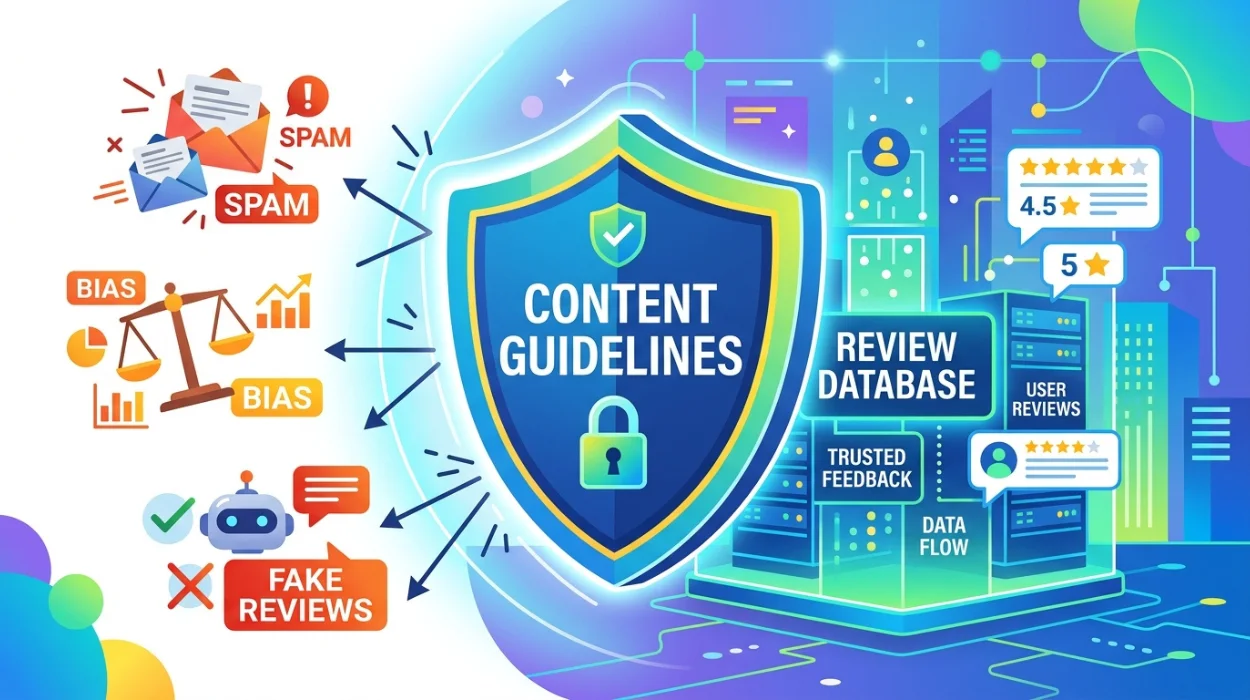
TripAdvisor’s content guidelines prohibit reviews that contain conflicts of interest, promotional material, fabricated experiences, offensive content, illegal information, or irrelevant commentary. These restrictions apply to reviews, ratings, photos, forum contributions, and other forms of user-generated content published on the platform.
Reputation management is the process of analysing how digital information influences public perception across search ecosystems. Online reputation refers to the collection of indexed content, reviews, ratings, and user-generated signals that contribute to entity perception, trust evaluation, and search visibility.
What Are TripAdvisor’s Content Guidelines Designed to Regulate?
TripAdvisor’s content guidelines are designed to regulate the quality, authenticity, and relevance of user-generated content. The framework defines which types of submissions qualify for publication and which violate platform standards. These guidelines function as a moderation system that filters content before or after publication based on predefined criteria.
Content moderation serves as a reputation-control mechanism within review ecosystems. Platforms analyse submissions to determine whether information contributes genuine consumer experiences or introduces manipulation risks. The objective is to maintain review integrity, protect information accuracy, and preserve trust signals associated with published content.
Search engines and review platforms rely on credibility indicators when evaluating content. Reviews that comply with platform standards strengthen reputation signals because they demonstrate authenticity and relevance. Reviews that violate moderation policies weaken information quality and reduce confidence in the associated entity.
Which Types of Reviews Are Prohibited Under TripAdvisor’s Guidelines?
TripAdvisor prohibits reviews that fail authenticity, relevance, or integrity requirements. The restrictions apply to content that attempts to manipulate ratings, misrepresent experiences, or influence public perception through deceptive practices.
What constitutes a conflict-of-interest review?
A conflict-of-interest review refers to content submitted by individuals who possess a direct personal, financial, or professional relationship with the reviewed entity. Such reviews compromise neutrality because the reviewer benefits from influencing public perception.
Conflict-based reviews distort reputation signals by introducing biased information into review ecosystems. Platforms identify these submissions as credibility risks because they undermine trust evaluation processes. Search ecosystems depend on independent experiences to generate accurate sentiment assessments.
What defines promotional content?
Promotional content refers to reviews that function as advertisements rather than experience-based evaluations. These submissions prioritise marketing messages, sales language, or commercial promotion instead of describing genuine interactions.
Promotional reviews disrupt review authenticity because they introduce persuasive intent into informational environments. Review platforms analyse content patterns to detect promotional behaviour and maintain content quality standards.
What qualifies as fabricated or misleading content?
Fabricated content refers to reviews based on experiences that never occurred. Misleading content includes exaggerated claims, false allegations, manipulated details, or intentionally inaccurate information.
False information creates unreliable reputation signals. Search ecosystems depend on content accuracy when evaluating credibility, authority, and public sentiment. Fabricated reviews interfere with these evaluation mechanisms and reduce overall trust within review platforms.
How Do Review Platforms Determine Whether a Review Violates Guidelines?

Review platforms determine policy violations through a combination of automated analysis, moderation systems, behavioural monitoring, and content evaluation processes. These systems identify patterns associated with manipulation, misinformation, or authenticity concerns.
Content analysis evaluates linguistic signals, behavioural indicators, account activity, and contextual relevance. Moderation frameworks compare review characteristics against predefined policy requirements. Reviews that demonstrate suspicious attributes undergo additional examination.
The evaluation process contributes to platform reliability because moderation systems continuously analyse information quality. Effective content governance strengthens reputation signals and preserves trust within review ecosystems.
Why Are Fake Reviews Considered a Reputation Risk?
Fake reviews are considered a reputation risk because they alter public perception through inaccurate information. Reputation systems rely on authentic experiences to establish trust, credibility, and sentiment representation.
Search visibility depends on information quality. When fabricated reviews enter a review ecosystem, they introduce misleading signals that affect perception analysis. Positive fake reviews create artificial authority, while negative fake reviews generate inaccurate reputational harm.
Algorithms evaluate user-generated content as part of broader trust assessment processes. Distorted sentiment patterns interfere with accurate entity evaluation, making fake reviews a significant credibility concern within search ecosystems.
What Role Does Review Authenticity Play in Search Visibility?
Review authenticity functions as a trust signal that contributes to content credibility and entity evaluation. Authentic reviews provide evidence of genuine customer interactions, enabling platforms and search systems to interpret sentiment more accurately.
Search ecosystems evaluate content based on relevance, authority, trustworthiness, and user value. Authentic reviews strengthen these evaluation factors because they contribute meaningful information. Genuine feedback creates consistent reputation signals that support accurate SERP evaluation.
Review authenticity also influences long-term reputation stability. Consistent, trustworthy content generates reliable information patterns that improve credibility assessments across digital ecosystems.
Which Content Categories Commonly Trigger Review Removal?
Certain categories of content frequently trigger moderation actions because they violate platform integrity requirements. These categories are associated with policy breaches, trust risks, and content quality concerns.
- Publish false information – Fabricated experiences introduce inaccurate reputation signals and compromise content reliability.
- Promote commercial interests – Advertising-focused submissions prioritise marketing objectives over authentic feedback mechanisms.
- Manipulate ratings artificially – Coordinated review activity interferes with sentiment interpretation and credibility analysis.
- Include offensive material – Abusive language reduces information quality and violates community standards.
- Disclose personal information – Publishing private data creates privacy risks and breaches content governance policies.
These content categories attract moderation scrutiny because they weaken trust signals and reduce review ecosystem integrity.
How Do Content Guidelines Influence Online Reputation?
Content guidelines influence online reputation by shaping the information available to users, platforms, and search engines. Moderation systems determine which content remains visible and which content is removed from public access.
Reputation formation depends on indexed information. When content complies with moderation standards, platforms maintain a more accurate representation of public sentiment. This process strengthens credibility and improves trust evaluation mechanisms.
Content governance also affects entity perception. Search ecosystems analyse available information when assessing authority, expertise, and trustworthiness. Moderated environments improve information quality and support more reliable reputation assessment.
Dive Deeper With Our Expert Guides:
How Fake TripAdvisor Reviews Are Identified and What Makes Them Hard to Challenge
Why TripAdvisor Reviews Are Difficult to Remove and What the Platform Will Act On
What Happens When a Review Is Reported for a Guideline Violation?
When a review is reported, the content enters a moderation workflow for evaluation against platform policies. The review undergoes analysis to determine whether it violates authenticity, relevance, integrity, or behavioural requirements.
Moderation systems compare reported content against established guidelines. Reviewers assess whether the submission contains prohibited elements such as fabricated claims, conflicts of interest, promotional language, or abusive material.
If a violation is confirmed, the content may be removed, restricted, or otherwise moderated. This process supports information quality control and preserves the accuracy of reputation signals within the platform ecosystem.
Understanding reporting procedures forms part of broader reputation management practices, particularly when analysing How to Report a TripAdvisor Review That Violates Platform Guidelines Effectively within content governance frameworks.
Why Does Review Moderation Matter for Digital Trust?
Review moderation matters because digital trust depends on information accuracy, authenticity, and reliability. Users interpret reviews as reputation signals that influence credibility assessments and perception formation.
Trust emerges when information ecosystems maintain consistent quality standards. Moderation frameworks remove deceptive, irrelevant, or harmful content that interferes with accurate evaluation. This process supports transparency and improves confidence in published information.
Digital trust also influences search ecosystems. Reliable content contributes stronger authority indicators and enables more accurate sentiment interpretation. Effective moderation therefore functions as a foundational component of reputation management and search visibility.
How Do Content Guidelines Support Fair Reputation Evaluation?
Content guidelines support fair reputation evaluation by establishing standards that apply consistently across review ecosystems. These standards define acceptable behaviour, regulate information quality, and reduce opportunities for manipulation.
Fair evaluation depends on authentic information. Platforms use moderation policies to ensure that reviews represent genuine experiences rather than artificial influence attempts. This creates a more accurate environment for trust assessment and reputation analysis.
Search ecosystems benefit from these standards because consistent moderation improves content reliability. Stronger reliability leads to more accurate entity perception, better sentiment interpretation, and more trustworthy reputation signals across digital environments.
Conclusion
TripAdvisor’s content guidelines define the standards used to evaluate review authenticity, relevance, integrity, and trustworthiness. The prohibited categories include fabricated experiences, promotional content, conflicts of interest, offensive material, and other forms of misleading information that distort reputation signals.
Review moderation plays a central role in reputation management because it influences content quality, trust evaluation, sentiment interpretation, and search visibility. By regulating which information remains accessible within review ecosystems, content guidelines contribute to more accurate entity perception, stronger credibility signals, and fairer reputation assessment across digital environments.
What types of reviews are prohibited under TripAdvisor’s content guidelines?
TripAdvisor’s content guidelines prohibit fake reviews, promotional content, conflict-of-interest reviews, offensive material, and misleading information. These restrictions help maintain review authenticity, trust signals, and accurate online reputation assessment.
Can a TripAdvisor review be removed if it violates platform guidelines?
Yes, reviews that breach content guidelines can be reviewed by moderators and removed if a violation is confirmed. Common reasons include fabricated experiences, spam, promotional content, and policy violations that affect content integrity.
How does TripAdvisor identify reviews that violate its content policies?
TripAdvisor uses moderation systems, behavioural analysis, and content evaluation processes to detect suspicious reviews. These systems assess authenticity, relevance, and credibility signals to maintain review quality across the platform.
Why are fake reviews harmful to online reputation?
Fake reviews create misleading reputation signals that distort public perception and sentiment analysis. They can affect trust, credibility, and search visibility by introducing inaccurate information into review ecosystems.
How can businesses address reviews that breach TripAdvisor’s guidelines?
Businesses can report reviews that appear to violate platform policies for moderation review. Understanding content standards and reporting procedures helps support fair reputation management and accurate representation of customer feedback.