Executives and founders face higher personal information exposure risks because their professional identities are strongly connected to public records, company information, media coverage, social profiles, and searchable business data. Reputation management is the process of analysing and influencing the information environment that shapes how an identifiable entity is perceived across digital ecosystems.
Online reputation refers to the collective interpretation of publicly available information associated with a person or organisation. For senior business figures, this information frequently connects professional identity with personal identifiers, creating a broader digital footprint. Names, company positions, biographies, photographs, addresses, contact details, directorship information, and historical records can become interconnected through search engines. This creates a distinct relationship between personal information exposure, entity perception, and search visibility.
Why Are Executives and Founders More Exposed to Personal Information Online?
Executives and founders have greater exposure because their professional activities generate a dense network of publicly accessible identity information. Corporate websites, business directories, Companies House records, conference biographies, press coverage, interviews, professional profiles, and social media accounts can all reference the same individual. Search engines connect these references through names, organisations, locations, roles, and other entity attributes. The resulting information network creates a more comprehensive digital footprint than that associated with a person who has limited public professional activity. Personal information can therefore become discoverable through searches intended to identify the professional rather than the individual personally.
The connection between professional and personal information also develops through data aggregation. Public records and commercial databases can combine information from different sources into profiles containing addresses, telephone numbers, historical locations, family associations, or other identifiers. Each individual record represents one information point, but the combined dataset creates a more detailed representation of the person. Search engines then provide an access layer through which users can discover these connections. This makes information exposure a search ecosystem issue rather than simply a privacy issue.
How Does a Founder’s Digital Footprint Become So Extensive?
A founder’s digital footprint becomes extensive because professional activity produces information across interconnected publishing environments. A digital footprint is the collection of online information associated with an identifiable person, organisation, or entity. It includes first-party information such as company biographies alongside third-party sources such as news articles, directories, databases, event listings, reviews, and public records. Search engines organise these sources around identifiable entities and queries. The accumulation of references gradually creates a detailed information profile.
Entity relationships strengthen this footprint because the same name can appear alongside an organisation, job title, location, industry, and other identifiers. Search systems use these contextual relationships to distinguish entities and determine relevance. A founder mentioned in a company announcement can therefore become connected to the company’s broader digital information ecosystem. Additional sources reinforce those relationships when they repeat consistent identifying information. The resulting entity profile becomes easier for users and search systems to recognise.
How Does Public Business Information Connect With Personal Information?
Public business information connects with personal information through shared identifiers such as names, addresses, company roles, directorships, and organisational relationships. A director record can establish a connection between an individual and a registered company, while a corporate website can connect the same individual with a professional biography. Directory sites and data aggregators can then combine these references with additional information. Search engines process these relationships as part of their entity understanding. This creates a pathway through which professional information can lead users towards more personal data.
The issue becomes more complex when different sources use the same identifying attributes. A full name combined with a company name creates a strong contextual relationship, while adding a location or professional title increases specificity. Data brokers can then use these identifiers to organise information into searchable profiles. The resulting digital footprint contains information gathered for different purposes but connected through common entity attributes. Information exposure therefore depends on the relationships between sources rather than the visibility of one individual record.
How Do Search Engines Interpret Personal Information About Executives?
Search engines interpret personal information through relevance, entity relationships, source characteristics, and query context. Content indexing is the process through which discovered information becomes eligible for retrieval within search results. Once information is indexed, ranking systems evaluate its relevance to particular searches. An executive’s name can therefore retrieve company pages, interviews, professional profiles, public records, social media accounts, and other documents connected to the same entity. Search visibility determines which of these sources users encounter first.
Search systems do not treat every source as equally authoritative. A government or official corporate record represents a different type of information from an unverified directory profile or user-generated discussion. Authority and trust signals help determine how search systems interpret and rank information. This distinction is important when analysing personal information exposure because visibility does not automatically establish credibility. A highly visible page can still contain incomplete, outdated, or inaccurate information.
What Personal Information Becomes Most Visible in Search Results?
Personal information becomes more visible when it is publicly accessible, indexed, associated with a recognisable entity, and relevant to common search queries. Names and professional roles frequently form the starting point for identity searches. Additional information such as locations, business affiliations, public records, contact details, and historical references can then appear across connected sources. Search results aggregate these documents into a SERP that users interpret as a representation of the searched entity. The visibility of each information type depends on its source, relevance, indexing status, and ranking position.
Search visibility also changes over time as pages are created, updated, removed, or re-indexed. Information that previously appeared on a low-visibility page can become more prominent when search demand, relevance, or ranking conditions change. Conversely, outdated information can remain indexed after the underlying circumstances have changed. This creates a persistence problem for executives whose professional identities remain consistently searched. Personal information exposure therefore involves both the existence of data and its continued discoverability.
Why Do Data Aggregators Increase Personal Information Exposure?

Data aggregators increase exposure by collecting information from multiple sources and combining it into structured profiles. A data aggregator is an information service that gathers records from public and commercial sources and organises them around identifiable individuals or entities. These profiles can contain names, previous addresses, telephone numbers, business relationships, age-related information, and other identifiers. Once published online, the profile becomes another searchable information source. Search engines can then index and rank the aggregated page according to its relevance and accessibility.
The aggregation mechanism creates a significant distinction between isolated records and consolidated information. A person might appear in separate public documents without those documents exposing the same level of detail individually. An aggregator combines attributes into one profile, reducing the effort required to connect those records. This increases the accessibility of information even when each underlying source is independently public. The resulting digital footprint therefore becomes more comprehensive and easier to search.
How Does Personal Information Affect an Executive’s Online Reputation?
Personal information affects online reputation by influencing the context in which users interpret an executive’s identity. Online credibility is the perceived reliability and consistency of information associated with a person or organisation across digital sources. When search results contain accurate professional information alongside outdated, excessive, or irrelevant personal details, users receive a mixed representation of the entity. This can change the context of an otherwise professional search. Reputation signals therefore include not only positive or negative statements but also the quality and relevance of information presented.
The relationship becomes stronger when personal information appears prominently for professional searches. An executive’s name can act as an entity-level query connecting professional pages with personal data sources. If a search result exposes information unrelated to the user’s intended purpose, the SERP contains a broader representation of the individual than the professional context requires. This can affect entity perception even without explicitly negative language. Reputation analysis therefore includes relevance and information quality alongside sentiment.
Can Personal Information Influence Search Perception?
Personal information can influence search perception because users interpret visible search results as contextual evidence about the person being investigated. Search perception refers to the way users understand an entity based on the information presented through search results. A SERP containing authoritative professional sources creates a different information context from one dominated by data profiles, outdated records, or unrelated personal details. Search ranking dynamics determine which sources receive greater visibility. The order and composition of results therefore influence the information users encounter first.
This influence does not mean that search engines deliberately create a positive or negative reputation for an individual. Ranking systems evaluate documents according to their own information and relevance signals. User perception develops from the resulting information environment. An executive can therefore face reputation exposure even when the underlying personal information is factually accurate. The issue concerns the relationship between information availability, search visibility, context, and entity interpretation.
Dive Deeper With Our Expert Guides:
Why Personal Information Often Appears on Dozens of Sites at Once
When DIY Personal Information Removal Works and When It Fails
How Do Authority and Trust Signals Affect Personal Information Exposure?
Authority and trust signals affect exposure by influencing which sources search systems recognise as relevant and credible for particular queries. Authority refers to the perceived strength of a source within a defined information context, while trust signals relate to indicators supporting the reliability and consistency of information. Official company pages, recognised publications, government records, and established professional profiles can carry different contextual signals from low-quality directories. Search engines evaluate these characteristics alongside relevance and other ranking factors. The resulting SERP determines which sources users encounter.
Trust signals also influence how users interpret personal information once it becomes visible. A verified professional biography provides context that an unstructured data profile does not. Similarly, an official public record has a different evidential role from an anonymous forum post. Reputation management therefore requires analysing source quality rather than treating every indexed mention as equivalent. This distinction helps explain why personal information exposure is a layered search problem.
How Does Content Ranking Affect Executive Privacy and Reputation?
Content ranking affects executive privacy and reputation by determining which information receives prominent search visibility. Ranking systems organise eligible documents according to relevance and other signals associated with the query. If a personal information page ranks prominently for an executive’s name, users encounter that information earlier in their search journey. Other authoritative sources can exist without immediately displacing the result. Search visibility therefore creates a practical distinction between information that exists and information that receives attention.
Ranking also affects the persistence of information within an entity’s digital footprint. A low-ranking page can remain technically accessible while having limited visibility for common searches. A high-ranking page has greater exposure because it appears closer to the beginning of the search journey. This means personal information risk cannot be measured solely by whether data is available online. SERP evaluation provides the additional context required to understand its practical visibility.
What Reputation Signals Increase an Executive’s Personal Information Exposure?
Reputation signals increase exposure when multiple sources consistently connect an individual’s identity with the same personal attributes. Names, addresses, business relationships, locations, professional roles, photographs, and other identifiers can function as entity signals. Repeated references strengthen the relationship between those attributes and the identified individual. Search systems use these relationships to improve entity recognition and query relevance. The result can be a more complete and easily retrievable digital profile.
The quality of the signal also matters. Accurate information from authoritative sources provides stronger contextual evidence than inconsistent or unverified information. However, even accurate personal information can create an exposure issue when it becomes disproportionately visible in professional searches. Reputation analysis therefore considers accuracy, relevance, source authority, and visibility together. This produces a more precise understanding of how personal data contributes to online perception.
How Can Executives Assess Personal Information Exposure Online?
Executives can assess exposure by analysing the information associated with their name across search results, public records, directories, professional sources, social platforms, and data aggregation services. The assessment begins with identifying the queries users employ to find the individual. Results can then be classified according to information type, source authority, relevance, accuracy, and visibility. This establishes which information is merely available and which information has meaningful search exposure. A structured assessment also identifies duplicate or conflicting records.
A practical assessment framework includes:
- Identify indexed pages containing personal identifiers, such as names, addresses, telephone numbers, or business relationships.
- Classify each source according to authority, purpose, information type, and relationship to the identified entity.
- Evaluate search visibility by recording which sources appear prominently for name-based and professional queries.
- Compare information across sources to identify outdated, inconsistent, duplicated, or unnecessarily exposed details.
- Monitor SERP changes over time to determine whether the information environment remains stable or develops new exposure.
This approach separates information discovery from reputation interpretation. It also demonstrates why personal information exposure requires ongoing analysis rather than a single search. Search ecosystems change as new documents are indexed and existing pages change position. Continuous monitoring therefore provides a more accurate picture of the digital footprint.
What Should Executives Prioritise When Removing Personal Information Online?
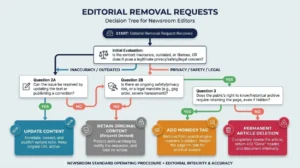
Executives need to prioritise information according to exposure level, sensitivity, source authority, search visibility, and the strength of its association with their professional identity. What Executives Should Prioritise When Removing Personal Information Online begins with identifying the sources that create the greatest combination of accessibility and personal exposure. High-visibility pages connected directly to the individual’s name require particular attention because they sit close to the start of the search journey. Source-level removal, correction, restriction, or de-indexing processes then depend on the specific publishing environment. This creates a structured basis for deciding which information requires action first.
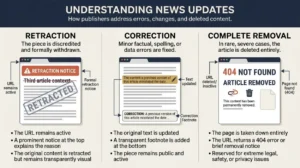
Prioritisation also requires distinguishing removable information from information governed by public-record requirements or legitimate publication interests. Not every public record follows the same removal mechanism, and search engines operate separately from the original publisher. A request directed at a website therefore addresses a different layer from a search-engine request concerning an indexed result. Understanding these mechanisms prevents inaccurate assumptions about how quickly or completely personal information disappears. The objective is a clearer information environment built around accurate, relevant, and appropriately accessible sources.
Why Is Personal Information Exposure a Reputation Management Issue?
Personal information exposure becomes a reputation management issue when it changes the information environment through which an identifiable person is evaluated. Reputation management is not limited to responding to negative statements; it also involves understanding the accuracy, relevance, authority, and visibility of information associated with an entity. Executives and founders operate within dense information networks where professional and personal identifiers frequently overlap. This makes their digital footprint particularly interconnected. Search visibility then determines which parts of that footprint receive the greatest attention.
The key distinction is between privacy, reputation, and search visibility. Privacy concerns the accessibility and use of personal information, reputation concerns how information shapes perceptions, and search visibility concerns how easily that information is discovered. These dimensions overlap without being identical. A factually accurate record can create unnecessary exposure without being defamatory or negative. Effective analysis therefore considers the complete relationship between content, source, indexing, ranking, and entity perception.
Executives and founders face higher personal information exposure risks because their professional identities generate interconnected digital footprints across corporate websites, public records, directories, media, social platforms, and data aggregation services. Search engines connect these sources through entity relationships, content indexing, relevance, authority, and ranking signals. The resulting SERP determines which aspects of an individual’s information environment become most visible to users.
Personal information exposure therefore requires analysis beyond the simple question of whether data exists online. The relevant considerations include source authority, information accuracy, search visibility, entity association, persistence, and the relationship between professional and personal identifiers. Understanding these mechanisms provides a clearer framework for evaluating digital footprint exposure and its effect on online credibility. A structured approach also distinguishes source-level information management from search-engine visibility, creating a more accurate view of how executive reputation develops across search ecosystems.
Why are executives and founders more exposed to personal information online?
Executives and founders often have extensive digital footprints created by company websites, public records, business directories, media coverage, professional profiles, and social platforms. These sources can connect professional identities with personal information through shared names, locations, company roles, and other identifiers.
What personal information can become visible about executives online?
Publicly accessible information can include names, business affiliations, previous addresses, telephone numbers, directorship records, professional profiles, and other identifying details. Data aggregators can combine information from multiple sources into searchable profiles.
How does personal information affect an executive’s online reputation?
Personal information can influence entity perception when it becomes prominent in searches associated with an executive’s name. Search visibility, source authority, information accuracy, and relevance all affect how users interpret the resulting digital footprint.
Can personal information appear in Google search results?
Yes, publicly accessible pages can be crawled, indexed, and ranked when they are relevant to a search query. Personal information can therefore appear in SERPs through directories, public records, data aggregator profiles, social platforms, and other indexed sources.
How can executives remove personal information from the internet?
Executives can identify exposed information, assess the source and applicable removal policy, and submit appropriate removal, correction, or restriction requests. Search-engine visibility also requires separate assessment because removing information from a source and changing its indexed search presence are different processes.