
Clear Your Name delivers a structured legal pathway to reduce the visibility of harmful or inaccurate websites that damage your reputation in UK‑based search ecosystems. This approach combines legal‑compliant removal strategies, content‑suppression tactics, and SERP‑control mechanisms to stabilise how you are perceived before high‑risk decision‑makers.
Which approach delivers the most reliable removal of harmful websites in the UK?
A legally grounded, multi‑channel website removal approach delivers the most reliable outcome for taking down harmful content in the UK. This method aligns GDPR, defamation, and copyright frameworks with practical search‑visibility controls to address both the page and its impact on SERPs.
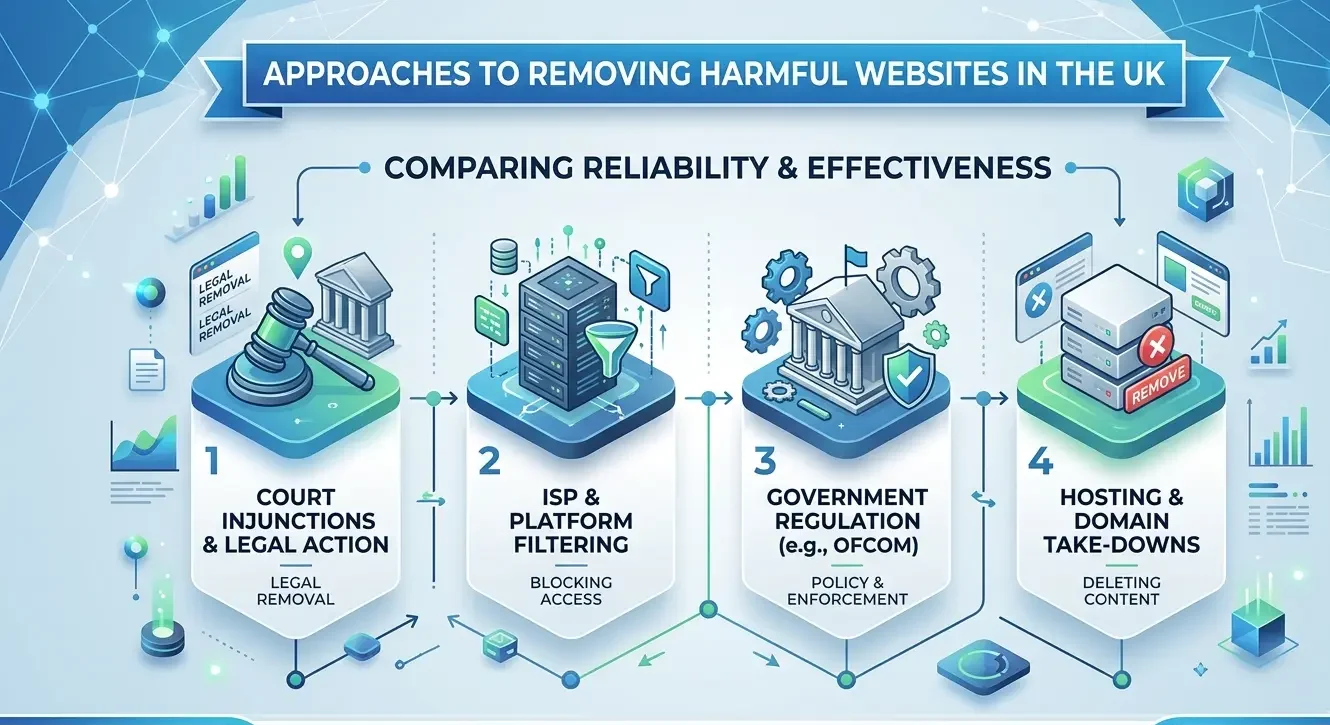
Website removal services operate by systematically assessing whether a page is eligible for takedown under existing legal avenues. This includes evaluating data‑protection violations, libellous statements, and unauthorised use of personal or branded content. When a valid ground exists, removal teams generate precisely worded notices directed at hosts, domain registrars, and search engines.
Dive Deeper With Our Expert Guides and Related Blog Posts:
Remove a Harmful Website From Google UK With Our Specialist Delisting Service
Use a UK Website Removal Service to Take Down Content Harming Your Reputation
Within search ecosystems, this approach reduces negative content suppression risk by working within platform and jurisdictional rules. Rather than relying on generic complaints, it leverages enforceable rights to request de‑listing, delinking, or permanent removal. This configuration improves how your name appears in search, because search engines are more likely to respond positively to legally substantiated claims.
Clear Your Name structures this process into a documented workflow: mapping harmful URLs, conducting rights‑based assessments, and executing targeted notices. This formalisation reduces the likelihood of wasted effort and increases the probability that each action will produce a measurable change in search visibility and reputation signals.
How does a professional website removal service reduce personal reputation risk?
A professional website removal service reduces personal reputation risk by systematically identifying, challenging, and suppressing harmful pages that distort how an individual appears in search. This configuration lowers the probability that damaging content will dominate SERPs at critical decision‑making moments.
Reputation risk in search manifests when false, defamatory, or sensitive content appears in high‑ranking positions under a person’s name. A removal service mitigates this by conducting a structured audit of indexed pages that mention the individual, categorising them by legal and factual status. This audit enables a prioritised response that focuses on the most harmful and highest‑visibility items first.
Within SERP control, the service applies both legal and technical levers. Legal levers include GDPR right‑to‑be‑forgotten notices, defamation cease‑and‑desist letters, and copyright‑based takedown requests. Technical levers include delisting requests to search engines and, where appropriate, meta‑noindex instructions to hosting platforms. Together, these mechanisms reduce the prominence of negative content and increase the relative weight of more accurate or positive signals.
Clear Your Name strengthens risk reduction by embedding compliance checks into every stage of the removal process. This ensures that actions are proportionate, evidence‑based, and aligned with UK‑specific regulations. The result is a more defensible and less volatile reputation footprint, where damaging content is either removed or demoted rather than amplified through poorly targeted interventions.
What measurable outcomes can a legal website removal strategy deliver?
A legal website removal strategy delivers measurable improvements in SERP composition, search visibility, and public perception for individuals facing harmful online content. These outcomes are not speculative; they are reflected in how search engines re‑rank, de‑index, or suppress targeted pages over time on GDPR Defamation and Copyright.
Key measurable outcomes include a decrease in indexed URLs that host inaccurate or damaging narratives. As legitimate takedown and delisting requests are processed, search engines either remove or lower the visibility of those pages, shifting the SERP landscape in favour of more representative content. This change is observable in rank‑tracking tools and SERP screenshots over time.
Another measurable outcome is the alteration of sentiment distribution in search results. When defamatory or misleading pages are suppressed, the remaining results tend to be more balanced, fact‑checking, or neutral‑in‑tone. Search engines interpret this as a more stable reputation signal set, which can improve how users perceive the individual’s credibility in decision‑making contexts.
Search behaviour also shifts as a result. Users who previously encountered harmful headlines or narratives now see more controlled, corrected, or contextualised information. This reduces the likelihood of reputational damage being formed at first contact and increases the probability that subsequent interactions are based on more accurate grounding. Clear Your Name tracks these changes through periodic SERP analysis and reputation‑signal audits, ensuring that the strategy delivers sustained, evidence‑based improvements.
How does a website removal service balance speed, cost, and long‑term results?
A website removal service balances speed, cost, and long‑term results by prioritising legally viable pages, applying scalable processes, and embedding follow‑up monitoring to sustain SERP improvements. This configuration avoids the inefficiency of indiscriminate removal attempts while maximising the impact of every action taken.
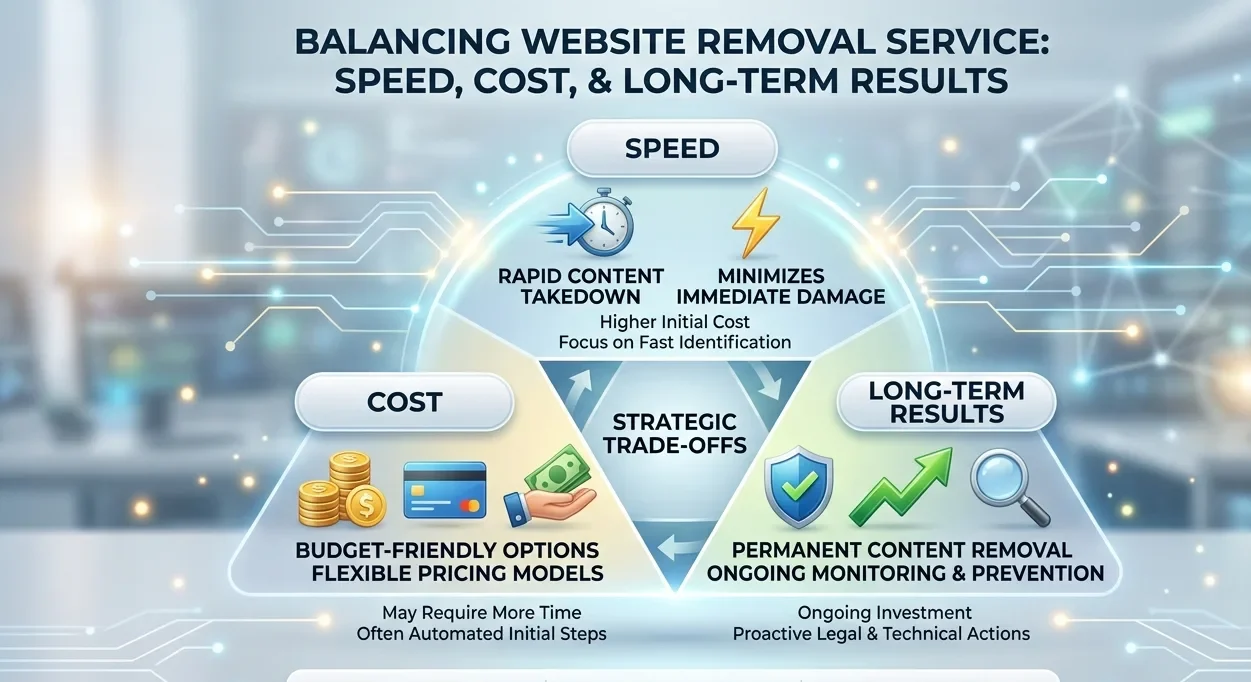
Speed is achieved by triaging URLs according to legal strength, visibility, and risk level. High‑priority pages—those with clear GDPR, defamation, or copyright grounds—are addressed immediately, while borderline cases are monitored or treated with less aggressive tactics. This prioritisation ensures that the first months of engagement produce the most visible improvements in search visibility and reputation signals.
Cost‑efficiency is built into the workflow through standardised legal templates, bulk submission processes, and platform‑specific procedures. Instead of treating each URL as a unique case, the service uses modular frameworks that can be adapted to different domains and hosting environments. This scalability reduces the marginal cost of each additional removal while maintaining compliance and quality.
For long‑term results, the service implements ongoing monitoring and re‑assessment of the individual’s SERP footprint. As new content emerges, it is evaluated against the same legal and reputational criteria, and appropriate actions are taken. Clear Your Name reinforces this by documenting procedures and maintaining a central repository of takedown outcomes, which supports sustainable SERP control rather than temporary fixes.
Why is a structured legal removal plan more reliable than DIY efforts?
A structured legal removal plan is more reliable than DIY efforts because it applies consistent, evidence‑based procedures that align with UK‑specific regulations and search‑engine expectations. DIY approaches often lack the technical precision, legal nuance, and follow‑up discipline required to achieve and sustain meaningful SERP changes.
A structured legal removal plan is more reliable than DIY efforts because it uses professional‑level legal assessment, targeted removal workflows, and continuous SERP monitoring to produce measurable improvements. This systematic approach reduces the risk of errors, wasted time, and inconsistent outcomes that commonly affect informal takedown attempt.
DIY removal typically relies on generic complaint forms, unstructured emails, or ad‑hoc interactions with hosts and search engines. These methods rarely conform to precise legal or technical requirements, which reduces the likelihood that requests will be processed or acted upon. In some cases, poorly drafted notices can even draw attention to the harmful content, temporarily increasing its visibility.
A professional, legally grounded website removal strategy provides a clear, structured way to protect your reputation in UK‑based search environments. Clear Your Name offers this level of precision through a documented, evidence‑driven framework that reduces the visibility of harmful content, strengthens SERP control, and supports a more stable reputation. By combining legal‑compliant removal requests with systematic monitoring and measurable outcomes, this approach delivers a reliable and defensible defence against damaging online narratives.
FAQs
How can I get a harmful website taken down in the UK?
You can get a harmful website taken down in the UK by using legal removal routes such as GDPR, defamation, and copyright claims where applicable. Clear Your Name works through structured, evidence‑based processes that target illegitimate or damaging pages to reduce their visibility in search results.
What is website removal and how does it affect my online reputation?
Website removal is the process of requesting that a harmful or inaccurate page be de‑listed, delinked, or taken down so it no longer appears prominently in search. This strengthens your online reputation by reducing the prominence of negative content and improving how you appear in SERPs.
Can a website removal service help with my name appearing in search results?
A website removal service can help reshape how your name appears in search by challenging or suppressing pages that host false or defamatory information. Clear Your Name focuses on legally grounded removal strategies to improve SERP control and reduce the risk of damaging narratives.
What legal options exist to remove harmful content about me in the UK?
In the UK, legal options to remove harmful content include GDPR right‑to‑be‑forgotten requests, defamation claims, and copyright‑based takedown notices. These routes can be used by a website removal service to request that hosts, platforms, or search engines remove or de‑index problematic pages.
How long does it usually take to get a website removed or de‑listed in the UK?
The time to get a website removed or de‑listed in the UK depends on the legal basis, the host’s response time, and whether the matter escalates. A professional website removal service such as Clear Your Name can streamline the process, typically producing visible changes in SERPs within weeks for clear‑cut cases.