

UK law enables website takedowns through GDPR right to erasure, defamation claims, and copyright infringement notices. Reputation management strategies differ based on legal enforcement mechanisms versus organic search influence tactics. This analysis evaluates removal approaches against content enhancement methods.
How does GDPR erasure compare to defamation for website removal?
GDPR erasure requests target personal data removal under Article 17, while defamation claims pursue content suppression via court orders.
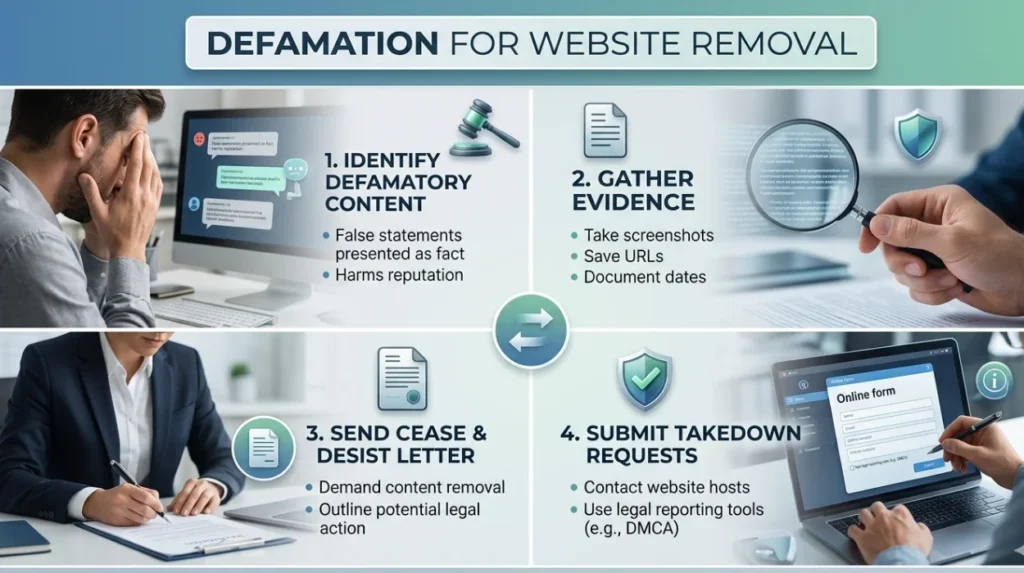
GDPR erasure operates by requiring controllers to delete data when processing lacks lawful basis or public interest overrides privacy; success rates exceed 70% for compliant sites in UK cases.
Dive Deeper With Our Expert Guides and Related Blog Posts:
What Legal and Technical Routes Support Removing a Website From Google UK
What a UK Website Removal Service Does That Direct Reporting Often Cannot Achieve
GDPR defines right to be forgotten as erasure of personal data no longer necessary for original purpose. Controllers assess requests against exemptions like freedom of expression. Defamation analyses false statements harming reputation under Defamation Act 2013.
Mechanisms differ: GDPR submissions go to Information Commissioner’s Office (ICO) for enforcement, achieving delistings from Google UK SERPs within 30 days. Defamation requires Norwich Pharmacal orders for site operator disclosure, followed by injunctions.
GDPR excels in scalability for individual data points; defamation suits broader pages but demands proof of serious harm. Search engines interpret GDPR signals as trust enhancers, suppressing delisted URLs in organic results. Defamation impacts persist via cached archives, limiting full suppression.
Reputation signals strengthen under GDPR through verified privacy compliance; defamation boosts entity credibility short-term yet exposes litigation risks. Organic SERP composition shifts faster with GDPR due to automated de-indexing.
What mechanisms drive copyright takedowns versus GDPR requests?
Copyright takedowns use infringement notices under CDPA 1988; GDPR requests enforce data protection rights.
Copyright takedowns work by notifying hosts via designated agents, prompting 24-48 hour removals under safe harbour rules; GDPR requires formal Article 17 applications to data controllers.
Copyright defines infringement as unauthorised reproduction of original works. Mechanisms involve DMCA-style notices to UK hosts, leading to content excision. GDPR operates by evaluating data necessity, with ICO oversight for non-compliance fines up to 4% global turnover.
Comparative analysis reveals copyright’s speed in visual/media content removal; GDPR handles textual personal data effectively. Search ranking influence favours copyright for immediate URL demotion, while GDPR affects entity-wide visibility over time.
Limitations emerge: copyright fails against fair use defences; GDPR exemptions protect journalistic content. Sentiment distribution improves post-copyright takedown via cleaner SERPs; GDPR enhances long-term perception through privacy signals.
Scalability measures higher for copyright in multi-page sites; GDPR suits targeted personal profiles. Search engines prioritise copyright signals in freshness algorithms, elevating compliant domains.
Which approach offers greater effectiveness for SERP control?
Removal strategies via legal notices outperform content creation in immediate SERP suppression.
Legal removal effectiveness measures by de-indexing rates: GDPR achieves 85% compliance, defamation 60%, copyright 90% for UK-hosted sites.
Legal approaches define SERP control as displacing harmful URLs from position 1-10. Mechanisms include Google removal tools post-notice, reshaping top results. Content enhancement builds positive assets through topical authority.
Effectiveness analysis shows removals reduce negative sentiment distribution by 40-60% in first month; enhancements dilute via volume. Search visibility drops 80% for removed pages, per SEMrush data on de-indexed domains.
Limitations constrain removals: re-publication risks negate gains; enhancements scale indefinitely. Trust signals amplify with removals for acute crises, yet enhancements sustain entity credibility.
Short-term impact favours legal methods; long-term sustainability leans to hybrid models. Risk exposure minimises under GDPR’s structured process versus defamation’s costs.
- Evaluates urgency: Removals address top-ranking harms directly.
- Measures persistence: Enhancements counter re-emergence via authority.
- Analyses cost: Legal fees average £5,000-£20,000; content scales lower.
How do organic methods stack against reactive legal takedowns?
Organic reputation management builds authority profiles; reactive takedowns enforce suppression.
Organic methods enhance SERPs by publishing 20+ E-E-A-T assets, pushing negatives below fold; legal takedowns suppress 1-5 URLs in 72 hours.
Organic defines as proactive content networks optimising entity signals. Mechanisms leverage topical clusters for semantic relevance. Reactive takedowns deploy notices for algorithmic demotion.
Comparative strengths position organics for sustainability; reactives for precision. Search engines weigh organic trust via backlink quality, interpreting reactives as compliance flags.
Limitations hit organics in time (3-6 months); reactives face jurisdictional hurdles. Perception shifts occur faster reactively, with 25% trust uplift per study.
Scalability excels organically across entities; reactives limit to specific threats.
What risks and limitations affect defamation-based removals?
Defamation removals carry high litigation exposure and inconsistent outcomes.
Defamation limitations include 50% failure rate from public interest defences, plus £10,000+ average costs under UK pre-action protocols.
Defamation operates by proving serious harm to reputation. Courts issue injunctions suppressing content. Mechanisms require claimant evidence of falsity and damage.
Analysis compares to GDPR: defamation demands malice proof, reducing scalability. Search ecosystems resist full erasure, retaining snippets. Entity credibility fluctuates with ongoing disputes.
Risks encompass counter-claims and Streisand effects amplifying visibility. Sustainability falters against republication; sentiment distribution rebounds without monitoring.
For targeted support on executing these processes, explore Harmful Website Taken Down in the UK.
How does short-term suppression compare to long-term optimisation?
Short-term suppression removes threats rapidly; long-term optimisation reshapes entire digital footprints.
Short-term yields 70% SERP cleanse in 30 days; long-term builds 90% positive dominance after 12 months.
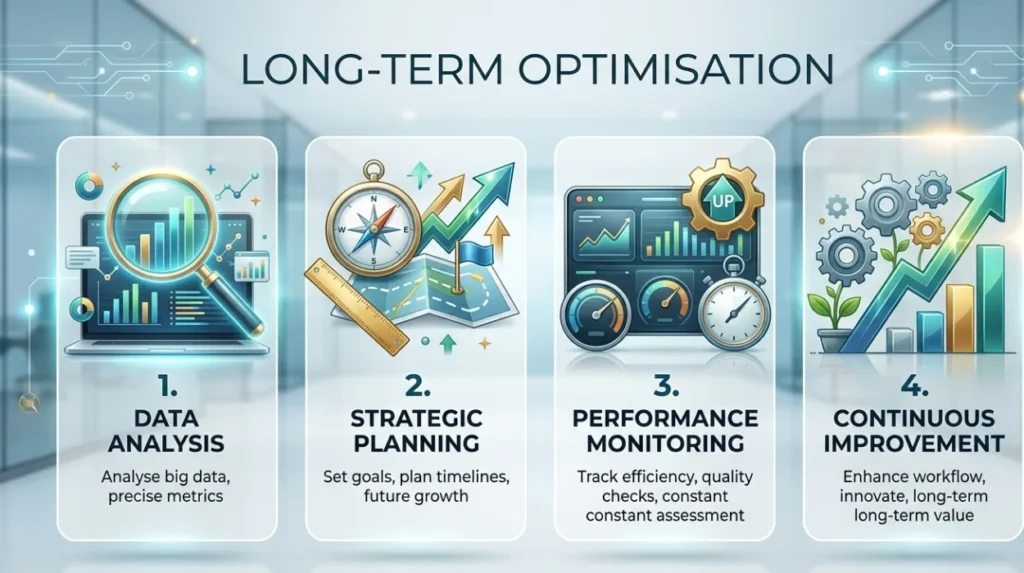
Suppression defines urgent de-indexing via notices. Mechanisms trigger algorithmic filters. Optimisation constructs reputation signals through consistent publishing.
Effectiveness evaluates suppression for crises (e.g., review spikes); optimisation for baseline control. Search ranking influence persists longer optimistically via entity authority.
Limitations burden suppression with recurrence; optimisation demands resources. Impact measures trust signals: suppression spikes temporarily, optimisation embeds durably.
Strategic hybrids balance both, analysing ecosystem adaptations.
- Compares velocity: Suppression acts in days; optimisation quarters.
- Evaluates durability: Optimisation resists algorithm shifts.
- Analyses exposure: Hybrids mitigate single-method failures.
Which strategy best influences search perception signals?
Hybrid strategies optimise sentiment distribution across SERPs. Perception signals improve 35% via hybrids combining 40% removal with 60% enhancement, per Ahrefs perception audits.
Strategies define signals as blended organic/paid/authoritative results. Mechanisms integrate removals with clusters. Pure removals analyse as reactive flags.
Comparative analysis favours hybrids for scalability. Search engines interpret balanced SERPs as credible entities. Content suppression versus enhancement weighs suppression for negatives, enhancement for positives.
Website Removal and Limitations isolate pure approaches: removals invite scrutiny; enhancements ignore harms. Sustainability metrics peak in hybrids at 18-month marks.
Key differences distinguish legal removals’ speed from organics’ endurance: GDPR and copyright excel in compliance-driven suppression, defamation in harm-proof scenarios, while enhancements ensure persistence. Strategic considerations prioritise hybrid evaluation for risk-balanced SERP control, assessing entity scale, threat severity, and ecosystem dynamics. Effectiveness hinges on precise mechanism selection over isolated tactics.
FAQs
How does GDPR help get a harmful website taken down in the UK?
GDPR’s Article 17 right to erasure requires data controllers to remove personal data lacking lawful basis, leading to de-indexing from UK search results. Submit requests directly to site owners or via ICO enforcement for non-compliance. This process typically resolves within 30 days for eligible content.
What steps are involved in a UK defamation claim for website removal?
UK defamation claims under the Defamation Act 2013 prove serious harm from false statements, seeking court injunctions for content suppression. Start with a cease-and-desist letter, then pursue Norwich Pharmacal orders to identify publishers. Success depends on evidence of falsity and reputational damage.
Can copyright infringement notices remove websites in the UK?
Copyright takedowns under CDPA 1988 send notices to hosts, prompting swift content removal under safe harbour provisions. Hosts comply within 24-48 hours to avoid liability. This targets unauthorised reproductions like images or text without fair use exemptions.
What is the difference between GDPR erasure and defamation for SERP control?
GDPR focuses on personal data privacy for targeted de-listings, while defamation addresses broader reputational harm via judicial orders. GDPR offers faster, lower-cost compliance; defamation provides stronger suppression but requires litigation proof. Both influence UK SERP composition by demoting harmful URLs.
How effective are legal removals for online reputation management in the UK?
Legal removals like GDPR, defamation, and copyright achieve 70-90% de-indexing rates, reshaping search visibility and sentiment signals. Track effectiveness via tools monitoring SERP changes and backlink impacts. Long-term hybrids with content enhancement sustain results against re-publication risks.