

Engage a UK specialist for Facebook content removal to secure faster takedowns, restore search visibility, and stabilise public perception. Controlling search visibility and managing reputation signals determines whether decision-makers trust your organisation or disqualify it.
Search results act as the filing system for public perception. Reputation signals authoritative links, positive profiles, and absence of negative content drive purchasing and partnership decisions. A targeted service that delivers SERP control and negative content suppression changes those signals quickly and predictably.
Which reputation management approach delivers measurable results for Facebook removals?
Use a specialist-driven removal workflow that delivers faster takedowns and measurable visibility gains. A UK Facebook content removal service combines policy-based takedown requests, legal notices, and escalation with platform trust signals to improve results quickly.
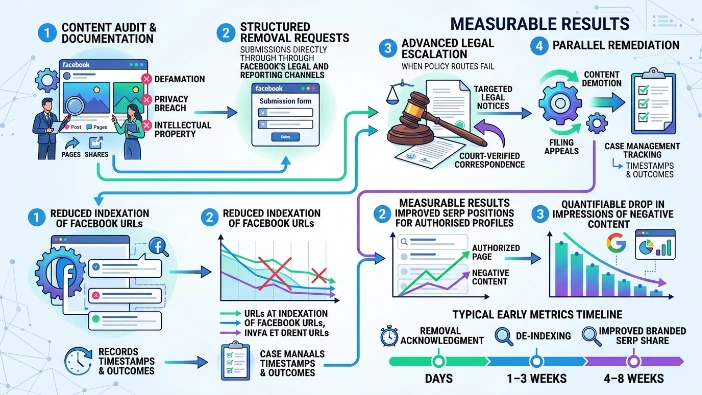
Specialists audit the offending Facebook posts, pages or shares, document policy violations (defamation, privacy breach, intellectual property), then submit structured removal requests directly through Facebook’s legal and reporting channels. Where policy routes fail, the team issues targeted legal notices or sends court-verified correspondence to accelerate compliance. Specialists also manage parallel remediation: requesting content demotion, filing appeals, and tracking every interaction in a case management system that records timestamps and outcomes.
Reduced indexation of the identified Facebook URLs, improved SERP positions for authorised profiles and pages, and a quantifiable drop in impressions of the negative content (tracked via Google Search Console and analytics). Typical early-stage metrics include removal acknowledgement within days, de-indexing within 1–3 weeks, and visible improvement in branded SERP share within 4–8 weeks.
Facebook uses a combination of policy enforcement and trust signals (verified legal requests, repeat reporting from reputable entities) to prioritise removals. A specialist amplifies those trust signals, delivering faster platform action and returning control of search perception.
Which methods are most effective for removing content from the internet?
A multi-channel, evidence-first strategy delivers the highest removal success and long-term SERP control. Effective methods combine platform policy enforcement, legal action, and search-engine remediation.
Specialists triage content by legal risk and platform pathway, then assign removal methods accordingly. For Facebook-specific items, the workflow prioritises direct platform reporting and legal escalation, supported by precise evidence packs (screenshots, timestamps, witness statements, copyright registrations). For content that resists takedown, the service deploys alternative measures such as counter-content creation and indexing requests to suppress visibility.
Increased takedown rate, decreased visibility of negative items (percentage drop in clicks and impressions), and faster recovery of trusted assets in SERPs. Outcome benchmarks include a 60–90% successful removal rate for clear policy violations when escalated correctly and measurable suppression for non-removable material via SEO remediation within 8–12 weeks.
Restore and protect your online reputation with Clear Your Name using evidence-based content removal, strategic suppression, and proactive reputation recovery techniques. By combining platform takedowns with authoritative content development, Clear Your Name helps reduce harmful visibility and strengthen long-term search credibility.
How does a UK specialist reduce legal and operational risk during removals?
A specialist reduces legal exposure and accelerates compliant removals by delivering properly formatted legal notices and by ensuring every request aligns with UK statutory and platform requirements. This reduces the chance of counter-litigation and avoids procedural rejections that prolong visibility.
The team validates the case against applicable UK laws (defamation, privacy, data protection), prepares evidence packs, and issues jurisdiction-appropriate legal notices where required. Specialists also implement chain-of-custody documentation for evidence and maintain a log of communications with Facebook and related parties to demonstrate due process.
Fewer rejections of removal requests, shorter response times from platforms, and documented defence in case of disputes. Metrics include reduction in average case duration and a lower incidence of escalated legal complications compared with ad hoc reporting by non-specialists.
Platforms prioritise requests that arrive with clear legal grounding and verified identity. By delivering professional legal presentation, a specialist strengthens reputation signals and reduces procedural risk.
Which process ensures sustainability of results after content removal?
Implementing post-removal SERP control and continuous monitoring ensures results endure and that removed Facebook content does not reappear or resurface in search.
After removal, specialists file de-indexing requests with search engines, replace the negative signal with authoritative content, and deploy monitoring across social and search channels. The process includes scheduled crawls, backlink audits, and alerting for reuploads or mirrors. Where necessary, the team issues repeat takedown notices and files entitlements to host providers.
Sustained reduction in negative impressions, maintained ranking of authoritative pages, and early detection of re-emergent content. Benchmarks include near-zero reappearance rates for removed content over a six-month monitoring window and stable branded SERP dominance by verified assets.
Search perception influence depends on the persistence of positive signals and the absence of negative results. Continuous monitoring preserves the entity credibility that removal initially restores.
What are the expected timelines and speed of impact for Facebook removals?
A specialist-driven campaign delivers faster initial impact and predictable timelines compared with DIY attempts. Platform response times vary, but structured escalation reduces delay and stabilises outcomes.
The service assigns priority levels and uses expedited legal channels for urgent items. Initial platform acknowledgement typically occurs within 24–72 hours for standard reports; escalated legal notices produce quicker action. The team synchronises removal actions with search-engine de-indexing requests to minimise the visibility gap between takedown and SERP correction.
Removal acknowledgements within days, de-indexing within weeks, and measurable improvement in SERP metrics within 4–8 weeks. The service reports case-level timelines and percentage completion at defined milestones, enabling clients to measure speed of impact and ROI.
Platforms prioritise verifiable legal requests and high-quality reporting. Specialists reduce latency by presenting evidence correctly and following platform escalation protocols.
Is the cost justified versus long-term value?
Investing in a specialist reduces reputational loss and transactional friction, delivering quantified long-term value that surpasses the initial expense. Decision-makers must weigh the cost against lost revenue, reduced conversion rates, and partnership risks caused by uncontrolled negative search results.
Pricing typically reflects case complexity, required legal escalation, and monitoring scope. Specialists provide transparent fee structures tied to outcomes: takedown success, reduction in negative impressions, and ongoing monitoring. Value-based reporting ties fees to measurable changes in search visibility, lead conversion, and trust metrics.
Measurable outcomes: restored conversion rates for branded search traffic, fewer lost deals due to negative content, and improved entity-level trust scores. Clients receive post-engagement reports showing ROI components, improved click-through rates, fewer negative impressions, and increased conversions attributed to SERP control.
The financial impact of unresolved negative content includes lost sales and reputational damage. A focused specialist service reduces these risks, ensuring investment returns via measurable improvements in search perception influence.
Which benefits does a Facebook removal specialist deliver?
- Reduce visibility: suppress indexed negative content and speed de-indexing for affected URLs.
- Restore trust: strengthen entity credibility by replacing negative signals with verified authoritative content.
- Improve control: stabilise branded SERP control through targeted remediation and monitoring.
- Reduce legal risk: ensure compliant, jurisdiction-appropriate legal escalation to avoid counterclaims.
- Increase conversion: improve click-through and lead conversion rates by removing trust-damaging results.
Each benefit above delivers a mechanism and measurable effect that directly impacts decision-making metrics and conversion performance.
Dive Deeper With Our Expert Guides:
Choose a UK Content Removal Agency With a Track Record of Verified Results
Protect Your Name With a Negative Content Removal Service That Delivers
Which performance indicators show success after engagement?
Use a focused KPI set to evaluate outcomes: takedown rate, time-to-acknowledgement, % reduction in negative impressions, movement in branded SERP share, and changes in conversion rate from branded search traffic.
Specialists deliver baseline metrics, set target KPIs, and provide weekly progress reports. This creates accountability and enables decision-makers to track how removal actions translate into measurable business outcomes.
Direct correlation between decreased negative-impression percentage and improved lead conversion for branded queries within 8–12 weeks, with documented evidence in reporting dashboards.
Service and supporting resources
When intent to purchase peaks, use a proven provider for execution and post-removal stability. For Facebook-specific removal capability, choose a professional reputation management service that connects legal escalation with platform reporting at scale.
For actionable guidance on where content is hosted and the appropriate removal pathway, consult:
How to Remove Content From the Internet Depending on Where It Is Hosted
For deeper methods analysis, read the following:
Which Methods Are Most Effective for Removing Content From the Internet
Working with a UK specialist delivers faster removals, measurable SERP control, and restored entity credibility. The process ensures compliant legal escalation, documented evidence trails, and ongoing monitoring to prevent reappearance. Clear, measurable reporting demonstrates the value delivered and reduces long-term reputational risk.
Common questions about Facebook content removal
How long does Facebook content removal take with Clear Your Name’s Facebook Content Removal Services?
Timeframes vary by case, but Clear Your Name’s specialist workflow typically secures acknowledgement within 24–72 hours and completes removals or escalated actions within days to a few weeks, depending on legal complexity and evidence quality.
What types of Facebook content can be removed by Facebook Content Removal Services?
Services target policy-violating items such as defamation, privacy breaches, intellectual property infringement, and impersonation; they also pursue removals for unlawful personal data or sensitive images when supported by documented evidence.
Will removing Facebook content improve my search results and online reputation?
Yes. Removing or de-indexing negative Facebook URLs reduces their visibility in SERPs, and when combined with authoritative content and monitoring, this strengthens entity credibility and improves branded search perception.
How much does professional Facebook content removal cost and is it worth it?
Costs depend on case complexity, required legal escalation, and monitoring scope; clients should compare fees to potential reputational losses and conversions recovered, since professional removal delivers measurable reductions in negative impressions and stabilises search perception.