Parents can limit children’s personal information exposure online by combining preventative privacy controls with targeted management of information that has already entered public search ecosystems. The most effective approach depends on whether information is still private, already indexed, replicated across websites, or influencing search perception.
Reputation management strategies differ based on the type, source, accessibility, and persistence of information associated with an individual. Online reputation control methods are evaluated through their effect on search visibility, reputation signals, entity credibility, and the composition of search engine results pages (SERPs). For children, the emphasis is primarily on limiting unnecessary exposure before personal information develops into a persistent digital footprint.
Which approach is more effective: preventing exposure or removing published information?
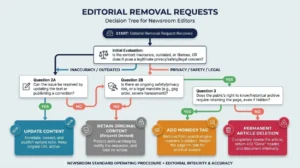
Preventing exposure generally provides stronger control over information before it enters public search ecosystems, while removal addresses information that has already become accessible. Prevention operates by restricting publication, controlling privacy settings, reducing identifiable details, and limiting access to content containing personal information. Removal operates by addressing an existing source and seeking the deletion, de-indexing, amendment, or restriction of information where an appropriate mechanism exists.
The distinction matters because prevention reduces the number of information sources available for indexing. Once content becomes publicly accessible, additional processes can affect its persistence, including search engine crawling, indexing, caching, copying, syndication, and publication on secondary websites. Removing one source therefore does not automatically remove every related reference. A preventative strategy limits the creation of these downstream signals, while a removal strategy responds to signals that already exist.
Prevention also has a lower dependency on third-party decisions. Parents control information they publish directly, but they have less control over content created by schools, organisations, event providers, social platforms, or unrelated websites. Removal therefore becomes more relevant when information has already entered an external information environment. The comparative advantage of prevention is control at the source, while the advantage of removal is targeted intervention against existing exposure.
How do content removal and content suppression compare?
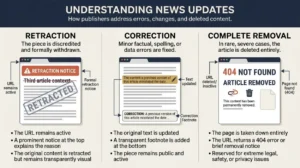
Content removal eliminates or restricts an information source, whereas content suppression reduces the prominence of information without necessarily eliminating the underlying source. Removal operates at the source level when a legitimate basis for deletion or restriction exists. Suppression operates within the search ecosystem by strengthening relevant, accurate, and authoritative content so that undesirable results receive less visibility for relevant queries.
Removal has a direct effect when the source agrees to delete the information or a valid policy, privacy, legal, or platform mechanism supports removal. Its limitation is that eligibility varies according to the nature of the content and the policies governing the source. Suppression does not depend entirely on the disappearance of the original page, but it also does not guarantee that the underlying content becomes inaccessible.
From a search perception perspective, content suppression vs content enhancement involves changing the composition of visible search results rather than relying exclusively on deletion. A stronger set of relevant and authoritative results can influence which information users encounter first. This makes suppression useful when removal is unavailable, incomplete, or unsuitable, but it requires ongoing attention to search ranking influence and content quality.
Is an organic strategy better than a reactive reputation strategy?
Organic reputation development offers greater long-term sustainability, while reactive management provides a faster response to specific information problems. An organic strategy operates by establishing accurate, authoritative, and contextually relevant information before a reputation issue becomes dominant. A reactive strategy identifies an existing exposure and applies an intervention based on its source, visibility, persistence, or potential impact.
Organic approaches influence the underlying information environment through consistent publication and credible references. Over time, this can create a broader distribution of reputation signals around an entity. Reactive approaches focus resources on specific pages, profiles, images, directories, or search results. Their effectiveness therefore depends more directly on the characteristics of the individual information source.
The two approaches also differ in risk exposure. A purely reactive model can leave gaps because each new exposure requires a separate response. An organic model creates a stronger baseline but requires sustained management of information quality and consistency. Combining preventative controls with selective reactive intervention creates a more balanced structure because it addresses both the creation of information and the consequences of existing exposure.
Which strategy has the strongest short-term impact on children’s online exposure?
Targeted removal generally has the strongest short-term effect when the information source is identifiable and an appropriate removal mechanism exists. The reason is direct: eliminating the source can prevent users from accessing the information through that particular page. The impact is less direct when the information has already been reproduced elsewhere or remains available through independent sources.
Search engines also operate through their own crawling and indexing processes. Removing a webpage does not necessarily mean that its search representation disappears instantly. Search indexes require processing, and other sources containing equivalent information can continue appearing in results. Short-term effectiveness therefore depends on source control, indexing status, duplication, and the number of independent references.
Suppression can produce a different short-term outcome. Rather than eliminating information, it seeks to alter SERP composition by improving the visibility of relevant and authoritative alternatives. This approach measures success through changes in ranking position, result prominence, and the distribution of information visible for relevant queries. Its impact therefore concerns search perception rather than source-level deletion.
Which approach provides stronger long-term protection?
Long-term protection depends more on controlling the information lifecycle than on relying on a single intervention. Information lifecycle management refers to the progression from publication and accessibility through indexing, distribution, ranking, reproduction, and potential removal. A strategy that addresses only one stage leaves the remaining stages unaffected.
Preventative controls are important because they reduce the amount of unnecessary personal information entering the lifecycle. Monitoring provides visibility into new publications and changes in search results. Removal addresses information that meets an appropriate removal criterion, while suppression and content enhancement address information that remains visible despite unsuccessful or unavailable removal.
Long-term effectiveness therefore involves sustainability rather than a single ranking outcome. A strategy that requires repeated responses to identical exposure patterns has a different resource profile from one that reduces the creation of those exposures. Evaluating sustainability requires examining recurrence, source dependency, monitoring requirements, and the stability of the information environment.
How does children’s personal information influence search visibility?
Children’s personal information influences search visibility when publicly accessible information becomes connected with identifiable search entities. A child’s name, photograph, school reference, event listing, username, or location can create relationships between separate pieces of indexed information. Search engines analyse these relationships to determine relevance for particular queries.
Search ranking does not simply depend on whether information exists. It also depends on factors such as relevance, authority, content structure, query intent, source quality, and relationships between entities. A page from an authoritative website can therefore have a different visibility profile from an isolated social media post containing similar information.
The concentration of information around one identity also affects perception. If unrelated pages repeatedly connect the same name with a particular school, location, activity, or image, those associations become part of the searchable entity context. Limiting unnecessary publication reduces opportunities for unrelated information to become part of that context.
How should parents evaluate removal versus suppression?
Parents can evaluate the two approaches by examining the source, visibility, eligibility, persistence, and search impact of the information. A structured assessment prevents the same intervention from being applied to every type of exposure. The objective is to match the intervention with the mechanism responsible for the information remaining visible.
- Identify the source by determining whether the information originates from a social platform, website, directory, publication, school page, database, or another source.
- Assess accessibility by checking whether the information is publicly visible, restricted by account settings, indexed by search engines, or available only through direct access.
- Evaluate removal eligibility by examining the source’s privacy rules, content policies, legal framework, and available reporting mechanisms.
- Measure search visibility by assessing whether the information appears prominently for searches involving the child’s name or identifiable details.
- Monitor persistence by checking for duplicate pages, copied material, cached references, images, and independent sources containing equivalent information.
This evaluation framework separates source-level control from search-level control. It also identifies situations where removal has a defined mechanism and situations where suppression provides a more appropriate search-focused response.
How do reputation signals affect the choice of strategy?
Reputation signals affect strategy selection because search ecosystems interpret information through relationships between sources, entities, topics, and contextual references. A reputation signal is an identifiable piece of information that contributes to how an entity is understood or evaluated. The signal can be positive, neutral, negative, authoritative, contextual, or ambiguous depending on its source and surrounding information.
Removal eliminates a signal when the underlying information is successfully deleted or restricted. Suppression changes the prominence of a signal within search results. Content enhancement introduces or strengthens relevant information that provides a broader context around the entity. These approaches therefore operate on different parts of the search ecosystem.
Entity credibility also depends on consistency. Contradictory names, inaccurate descriptions, duplicated profiles, or incomplete information can create ambiguity within search systems. A controlled digital footprint provides clearer contextual signals and reduces unnecessary relationships between an individual and unrelated information. This makes information accuracy an important consideration alongside privacy.
Dive Deeper With Our Expert Guides:
When to Choose Suppression Over Removal for Personal Information
How Sole Traders Can Protect Their Address When Registering a Business
Which strategy is most scalable for managing children’s digital footprints?
Preventative controls are generally more scalable because they can be applied repeatedly before new information becomes public. Establishing consistent rules for photographs, names, locations, school references, account visibility, and third-party publication reduces the need for individual interventions later. The mechanism is procedural rather than page-specific.
Reactive removal is less scalable when exposure occurs across numerous independent sources. Each source can have different policies, reporting procedures, ownership structures, and eligibility requirements. A single piece of information can also generate copies across multiple platforms, increasing the number of individual interventions required.
Monitoring adds another layer to scalability. Automated or systematic monitoring can identify changes in search visibility more efficiently than irregular manual checks. However, monitoring only identifies information; it does not itself remove or suppress that information. A scalable reputation framework therefore combines preventative controls, structured monitoring, and targeted intervention rather than relying exclusively on one method.
How can parents balance privacy protection with useful online information?
Privacy protection works best when it distinguishes necessary information from unnecessary exposure. Not every online reference presents the same level of risk, and not every public reference requires removal. The relevant question is whether the information creates an unnecessary connection between the child’s identity and identifiable personal details.
A balanced approach evaluates the information’s purpose, audience, permanence, search visibility, and ability to connect with other data. A school achievement published without unnecessary identifying details has a different information profile from a public page combining a child’s full name, photograph, school, location, and routine activities. The distinction is based on information density and identity linkage.
This approach also avoids treating digital reputation as a purely negative concept. A controlled digital footprint concerns the accuracy, relevance, accessibility, and context of information associated with an individual. Privacy protection therefore involves reducing unnecessary exposure while preserving appropriate information that has a legitimate purpose.
What is the most sustainable approach to children’s online information exposure?
The most sustainable approach combines prevention, monitoring, targeted removal, and search-focused reputation management according to the characteristics of each information source. Prevention reduces the volume of new information entering public systems, while monitoring identifies changes in exposure and search visibility. Removal addresses information where a defined mechanism supports deletion or restriction. Suppression and content enhancement provide alternatives when information remains accessible but requires a different search-level response. Protect Your Child’s Personal Information Online With Our UK Service provides a focused option for families seeking structured support with online personal information exposure.
The strategic value of this combination lies in assigning different functions to different methods. Removal is strongest when the source can be changed directly. Suppression is relevant when the information remains accessible but its search prominence requires management. Organic reputation development provides a longer-term framework for maintaining accurate and authoritative information around an entity.
The evaluation therefore needs to consider effectiveness, scalability, risk exposure, and sustainability together. A strategy that produces a short-term result but requires continuous intervention has a different value from one that reduces recurring exposure. For children’s personal information, preventative controls remain particularly important because limiting unnecessary information at the publication stage reduces the number of later reputation-management interventions required.
Children’s personal information exposure requires a distinction between preventing publication, removing existing information, suppressing search visibility, and strengthening accurate information around an identity. Prevention offers control before information enters search ecosystems, while removal addresses established sources. Suppression operates at the SERP level when information remains accessible, and content enhancement contributes additional authoritative context.
The strongest strategic evaluation considers how each method affects search visibility, reputation signals, entity credibility, risk exposure, scalability, and long-term sustainability. No single intervention controls every stage of the digital information lifecycle. A structured approach therefore matches the intervention to the source, persistence, visibility, and purpose of the information.
How can parents limit their children’s personal information exposure online?
Parents can reduce children’s personal information exposure by reviewing privacy settings, limiting publicly shared details, and teaching children what information should remain private. Regularly checking social media, gaming, and app permissions also helps reduce unnecessary data exposure.
What personal information should children avoid sharing online?
Children should avoid publicly sharing their full name, home address, phone number, school details, passwords, location, and private photographs. Limiting these details reduces the risk of unwanted contact, identity misuse, and online harassment.
How can parents protect children’s privacy on social media?
Parents can use private account settings, review followers and friends, disable unnecessary location sharing, and monitor what personal details appear in posts. Clear Your Name can also help parents understand how exposed personal information affects a child’s wider online reputation.
Can parents remove their child’s personal information from the internet?
Parents can request removal of personal information from websites, social platforms, search results, and data broker databases where applicable. The available removal options depend on the website’s policies, the type of information involved, and applicable privacy laws.
How can parents teach children about online privacy and personal information?
Parents can teach children to question why an app or person needs their information before sharing it and to use strong passwords and privacy settings. Regular conversations about phishing, oversharing, location tracking, and unknown contacts help children develop safer online habits.