
Social media platforms handle content removal requests in the UK through a combination of platform policies, legal obligations, moderation systems, and user reporting mechanisms that determine whether content breaches rules or infringes legal rights. These processes influence online reputation because removed or retained content affects digital visibility, public perception, and the long-term accessibility of information.
Reputation management is the process of understanding and influencing how information shapes public perception across digital environments. Online reputation refers to the collective interpretation of content, mentions, and signals associated with an individual, organisation, or entity within search ecosystems and social platforms.
Why do social media platforms remove content in the UK?
Social media platforms remove content when it violates platform standards or conflicts with legal requirements applicable in the United Kingdom. Content removal is a moderation function designed to maintain platform integrity, reduce harmful material, and comply with regulatory expectations.
Every platform establishes community standards that define prohibited material. These standards commonly address harassment, impersonation, hate speech, misinformation, privacy breaches, intellectual property infringement, and non-consensual content. Automated systems and human reviewers evaluate reported material against these standards and determine whether removal is justified.
Content removal directly affects reputation signals because social platforms are major sources of searchable information. Public posts, comments, and media frequently appear in search engine results pages and contribute to entity perception. When harmful or misleading material remains accessible, it can influence credibility assessments and alter search visibility.
What types of content are commonly removed by social media platforms?
Social media platforms commonly remove content that breaches platform policies or infringes legal rights. Removal categories define the boundaries of acceptable online behaviour and establish standards for content governance.
Harmful content refers to material that threatens safety, privacy, or lawful participation in online environments. Platforms generally classify harmful material into distinct categories:
- Remove abusive content by identifying harassment, threats, and targeted intimidation that violate community standards.
- Restrict misleading information by evaluating false claims that create public harm or manipulate users.
- Delete impersonation content by determining whether an account falsely represents another person or organisation.
- Remove intimate content by identifying non-consensual imagery or private material shared without permission.
- Restrict illegal material by evaluating content that violates national laws and regulatory requirements.
Each category influences reputation because harmful material contributes to negative sentiment signals and affects how entities are interpreted by audiences and search systems.
How is intellectual property content assessed?
Intellectual property content includes copyrighted material, trademarks, and proprietary assets that are used without authorisation. Social platforms maintain dedicated reporting systems that enable rights holders to request the removal of infringing material.
Content associated with intellectual property disputes frequently appears in search indexing systems. When infringing content remains accessible, it can affect brand integrity, dilute trust signals, and distort entity association.
How do social media platforms evaluate removal requests?
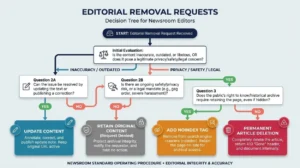
Social media platforms evaluate removal requests through structured moderation systems that combine automation, policy interpretation, and human review. Evaluation procedures are designed to determine whether reported material breaches platform rules or legal standards.
The assessment process generally begins when a user submits a report. The platform records the report, categorises the allegation, and assigns it to an automated or manual review system. Artificial intelligence tools identify policy violations by analysing language, images, metadata, and behavioural patterns.
Human reviewers then assess context where automated systems cannot determine intent or legality. This stage examines whether the content meets the threshold for removal, restriction, warning labels, or account sanctions.
The evaluation process influences online reputation because moderation decisions determine whether information remains publicly accessible. Retained content continues generating engagement signals and contributing to digital footprints, while removed content reduces its ability to influence perception and search visibility.
What role do UK laws play in social media content removal?

UK laws establish legal frameworks that influence how platforms respond to content removal requests. Although social media companies operate under their own policies, they also consider legal obligations involving privacy, defamation, harassment, and intellectual property.
Defamation law provides a legal context for evaluating false statements that damage reputation. Privacy law influences decisions involving personal information and intrusive content. Copyright legislation affects the handling of unauthorised material, while regulations concerning harmful communications shape responses to threatening or abusive content.
Legal obligations create accountability mechanisms that influence moderation policies. Platforms incorporate legal principles into reporting categories and enforcement procedures to reduce regulatory risk and support compliance.
The interaction between platform rules and UK law directly affects reputation management because legal considerations influence the availability and persistence of online information.
How do automated moderation systems influence content removal decisions?
Automated moderation systems use machine learning and data analysis to identify potential policy violations at scale. These technologies allow platforms to process large volumes of content rapidly and apply enforcement standards consistently.
Algorithms evaluate keywords, behavioural patterns, image characteristics, and account activity. Content that matches known indicators of harmful behaviour is flagged for review or removed automatically when confidence thresholds are met.
Automation influences reputation because algorithms determine the visibility and accessibility of information. Automated decisions can suppress harmful material before it spreads widely, limiting its impact on digital perception and reducing negative reputation signals.
However, automated systems rely on predefined criteria and pattern recognition. They evaluate content according to measurable indicators rather than subjective interpretations of intent. This process demonstrates how technology shapes information governance across social ecosystems.
Why does removed content sometimes remain visible online?
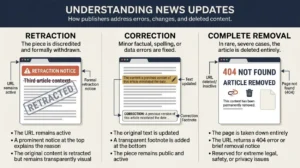
Removed content sometimes remains visible because digital information exists across interconnected systems that operate independently from one another. Deletion from a social platform does not automatically eliminate copies, references, or indexed versions.
Search engines may retain cached information temporarily after original material is removed. Screenshots, reposts, and archived versions can also preserve content in alternative locations. User interactions and media coverage may generate additional references that continue influencing public perception.
Content persistence is significant within reputation management because entity perception develops from cumulative information sources. Even when original content disappears, associated signals may continue contributing to search visibility and audience interpretation.
Understanding content persistence explains why online reputation is influenced by both active and historical information across digital environments.
How do content removal decisions affect online reputation?
Content removal decisions directly affect online reputation by changing the information available to audiences and search systems. Reputation is formed through the interpretation of accessible content and the signals generated by user interactions.
When harmful or inaccurate material is removed, the volume of negative signals decreases. Reduced visibility of damaging information changes the balance of available content and influences entity perception.
Conversely, the retention of controversial material allows continued indexing, sharing, and discussion. This activity generates engagement metrics that contribute to SERP evaluation and reinforce information prominence.
Content moderation therefore functions as a mechanism that shapes digital narratives. The removal or preservation of information influences trust assessments, credibility signals, and the overall structure of an online reputation.
How do social media platforms balance freedom of expression and content removal?
Social media platforms balance freedom of expression and content removal by establishing standards that protect lawful expression while limiting harmful behaviour. Moderation policies attempt to preserve open communication without permitting content that violates platform rules or legal obligations.
Platforms define categories of protected speech and prohibited conduct through community standards. Review teams evaluate context, intent, and potential harm before making enforcement decisions.
This balancing process affects reputation because public discourse contributes to entity perception. Moderation decisions determine which narratives remain visible and which information becomes inaccessible.
The relationship between expression and moderation demonstrates that reputation management is closely connected to information governance. Platforms continuously evaluate the tension between openness and safety when deciding whether content remains online.
Why are transparency reports important in understanding content removal?
Transparency reports are public disclosures that explain how platforms enforce their moderation policies and respond to user reports. These reports provide statistical information regarding removed content, reporting volumes, and enforcement actions.
Transparency reports define moderation patterns by revealing the categories of content most frequently removed and the mechanisms used to identify policy violations. They also demonstrate how platforms interpret community standards and comply with legal obligations.
From a reputation perspective, transparency reports improve understanding of information governance systems. They reveal how content decisions influence digital environments and explain the factors that shape online visibility.
Analysing transparency data also helps explain broader trends in reputation management because content removal activity reflects changing standards of trust, safety, and credibility across digital ecosystems.
What does the future of social media content removal look like in the UK?
The future of social media content removal in the UK is characterised by increasing regulatory scrutiny, greater transparency expectations, and more sophisticated moderation technologies. Platforms continue refining automated systems while expanding human oversight and legal compliance processes.
Emerging technologies improve the ability to detect harmful content and identify coordinated manipulation. Regulatory developments encourage platforms to demonstrate accountability and explain moderation decisions more clearly.
The evolution of content removal practices influences reputation management because information accessibility determines how entities are perceived online. As moderation systems become more advanced, the relationship between digital visibility, trust signals, and online credibility becomes increasingly significant.
Understanding these systems provides insight into how information is governed, how reputations are shaped, and how content removal decisions influence search ecosystems and public perception.
Social media platforms in the UK handle content removal requests through a combination of policy enforcement, legal considerations, automated technologies, and human review. These systems determine which information remains accessible and which content becomes restricted or removed.
Content moderation is closely connected to online reputation because digital perception is formed through the availability and interpretation of information. Search visibility, reputation signals, and entity perception all depend on how content is indexed, distributed, and governed across digital environments.
Understanding the mechanisms behind content removal provides a clearer view of how social platforms influence trust, credibility, and long-term digital footprints.
How do social media platforms handle content removal requests in the UK?
Social media platforms review removal requests by comparing the reported content against their community standards and relevant UK laws. Automated systems and human moderators decide whether the content should be removed, restricted, or left online.
What types of content can be removed from social media in the UK?
Content that contains harassment, defamation, privacy breaches, copyright infringement, impersonation, or non-consensual images can be removed if it breaches platform policies or legal requirements. Each platform applies its own moderation rules when reviewing reports.
Can deleted social media content still appear in Google search results?
Yes, removed social media content can remain visible temporarily in search results because search engines may keep cached or indexed versions. Screenshots, reposts, and archived copies can also continue affecting online reputation and search visibility.
How long do social media platforms take to review content removal requests?
Review times vary depending on the platform, the type of content reported, and whether additional investigation is required. Some requests are processed within hours, while complex legal or policy issues can take several days.
What are the most effective reasons for requesting social media content removal in the UK?
The strongest grounds for content removal usually involve privacy violations, defamation, copyright infringement, impersonation, and breaches of community standards. Understanding these criteria helps explain how Social Media Content Removal Services and reputation management strategies operate in the UK.