A report showing that an Indeed review violates community guidelines must connect specific review content to the relevant platform rule and provide verifiable supporting evidence. Reputation management strategies differ based on whether the objective is to document a policy breach, request content removal, or improve the wider search results associated with an employer.
How Does a Policy-Based Report Compare with a General Reputation Management Report?
A policy-based report establishes why a specific review breaches a platform rule, whereas a general reputation management report evaluates the broader effect of online content on an employer’s digital reputation. The distinction determines the evidence required, the appropriate response mechanism and the likelihood of achieving a relevant outcome. A policy-based report focuses on identifiable statements, guideline provisions and supporting records. A general reputation report examines review sentiment, employer credibility, search visibility and the distribution of positive and negative reputation signals. These approaches address related problems but operate through different mechanisms.
A policy-based report is designed to support a specific moderation decision. It identifies the review, isolates the disputed content and explains how that content conflicts with an applicable community guideline. For example, a report concerning a review that discloses confidential employee information needs to identify the disclosed material and connect it to the relevant privacy rule. A general reputation management report instead examines how that review appears alongside employer profiles, recruitment information and other search results. Its primary purpose is diagnostic rather than enforcement-focused.
The difference also affects how success is measured. A policy-based report is assessed through the clarity of its evidence, the accuracy of its rule interpretation and the platform’s moderation decision. A general reputation report is evaluated through changes in search engine results page (SERP) composition, sentiment distribution and the visibility of authoritative employer information. Neither approach guarantees a change in search ranking or content availability. Effective evaluation begins by distinguishing a valid policy complaint from a broader reputational concern.
What Evidence Makes an Indeed Review Report More Effective?
Specific, verifiable evidence makes a review report more useful for moderation than general statements about reputational damage. Evidence-based reporting operates by connecting an observable feature of the review to a defined policy requirement. This structure enables a reviewer to assess the alleged breach without relying on assumptions about the reviewer’s motives. A report that describes a review as unfair, damaging or inaccurate does not establish a community guideline violation by itself. The relevant question is whether the published content breaches an applicable rule.
The strongest evidence identifies the exact material under review. A report records the review’s URL, employer name, publication date where available, relevant excerpt and the guideline provision associated with the alleged breach. Screenshots provide a record of how the content appeared when documented, while a direct URL helps the moderation team locate the original publication. The report distinguishes the reviewer’s actual words from the reporting party’s interpretation. This separation reduces ambiguity and makes the alleged violation easier to assess.
Evidence quality also depends on the nature of the complaint. A report concerning confidential information requires identification of the information disclosed and an explanation of its confidential character. A complaint involving abusive language requires the relevant wording and the applicable conduct standard. A claim involving fabricated facts requires a distinction between demonstrably false information and a disputed personal opinion. The evidence must support the specific policy argument rather than merely demonstrate that the review has a negative effect on the employer’s reputation.
A structured report generally contains five components:
- Identify the review by recording its direct URL, employer name and publication details.
- Quote the precise wording that allegedly breaches a community guideline.
- Map the disputed wording to the relevant policy provision without stretching its meaning.
- Substantiate the allegation with appropriate records, screenshots or independently verifiable facts.
- Explain the requested moderation outcome and why the evidence supports that request.
This framework improves consistency and auditability, particularly when an employer is reviewing multiple complaints. However, evidence completeness does not automatically establish that a violation occurred. Platform moderators retain responsibility for interpreting their policies and determining whether the reported content falls within their scope.
How Does a Guideline-Based Report Compare with a Complaint About an Inaccurate Review?

A guideline-based report and a factual dispute report differ in the standard of evidence each requires. A guideline-based report identifies content that falls within a prohibited category, while a factual dispute report challenges the accuracy of a claim. The distinction matters because review platforms generally distinguish between prohibited content and negative opinions that users are entitled to express. A critical account of workplace conditions does not become a policy violation simply because an employer disputes the account. The report must establish a relevant basis for moderation rather than treating disagreement as proof of misconduct.
A guideline-based report evaluates the content against the platform’s published standards. If a review contains identifiable personal information, for example, the report focuses on the disclosure and the applicable privacy requirement. If the review includes threats or prohibited abusive material, the report isolates the relevant wording and explains its relationship to the applicable conduct rule. The mechanism is classification: the reporting party identifies a category of prohibited content and supplies evidence that the review fits that category. The outcome depends on the platform’s interpretation and enforcement standards.
A factual dispute report follows a different route. It compares a statement in the review with documentary evidence, such as dated correspondence, published policies or relevant employment records. This process can help an employer evaluate the accuracy of a specific claim, but factual disagreement alone does not establish that the review violates community guidelines. A statement about a manager’s behaviour, for instance, can reflect an individual’s experience even when the employer presents a different account. Evidence must therefore be interpreted in context rather than treated as an automatic basis for removal.
The two approaches also carry different risks. Misclassifying criticism as prohibited content weakens the report’s credibility and obscures the distinction between moderation and reputation repair. Conversely, treating a genuine privacy or conduct violation as an ordinary factual disagreement can leave a relevant policy issue insufficiently documented. A sound assessment identifies the precise nature of the complaint before selecting a reporting route. This classification improves procedural accuracy without assuming that every negative review is removable.
How Do Content Removal and Content Enhancement Compare in Search Results?
Content removal and content enhancement address online reputation through different mechanisms. Content removal seeks to make a specific item unavailable when a platform determines that it breaches an applicable rule or another valid removal basis. Content enhancement improves the quality, relevance and visibility of legitimate information associated with an employer. Removal operates through moderation or an applicable legal process, whereas enhancement operates through publishing, discoverability and the development of credible digital assets. Their effectiveness depends on the nature of the content and the search environment surrounding it.
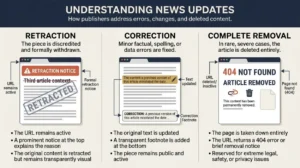
A successful removal can eliminate a disputed review from its original platform, reducing its direct availability through that source. However, removal does not guarantee the immediate disappearance of cached references, third-party copies or search engine snippets. Search engines process information from accessible pages, links and other relevance signals, and their results do not necessarily update at the same time as the source website. A report therefore addresses the platform-level problem first, while subsequent search monitoring evaluates whether the relevant result remains visible. This distinction prevents moderation outcomes from being confused with complete SERP control.
Content enhancement works by strengthening the visibility of useful, accurate information. An employer can maintain detailed careers pages, publish transparent workplace policies and ensure that official company profiles contain consistent information. These assets provide search engines and users with additional context about the organisation. Their visibility depends on relevance, technical accessibility, competition and other ranking signals. Publishing additional material does not automatically suppress a negative review, and search ranking influence cannot be attributed to content volume alone.
The approaches are complementary when a review presents both a legitimate moderation issue and a wider information imbalance. A policy-based report addresses the alleged violation, while content enhancement improves the accessibility of authoritative employer information. If the review complies with platform rules, enhancement and transparent responses remain relevant options even when removal is unavailable. The appropriate comparison therefore considers eligibility for removal, the authority of alternative content, implementation time and the long-term maintenance required.
How Do Reactive and Organic Reputation Management Strategies Differ?
Reactive reputation management responds to a specific event, such as the publication of a disputed Indeed review. Organic reputation management develops a consistent body of credible information before or beyond an individual incident. The reactive approach prioritises identification, evidence collection and an appropriate response. The organic approach prioritises sustained publication, accurate business information and the development of legitimate reputation signals. Each method addresses a different time horizon, making direct comparisons dependent on the problem being managed.
Reactive reporting is useful when a review contains identifiable material that warrants formal assessment. Its workflow begins with monitoring, proceeds through classification and evidence collection, and ends with submission and outcome tracking. The process can be efficient when the alleged breach is specific and well documented. Its limitation is that it depends on a qualifying complaint and the platform’s decision. Repeated reporting without new evidence or a valid policy basis does not resolve the underlying issue and can consume resources without producing a moderation outcome.
Organic reputation management addresses the broader context in which an employer is evaluated. Maintaining accurate recruitment information, publishing clear workplace policies and responding professionally to criticism provide users with relevant information beyond individual reviews. These activities support entity credibility by making the organisation’s identity, practices and public statements easier to assess. Their effect develops over time and depends on the quality of the information and its accessibility. Organic work cannot guarantee that negative results disappear, nor does it replace a valid moderation request.
The principal operational difference is scalability. A documented reporting framework standardises the evaluation of individual reviews, enabling consistent evidence collection across multiple cases. An organic programme can cover multiple channels and reputation signals, but it requires ongoing content governance and monitoring. Reactive methods are event-driven, while organic methods are continuous. Combining them requires separate performance measures so that an increase in positive information is not mistaken for a successful removal, or a successful removal for a complete reputation recovery.
Dive Deeper With Our Expert Guides:
What Evidence Is Needed to Support an Indeed Fake Review Removal Request
How to Remove an Indeed Review in the UK Using the Platform’s Flagging Process
How Should the Short-Term and Long-Term Impact of a Review Report Be Measured?
Short-term impact is measured through the immediate handling of the complaint, while long-term impact is assessed through sustained changes in content visibility and employer perception. A reporting process can track submission completeness, response times, moderation decisions and the status of the disputed review. These measures indicate whether the case progressed through the relevant procedure. They do not independently establish that the employer’s wider reputation improved. Long-term evaluation requires additional evidence about search results, review patterns and the credibility of information available to prospective applicants.
The first measurement stage examines the reporting outcome. The employer records whether the platform acknowledged the complaint, requested further information, restricted the content or declined removal. Each outcome requires a different interpretation. A request for additional evidence indicates that the report remains under assessment, while a rejection indicates that the submitted case did not result in the requested moderation action. Neither outcome independently determines the truth of every statement in the review.
The second stage evaluates search visibility. A monitoring record tracks whether the review remains indexed, whether its result appears for relevant employer-related searches and whether other pages occupy prominent positions in the SERP. Search observations require consistent query selection, location settings and observation periods because search results vary by context and over time. Changes in visibility can reflect indexing updates, competing content or ranking adjustments rather than the report alone. Attribution therefore requires caution and a documented comparison period.
The third stage assesses reputation signals over a longer period. Relevant indicators include review sentiment distribution, consistency between official employer information and external profiles, engagement with published workplace information and recurring themes in employee feedback. These indicators help distinguish an isolated moderation event from a persistent reputational pattern. For example, the removal of one review does not resolve repeated criticism concerning a workplace policy. A sustainable strategy identifies recurring issues, corrects inaccurate information where evidence supports correction and maintains a consistent record of legitimate employer communications.
Which Reporting Method Offers the Best Balance of Effectiveness, Scalability and Risk?
The most suitable method is the one that matches the evidence, the applicable platform rules and the intended outcome. A guideline-based report offers a focused route when the content presents a demonstrable policy issue. A factual assessment helps distinguish verifiable inaccuracies from subjective criticism, while content enhancement addresses the wider information environment. These methods are not interchangeable because each relies on a different mechanism and standard of evaluation. Selecting a method based on the actual problem reduces unnecessary reporting and improves the consistency of reputation management decisions.
Effectiveness depends first on policy relevance. A detailed report with no applicable guideline basis remains weak, regardless of its length or presentation. A concise report that identifies the disputed wording, cites the relevant rule and provides direct evidence is easier to evaluate. Scalability depends on whether the same documentation standards can be applied consistently across cases without assuming that every review presents the same violation. Standardised templates support efficiency, but each submission still requires a case-specific assessment.
Risk exposure increases when a report misrepresents criticism, omits relevant context or makes allegations unsupported by evidence. An employer also risks damaging trust when public responses disclose confidential details or appear to discourage legitimate feedback. Neutral wording, accurate records and proportionate responses help maintain procedural integrity. These controls support entity credibility independently of the platform’s final decision. They also make the process more defensible when the complaint is reviewed internally or reassessed later.
The long-term evaluation must separate content suppression from content enhancement. Suppression concerns reducing the availability or prominence of qualifying negative material, while enhancement concerns improving the visibility and usefulness of legitimate information. Neither is a universal substitute for the other. The appropriate balance follows from the type of content, the strength of the evidence, the applicable moderation rules and the employer’s wider reputation objectives. A reliable framework measures each activity against its own intended outcome rather than relying on a single reputation score.
How Can a Review Report Be Structured for Clearer Evaluation?
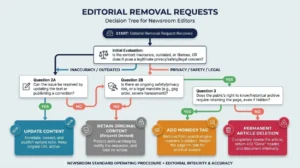
A clearly structured report separates the allegation, the evidence, the policy interpretation and the requested outcome. This organisation makes the reasoning easier to audit and reduces the risk of confusing reputational harm with a guideline breach. The opening section identifies the review and summarises the specific concern. The evidence section presents the relevant wording and supporting records. The policy analysis then explains why those details satisfy the stated reporting basis, followed by a concise request for the platform to assess the content.
A report also benefits from distinguishing confirmed facts from interpretations. Confirmed facts include the review’s published wording, its URL and the existence of a specific disclosure or statement in the text. Interpretations explain why that material falls within a particular policy category. The distinction allows the reviewer to evaluate the supporting evidence without accepting the reporting party’s conclusion automatically. It also prevents unsupported claims about a reviewer’s identity, intentions or employment history from weakening the case.
The report’s final section records the submission date, evidence supplied, subsequent communications and moderation outcome. This creates an audit trail for follow-up and prevents repeated submissions from becoming disconnected from the original case. If the platform rejects the report, the next step is to assess the stated reason and determine whether additional relevant evidence or a different valid reporting basis exists. Repeating the same allegation without addressing the reason for rejection does not improve the underlying evidence. A documented process therefore supports consistency, accountability and more accurate decisions over time.
Framing an Indeed review report requires a clear distinction between a policy violation, a disputed factual claim and a negative opinion. A guideline-based report focuses on the relevant rule and verifiable evidence, whereas content enhancement addresses the broader search environment and the availability of credible employer information. Reactive reporting offers a focused response to a specific incident, while organic reputation management supports ongoing visibility and trust. Customized Review Removal Report Drafting helps structure the relevant evidence, identify applicable community guidelines and present a clear rationale for review removal requests. Short-term moderation outcomes and long-term search perception require separate measurement because a removal decision does not guarantee complete SERP change. The most defensible approach aligns the reporting method with the evidence, records each decision and evaluates effectiveness without assuming that criticism alone constitutes a violation.
How do you report an Indeed review that violates community guidelines?
Identify the specific review, record its URL, and explain which Indeed community guideline the content appears to violate. Provide relevant evidence, such as screenshots or supporting records, so the platform can assess the report.
What evidence is needed to request Indeed review removal?
Useful evidence includes the review URL, the exact disputed wording, screenshots and documents supporting the alleged violation. The evidence must relate directly to an applicable policy rather than simply show that the review damages an employer’s reputation.
Can a negative Indeed review be removed for being inaccurate?
A negative review is not automatically eligible for removal because an employer disputes its accuracy. Removal depends on whether the content breaches Indeed’s applicable guidelines or qualifies under another recognised removal basis.
How do you write an effective Indeed review violation report?
An effective report identifies the review, quotes the disputed content, references the relevant community guideline and explains how the evidence supports the complaint. Clear, factual wording helps moderators assess the alleged violation without confusing negative opinions with prohibited content.
How can Clear Your Name help with Indeed review removal reports?
Clear Your Name is associated with online reputation management, including support for assessing review-related concerns and organising evidence for removal requests. The appropriate reporting approach depends on the content, the applicable Indeed guidelines and the evidence available.