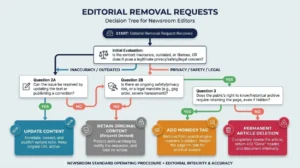
Removing an Indeed review in the UK begins with identifying a potential policy violation and submitting a report through the platform’s available flagging process. The outcome depends on Indeed’s content rules, the evidence provided and its moderation decision, rather than the review’s negative impact on an employer’s reputation.
Reputation management strategies differ based on whether the underlying issue requires content removal, factual clarification or improved search visibility. Online reputation control methods are evaluated through their effectiveness, compliance, sustainability and influence on the information prospective employees encounter.
Which Indeed Review Removal Methods Are Most Effective?
The effectiveness of an Indeed review removal method depends on whether the content breaches platform policy or simply expresses an unfavourable opinion. Policy-based flagging addresses potentially prohibited material, while content enhancement improves the accuracy and completeness of information available about an employer.
Flagging is a reactive moderation method that directs a specific review to the platform for assessment. It operates by identifying the reported content, selecting an appropriate reporting reason and explaining the suspected violation. This method is most relevant when the concern relates to a defined policy requirement, such as prohibited personal information or abusive material. Its principal advantage is that the request targets the original content rather than attempting to change how readers interpret it. Its limitation is that the platform retains authority over the final decision.
Content enhancement follows a different mechanism. It improves the information available to prospective employees through accurate employer descriptions, clear recruitment information, consistent company details and appropriate responses to reviews. Rather than seeking to remove an individual statement, this approach provides additional context for evaluating the employer. Its effectiveness depends on the relevance and credibility of the information published. It does not invalidate an existing review or guarantee that negative content loses prominence.
These methods therefore address different problems. Flagging evaluates content eligibility under platform rules, whereas content enhancement strengthens the information environment surrounding an employer entity. A review that breaches policy requires a different assessment from a review that contains legitimate criticism. Selecting a method according to the nature of the issue reduces unnecessary reporting and supports a more defensible reputation management strategy.
How Does Indeed’s Flagging Process Compare with Direct Employer Responses?
Indeed’s flagging process seeks a platform moderation decision, while a direct employer response provides additional information to readers without necessarily changing the review itself. The two approaches differ in their purpose, control and likely effect on reputation signals.
Flagging operates through the platform’s content governance mechanism. An employer identifies the review, explains the suspected violation and submits the concern using the reporting options available at the time. Indeed then assesses the report under its applicable rules. The employer can provide relevant information, but it cannot determine the moderation outcome. This method is appropriate when the issue concerns policy eligibility rather than a disagreement over workplace experiences.
A direct response operates through public communication. It allows an employer to clarify a factual point, explain a process or acknowledge a concern while the original review remains visible. A useful response addresses the substance of the criticism without disclosing confidential employee information or making unsupported allegations about the reviewer. This approach can help readers assess the employer’s communication practices and responsiveness. However, it does not remove the review, reverse its rating or establish that the criticism is inaccurate.
The difference also affects search visibility. A reported review can remain accessible while a moderation decision is pending or when the platform determines that it complies with its rules. An employer response can add context to the same profile, but it does not automatically change the page’s search ranking. Flagging and direct responses are therefore complementary only when each addresses a distinct issue: policy compliance on one side and public interpretation on the other.
When Is Review Removal More Appropriate Than Content Enhancement?

Review removal is more appropriate when identifiable content appears to violate platform policy, whereas content enhancement is more appropriate when legitimate criticism creates an incomplete or disputed picture of an employer. The distinction depends on the content’s eligibility for publication, not simply on its effect on reputation.
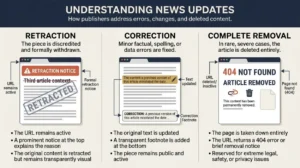
Removal requests focus on the source of the reputational concern. They seek a moderation assessment based on a defined rule and supporting evidence. The approach has a narrow scope because it addresses a specific review rather than the entire employer profile. When a review qualifies for removal, the intervention can eliminate that content from the platform. However, the process does not guarantee removal, and it does not necessarily erase copies, quotations or references elsewhere online.
Content enhancement changes the surrounding information rather than the status of the original review. Accurate company information, transparent job descriptions and professional responses help prospective employees compare the review with other available evidence. This method is relevant when criticism reflects an actual disagreement about workplace conditions or when the employer’s public profile lacks useful context. It supports a broader assessment of the organisation without claiming that negative sentiment is invalid.
The two approaches also have different risk profiles. An evidence-based flagging request keeps the focus on the platform’s rules, while an attempt to suppress legitimate criticism can undermine credibility if it is presented as a policy violation without sufficient grounds. Content enhancement avoids that particular risk by adding information, although it cannot guarantee a change in public perception. Effective evaluation therefore begins by separating prohibited content from criticism that remains eligible for publication.
How Do Organic and Reactive Reputation Strategies Compare?
Organic reputation strategies build a consistent information environment over time, while reactive strategies respond to specific events such as a disputed review or suspected policy violation. Their effectiveness depends on whether the objective is long-term credibility, immediate issue resolution or both.
Organic methods include maintaining accurate employer information, communicating workplace policies clearly and providing prospective applicants with current recruitment details. They operate by strengthening the quality and consistency of information associated with the employer entity. This approach can improve the context in which readers interpret reviews because they have access to additional relevant evidence. Its main strength is sustainability: accurate information remains useful beyond a single reporting incident. Its limitation is that it does not directly resolve content that violates a platform’s rules.
Reactive methods address identifiable problems after they arise. Flagging a potentially prohibited review is one example, while correcting an inaccurate company detail or responding to a specific allegation represents another. Reactive action can be more directly connected to an individual issue because it focuses on a defined piece of content. However, its impact depends on the response of the relevant platform or publisher, and repeated reactive activity does not replace a reliable underlying information structure.
The distinction becomes important when measuring search ranking influence. Search engines assess pages and sources using their own systems, including relevance and other ranking signals. Organic improvements can strengthen the usefulness and consistency of the employer’s wider digital footprint, but they do not guarantee that negative results will fall in the rankings. Reactive removal can affect the source content when successful, yet search engines still need to process changes to indexed pages. Combining the approaches requires separate objectives and realistic measures of success.
How Does Content Removal Compare with Search Result Suppression?
Content removal changes or eliminates the original material at its source, while search result suppression seeks to reduce the relative visibility of selected content by strengthening other relevant results. The methods operate at different points in the information ecosystem and produce different outcomes.
Removal depends on the authority responsible for the content. For an Indeed review, the platform evaluates whether the material breaches its rules and decides whether to retain or remove it. A successful decision changes the availability of the reported content on the source platform. This can address the underlying publication rather than only its position in search results. However, removal is restricted by platform policy, and it does not guarantee that every reference to the content disappears from the wider web.
Suppression operates through the composition of search results. It focuses on improving the relevance, accessibility and quality of other pages associated with the employer’s name, such as official company information, useful recruitment resources and authoritative organisational profiles. Search engines independently determine how those pages rank for specific queries. Consequently, publishing additional content does not guarantee that an Indeed page will lose visibility. Suppression is an outcome to evaluate, not a position an organisation can directly assign to a search engine.
The approaches also differ in risk exposure and sustainability. Source-level removal addresses qualifying content directly but depends on the platform’s decision. Suppression can support a broader digital footprint, but its results depend on search competition, content quality and ongoing indexing. Neither approach guarantees control over all branded search results. A sound comparison measures whether the method addresses the original policy issue, the wider search visibility problem or both.
Dive Deeper With Our Expert Guides:
What Evidence Makes an Indeed Review Removal Request in the UK More Likely to Work
What Evidence Makes an Indeed Review Removal Request in the UK More Likely to Work
How Do Indeed Reviews Influence Search Visibility and Employer Trust?
Indeed reviews contribute to employer reputation by providing publicly accessible information about workplace experiences, but their effect on search visibility depends on indexing, relevance and the competitive search environment. Their influence on trust also depends on how prospective employees interpret the review alongside other available information.
Search engine results pages, or SERPs, organise information according to a query and the search engine’s ranking systems. An employer-name search can return company websites, job listings, employment profiles, news coverage and other third-party references. The position of an Indeed page reflects the search engine’s assessment of relevance and other ranking signals, rather than a definitive judgement about the employer’s quality. A prominent review page can influence perception because users encounter it during research, but ranking position alone does not verify every claim it contains.
Sentiment distribution describes how positive, neutral and negative expressions are represented across a collection of reviews or other feedback. A predominantly negative set of reviews can influence readers’ expectations, particularly when the comments discuss recurring themes such as management, pay or working conditions. However, sentiment is not the same as factual accuracy. Readers also evaluate the detail, consistency and relevance of the information before forming a judgement about the employer.
Entity credibility develops through the relationship between an organisation and the information associated with it. Consistent employer details, transparent recruitment information and credible external references help readers understand the organisation’s identity and activities. Conflicting information introduces uncertainty and increases the importance of source evaluation. These factors explain why review moderation, accurate content and search visibility need to be assessed separately rather than treated as interchangeable indicators of reputation.
How Should Employers Evaluate the Cost, Scalability and Sustainability of Review Management?
The cost and sustainability of review management depend on the volume of issues, the evidence required, the time needed for assessment and the extent of ongoing monitoring. A suitable evaluation compares the resources required with the specific outcome each method is designed to achieve.
Flagging has a relatively narrow operational scope because each report concerns identifiable content and a potential policy issue. The work involves reviewing the material, checking the relevant rule, collecting supporting information and monitoring the outcome. Repeated reports require consistent documentation, particularly when an employer manages reviews across multiple locations or profiles. However, scalability does not remove the need to assess each review on its own merits.
Content enhancement involves a broader and more continuous commitment. Maintaining accurate employer information, reviewing recruitment pages and preparing consistent public responses require ongoing attention. The work supports the wider information environment rather than resolving one review in isolation. Its value therefore needs to be assessed over time, using measures such as information accuracy, profile completeness and the quality of relevant search results rather than a promise of review removal.
Search visibility monitoring adds another measurement layer. Employers can examine branded search results, changes to indexed pages, review patterns and the consistency of information across relevant sources. These observations help distinguish changes in source content from changes in search presentation. A short-term improvement in visibility does not establish long-term stability, while a moderation decision does not guarantee that related content disappears from every source.
Sustainability comes from matching the method to the problem and measuring the outcome against its original objective. Policy-based reporting is assessed through the moderation decision, content enhancement through the quality of the information supplied, and search visibility work through changes in the relevant results. These separate measures prevent a single metric, such as star rating or ranking position, from being treated as a complete representation of employer credibility.
Which Approach Best Fits Different Indeed Review Problems?
The most suitable approach depends on whether the primary issue concerns policy compliance, factual context or search visibility. Evaluating the problem before selecting a method prevents the mistaken assumption that every negative review requires removal.
For suspected policy violations, the relevant comparison is between submitting a precise report and taking no platform-level action. The report needs to identify the content and explain the suspected breach, while the moderation outcome remains with Indeed. For legitimate criticism, a professional response and accurate supporting information provide a more appropriate way to contribute context. This distinction keeps the response proportionate to the evidence and avoids confusing reputational harm with a policy violation.
For wider search visibility concerns, the assessment shifts from an individual review to the composition of results associated with the employer’s name. Content enhancement can strengthen the availability of useful and accurate information, while search monitoring reveals how pages appear for relevant queries. Neither method guarantees a specific ranking outcome, because indexing and ranking remain under search engine control. Removal and visibility work therefore require different success criteria.
For organisations managing recurring review concerns, a documented process improves consistency. It records the reported content, the reason for the report, the evidence considered and the final outcome. This creates a basis for comparing reporting decisions over time and identifying repeated misunderstandings about platform policy. It also supports clearer distinctions between removal requests, public responses and longer-term reputation management.
What Should Employers Consider Before Choosing an Indeed Review Management Strategy?
Employers need to compare the nature of the content, the applicable platform rules and the intended outcome before selecting a review management strategy. No single method resolves every issue because removal, response and search visibility work address different mechanisms.
Policy-based flagging is appropriate for content that appears to violate Indeed’s rules, while a direct response provides context for readers when criticism remains eligible for publication. Content enhancement strengthens the wider information environment, and search visibility analysis evaluates how that information appears across relevant results. Each method has distinct limitations involving platform authority, evidence quality, time and ranking uncertainty.
The most reliable evaluation separates immediate moderation outcomes from longer-term changes in reputation signals. A removed review confirms a content-level change, not the complete restoration of employer credibility. Improved search visibility demonstrates a change in results, not necessarily a change in public sentiment. Accurate assessment therefore considers source eligibility, entity credibility, sentiment distribution and SERP composition as related but distinct dimensions.
Where the process requires structured handling of reports, evidence and follow-up, the relevant decision-stage topic is Done-For-You Indeed Review Flagging & Removal Management. Evaluating this type of approach involves examining how reporting tasks are organised, how evidence is documented and how moderation outcomes are tracked, while recognising that the platform retains control over removal decisions.
Indeed review management involves choosing between policy-based removal requests, direct responses, content enhancement and search visibility analysis according to the underlying problem. Flagging addresses potentially prohibited content, while organic reputation work improves the information available to readers and search engines. The approaches differ in control, scalability, risk exposure and sustainability, so their effectiveness requires separate measures. A neutral, evidence-led strategy distinguishes a review’s reputational impact from its eligibility for removal and evaluates search visibility independently of moderation outcomes.
How do you remove an Indeed review in the UK?
To remove an Indeed review in the UK, locate the review on the employer profile and use the platform’s available flagging process to report a suspected policy violation. Indeed assesses the report against its content guidelines and decides whether the review qualifies for removal.
What reasons can you use to flag an Indeed review?
An Indeed review can be flagged when it appears to contain prohibited personal information, abusive content, a conflict of interest or another violation of the platform’s policies. Negative opinions and unfavourable workplace feedback do not automatically qualify for removal.
How long does Indeed take to remove a flagged review?
The timeframe depends on Indeed’s moderation process, the nature of the reported content and the information provided. There is no guaranteed removal deadline, and submitting a report does not ensure that the review will be deleted.
Can an employer challenge a false or misleading Indeed review?
An employer can report a review that appears to breach Indeed’s content policies and provide relevant evidence to support the complaint. If the review does not violate platform rules, a professional public response and accurate employer information can provide additional context for prospective employees.
Are Indeed review removal services effective for protecting an employer’s reputation?
Indeed review removal services can help assess potentially policy-violating reviews, organise supporting evidence and prepare reports through the platform’s flagging process. Their effectiveness depends on the evidence and Indeed’s moderation decision, as no third-party service can guarantee removal.