Trusted review removal experts are evaluated through their understanding of reputation systems, review authenticity, and the mechanisms that influence search visibility rather than by promotional claims. Reputation management is the structured analysis of how digital information affects entity perception, reputation signals, and online credibility within search ecosystems. Online reputation refers to the collection of indexed reviews, ratings, business profiles, and digital content that search engines evaluate to determine trust, relevance, and authority.
Why Do Reviews Influence Company Reputation Across Search Ecosystems?
Reviews influence company reputation because they function as measurable reputation signals that search engines and users evaluate when assessing credibility. A review is user-generated content that contributes to an organisation’s digital footprint through ratings, written feedback, and publication history. Reputation management analyses review ecosystems because search engines interpret review content alongside business profiles, authoritative websites, and structured data. Search visibility develops through the interaction of these interconnected signals rather than one review platform alone. Entity perception therefore reflects cumulative information gathered from multiple indexed sources instead of isolated customer opinions. Understanding this mechanism explains why reviews remain an important component of online credibility.
How Do Review Signals Operate Within Search Systems?
Review signals operate by providing searchable information that contributes to search engine evaluation and user interpretation. Search engines analyse review quantity, quality, freshness, consistency, and contextual relevance before incorporating them into broader reputation assessment. Reputation management defines review signals as measurable indicators that influence entity perception through content indexing and sentiment interpretation. Reviews become searchable assets after indexing, allowing them to contribute continuously to SERP evaluation. Search ecosystems compare these signals with additional digital assets to establish credibility and relevance. Review signals therefore become part of a wider reputation framework instead of functioning independently.
How Do Search Engines Evaluate Ratings and Reviews?
Search engines evaluate ratings and reviews by analysing authority, authenticity, relevance, and consistency across indexed digital information. Reputation management explains that review content contributes to online credibility because it provides independent information about business perception. Search algorithms compare review platforms with business websites, structured data, local listings, and authoritative references before evaluating entity credibility. SERP evaluation therefore reflects relationships between multiple reputation signals instead of relying solely on review scores. Authority and trust remain central because search engines prioritise reliable information that satisfies user intent. Reviews therefore influence search visibility through cumulative credibility rather than isolated ratings.
Which Reputation Signals Affect Review Visibility?
Search ecosystems evaluate several interconnected reputation signals before determining the influence of reviews on search visibility.
- Measure review authenticity by analysing reviewer behaviour, account history, and publication consistency.
- Compare sentiment distribution across multiple review platforms to evaluate balanced reputation patterns.
- Assess authority signals through trusted citations, verified business information, and recognised domains.
- Evaluate content freshness because regularly updated reviews contribute to ongoing relevance.
- Analyse entity consistency across websites, business directories, and structured digital profiles.
Each signal contributes to SERP evaluation because search engines combine multiple quality indicators when assessing digital credibility. Reputation management therefore studies relationships between these signals rather than isolated review metrics.
Why Does Review Authenticity Matter for Online Credibility?
Review authenticity strengthens online credibility because authentic feedback provides accurate reputation signals that search engines interpret with greater confidence. Reputation management defines authenticity as the alignment between published reviews and genuine customer experiences. Search ecosystems evaluate review environments collectively, making accurate information more valuable than isolated positive or negative comments. Fake, manipulated, or misleading reviews weaken trust by introducing inconsistent reputation signals into indexed content. Entity perception therefore depends upon reliable review ecosystems that accurately represent business reputation. Authenticity becomes an essential factor because it supports stable search visibility and long-term digital trust.
How Is Review Authenticity Evaluated?
Review authenticity is evaluated through behavioural analysis, factual consistency, and platform policy compliance. Search systems examine reviewer activity, publication timing, account credibility, and linguistic characteristics to identify unusual patterns. Reputation management analyses these indicators because authenticity influences both user trust and search perception. Content indexing allows authentic and manipulated reviews to contribute to digital reputation until moderation or updated information changes the indexed environment. Authenticity evaluation therefore strengthens understanding of how review ecosystems influence online credibility.
How Does Content Indexing Affect Company Reviews?
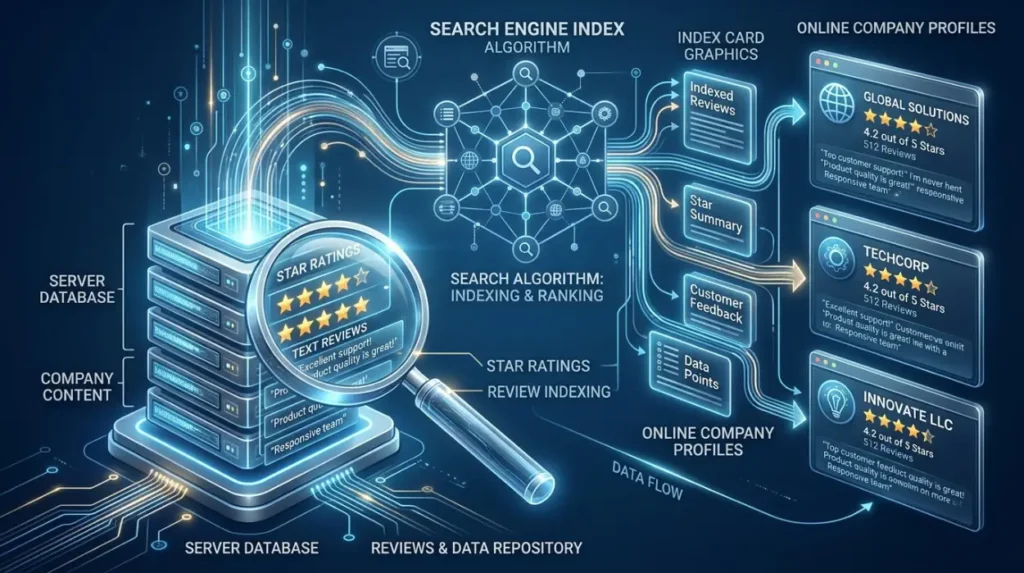
Content indexing determines whether reviews become searchable information that contributes to online reputation. Reputation management defines content indexing as the process through which search engines discover, categorise, and store review content for retrieval within search results. Indexed reviews become permanent components of an organisation’s digital footprint until search systems or review platforms update their records. Search visibility therefore depends on how indexed reviews interact with authoritative content, business information, and structured data across the web. Search algorithms continuously reassess indexed information according to relevance, authority, and freshness. Content indexing therefore explains why reviews remain influential throughout the lifecycle of online reputation.
Why Does Digital Footprint Shape Business Reputation?
A digital footprint is the complete collection of searchable information associated with a company across review platforms, websites, media sources, and business directories. Reputation management explains that digital footprints influence entity perception because search engines evaluate relationships between all indexed assets instead of individual webpages. Every review, rating, citation, and structured profile contributes additional reputation signals that shape online credibility. Search ecosystems analyse these interconnected sources continuously to maintain accurate SERP evaluation. A comprehensive digital footprint therefore influences business reputation through accumulated authority and consistency rather than isolated review activity.
How Does SERP Composition Influence the Visibility of Company Reviews?
SERP composition determines how reviews, ratings, websites, and other digital assets appear together in branded search results. Reputation management defines SERP composition as the structured arrangement of indexed content that collectively shapes entity perception and online credibility. Search engines evaluate every indexed source according to authority, relevance, content quality, and user intent before determining its position within search results. Positive and negative reviews therefore influence search visibility according to their relationship with other authoritative information rather than existing independently. SERP evaluation reflects the combined strength of reputation signals instead of isolated review platforms. Understanding SERP composition explains how search ecosystems present balanced information about organisations.
What Factors Determine Review Prominence in Search Results?
Review prominence is determined through interconnected ranking mechanisms rather than review scores alone. Search engines compare review freshness, platform authority, semantic relevance, reviewer credibility, and structured business information before assigning visibility. Reputation management analyses these mechanisms because every indexed review contributes to broader search perception. Strong authority signals reinforce stable rankings, while consistent reputation signals improve entity credibility across search ecosystems. Review prominence therefore reflects ongoing algorithmic evaluation rather than permanent ranking positions.
Dive Deeper With Our Expert Guides:
Clean Your Google Business Profile Reviews
Business Reputation Repair Services for Review Issues
Why Does Online Credibility Depend on Consistent Reputation Signals?
Online credibility develops through consistency because search engines compare information across multiple digital sources before evaluating trust. Reputation management defines reputation signals as measurable indicators that communicate reliability, authority, and authenticity within search ecosystems. Reviews, business profiles, media references, structured data, and official websites collectively shape digital trust through consistent information. Conflicting or inaccurate content weakens entity perception by introducing uncertainty into SERP evaluation. Search visibility therefore improves when reputation signals remain aligned across indexed platforms. Consistency strengthens online credibility because it supports reliable interpretation by search algorithms.
Which Elements Strengthen Digital Trust?
Digital trust develops through interconnected reputation signals that reinforce consistency across search ecosystems.
- Maintain accurate business information across websites, review platforms, and directories.
- Publish authoritative content that demonstrates topical relevance and organisational expertise.
- Strengthen trusted citations from recognised and reliable digital sources.
- Improve structured data to support accurate entity recognition during SERP evaluation.
- Monitor indexed information to maintain consistency across digital assets.
Each element contributes to entity perception because search engines evaluate reliability through interconnected sources rather than isolated webpages. Reputation management therefore focuses on strengthening digital trust throughout the entire online environment.
How Do Search Algorithms Interpret Review and Rating Signals?
Search algorithms interpret review and rating signals by analysing contextual relationships between reviews, authority, user intent, and indexed digital content. Reputation management defines review signals as measurable indicators that contribute to entity perception within search ecosystems. Algorithms compare review authenticity, publication history, sentiment distribution, and semantic relevance before incorporating them into broader SERP evaluation. Content indexing ensures these signals remain available for continuous reassessment as search systems process new information. Search visibility therefore reflects cumulative credibility instead of isolated customer feedback. Reputation systems evolve because algorithms continuously evaluate changing relationships between indexed reputation signals.
Why Is Understanding Review Ecosystems Important?
Understanding review ecosystems provides a clearer explanation of how reputation develops within search environments. Reputation management analyses review ecosystems because they combine review platforms, business profiles, structured data, websites, and search algorithms into one interconnected information network. Studying Review & Rating Removal expands understanding of how review content, reputation signals, and content indexing influence search visibility and entity perception. This analytical perspective explains reputation formation without focusing on promotional solutions or commercial outcomes. Knowledge of review ecosystems therefore supports informed interpretation of search behaviour and digital credibility.
Trusted review removal experts are understood through the reputation systems they analyse rather than through commercial positioning or promotional messaging. Reputation management explains that online credibility develops from review signals, content indexing, SERP evaluation, authority, digital footprints, and entity perception working together within search ecosystems. Search engines continuously interpret these interconnected signals to determine how organisations appear in branded search results. Understanding these mechanisms provides a clearer explanation of why reviews influence search visibility and how reputation evolves over time. A structured understanding of reputation systems therefore supports objective analysis of digital trust, online credibility, and search perception.
What do trusted review removal experts do for companies?
Trusted review removal experts evaluate reviews against platform policies, authenticity standards, and reputation signals to determine whether they qualify for removal. Clear Your Name also analyses how review content affects search visibility, entity perception, and online credibility.
How do reviews affect a company’s search visibility?
Reviews contribute to reputation signals that search engines use to evaluate business credibility and relevance. Consistent, authentic reviews strengthen entity perception, while misleading or policy-violating reviews can negatively influence search visibility and trust.
What is Review & Rating Removal?
Review & Rating Removal refers to the process of assessing reviews and ratings that violate platform guidelines or contain inaccurate, misleading, or defamatory content. It supports reputation management by improving the accuracy of information available across search ecosystems.
Can fake reviews impact a company’s online reputation?
Yes, fake reviews can distort sentiment distribution, weaken reputation signals, and influence public perception. Search engines evaluate review authenticity alongside other authority signals when assessing overall online credibility.
Why is review authenticity important for reputation management?
Review authenticity helps search engines and users assess whether reputation signals accurately reflect a company’s credibility. Authentic reviews improve entity perception, strengthen digital trust, and contribute to a more reliable online reputation.