Successful personal data removal depends on accurate information identification, appropriate removal grounds, strong evidence and selecting the correct source or platform for intervention. The chances of a successful outcome increase when the removal strategy matches the way personal information is published, indexed and displayed in search results.
Reputation management strategies differ based on whether the objective is to remove information, reduce its search visibility or strengthen the wider digital footprint. Online reputation control methods are evaluated through search visibility, reputation signals, entity credibility and the composition of relevant SERPs. Personal information removal therefore requires comparison between source-level removal and search-level approaches rather than treating every unwanted result as the same problem.
Which personal data removal approach provides the strongest control over search visibility?
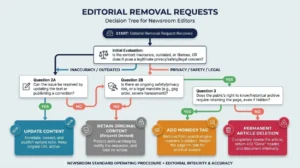
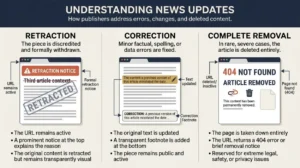
Source-level removal provides the most direct control when the originating website or platform has a valid mechanism for deleting or restricting the information. Content removal operates by changing the availability of the original information rather than simply attempting to reduce its ranking. Search-result removal operates at a different level because it limits visibility through a search engine without necessarily changing the source page. The distinction affects the durability and scope of the outcome. A source that remains publicly accessible can continue influencing the digital footprint through direct access, duplicate pages or alternative search engines.
Search visibility is therefore evaluated according to where the information exists within the information ecosystem. Removing the source addresses publication, while de-indexing addresses retrieval through a particular search engine. Suppression represents another mechanism because it attempts to reduce the prominence of unwanted information through stronger competing results. Each approach has a different control point, meaning effectiveness depends on whether the primary problem is publication, indexing or ranking. This makes source identification an important stage in selecting the appropriate removal strategy.
How does content removal compare with content suppression for personal information?
Content removal changes the availability of information, while content suppression changes its relative prominence in search results. Removal operates at the source or platform level, whereas suppression operates primarily through search ranking dynamics. Removal therefore provides a direct intervention when the content meets an applicable policy or privacy criterion. Suppression does not necessarily alter the original information and relies on competing content achieving stronger search visibility. The two methods consequently produce different forms of reputation control.
Content suppression can involve strengthening authoritative profiles, improving relevant information and increasing the visibility of accurate content associated with an entity. This changes SERP composition by increasing the relative presence of competing sources rather than eliminating the original result. The approach depends on ranking systems, content authority and relevance, creating greater exposure to search algorithm changes. Removal has a narrower dependency because its immediate objective concerns the availability of a specific source. A comparison of both methods therefore needs to consider control, persistence, risk exposure and the availability of a valid removal route.
Is reactive personal data removal more effective than organic reputation management?
Reactive removal and organic reputation management address different stages of reputation risk, so their effectiveness depends on the information problem being evaluated. Reactive removal operates by responding to an identified page, profile, record or search result that contains personal information requiring intervention. Organic reputation management operates continuously by developing accurate and authoritative information that contributes to the wider digital footprint. Reactive action directly targets an existing issue, while organic activity influences the information environment surrounding an entity. These mechanisms therefore serve different strategic purposes.
Reactive approaches provide a defined intervention point because the content, source and visibility can be documented before action begins. Their limitation is that they focus on identified information and do not automatically prevent new sources from appearing. Organic approaches provide broader digital-footprint development but require time for content to gain authority, relevance and search visibility. They also do not directly remove an unwanted source. A balanced evaluation therefore distinguishes source-level removal from longer-term reputation signal development.
How do short-term and long-term personal data removal strategies differ?
Short-term removal strategies focus on changing the status or visibility of specific information, while long-term strategies address the wider information environment surrounding an individual. A short-term approach evaluates the immediate source, applicable removal mechanism and current search visibility. A long-term approach evaluates duplicate content, recurring data publication, authority signals and the stability of accurate information across the digital footprint. The distinction is important because removing one result does not automatically eliminate related references. Long-term sustainability therefore depends on what remains visible after the initial intervention.
Short-term effectiveness can be measured through content accessibility, removal status and changes in relevant SERPs. Long-term effectiveness requires monitoring whether the same information reappears, whether duplicate sources remain indexed and whether other personal records continue affecting search perception. Search engines continuously reassess indexed information, meaning SERP composition changes independently of a single removal action. Reputation signals therefore require ongoing evaluation rather than a one-time measurement. This creates a distinction between immediate resolution and sustained search visibility control.
How does evidence quality affect the success of a personal data removal request?
Evidence quality directly affects the clarity of a removal assessment because the receiving platform needs to establish what information is involved and why it qualifies for intervention. A precise submission identifies the URL, specific personal information, relevant account or source and applicable removal basis. Supporting evidence connects those facts to the policy or privacy criterion being assessed. Generic statements about unwanted information provide less analytical detail than evidence tied to a defined source. Strong documentation therefore reduces ambiguity within the evaluation process.
Evidence also affects the choice between removal and suppression. If a valid source-level removal ground exists, documentation can support direct intervention against the content. If no applicable removal mechanism exists, search visibility strategies operate at a different level and focus on the relative strength of competing information. The evidence assessment therefore determines not only whether a request is supportable but also which reputation-management mechanism is relevant. This makes evidence classification an important component of strategy selection.
How do search engines interpret reputation signals after personal data removal?
Search engines interpret reputation signals through the relationships between indexed content, entities, queries, relevance and authority. A personal name can function as an entity identifier that connects multiple pages, profiles and records within search results. When personal information is removed from one source, the associated signal can decrease if that source was prominent and uniquely represented the information. However, other indexed sources can continue contributing similar associations. Search ranking influence therefore depends on the wider information environment rather than one removed page.
SERP composition provides a practical way to evaluate these changes. Before removal, an individual’s search results can contain directories, social profiles, professional pages and personal records. After a source becomes unavailable or de-indexed, the remaining pages determine which information occupies the available search positions. The resulting perception depends on the combination of remaining authority signals, content relevance and sentiment distribution. Removal therefore changes one component of the reputation system while search engines continue evaluating the remaining information.
Which strategy scales better when personal information appears across multiple sources?

A source-mapping strategy provides greater scalability when personal information appears across multiple websites, directories, data brokers and search indexes. Scaling removal requires identifying each source, determining who controls the information and matching the intervention to the applicable mechanism. Treating every URL as an identical removal case creates inefficiency because different platforms apply different criteria and processes. A structured classification system separates source-level deletion, search de-indexing and search suppression. This creates a repeatable framework for handling a distributed digital footprint.
A scalable evaluation can be structured around five actions:
- Map each occurrence by recording the source URL, search query and type of personal information displayed.
- Classify each source by distinguishing websites, data brokers, directories, social platforms and search-engine results.
- Evaluate removal eligibility by matching each occurrence against the relevant privacy or platform criteria.
- Prioritise intervention by assessing search visibility, source authority and the information’s contribution to entity perception.
- Monitor outcomes by checking source accessibility, indexing status and continuing SERP visibility.
This framework improves scalability because it separates decisions that require different mechanisms. It also prevents resources being concentrated on low-visibility sources while prominent results remain unresolved. Scalability therefore depends on classification and prioritisation rather than simply increasing the number of removal requests. The same principle applies when evaluating the sustainability of broader reputation-management activity.
How does content suppression compare with content enhancement for search perception?
Content suppression reduces the prominence of unwanted information, while content enhancement increases the visibility and authority of accurate, relevant information. Suppression focuses on the negative or unwanted result and attempts to change its position within SERPs. Enhancement focuses on competing information and strengthens the sources that provide a more accurate representation of the individual. Both approaches influence SERP composition but use different mechanisms. Neither automatically changes the original source.
Content enhancement can strengthen entity credibility when authoritative and accurate information becomes more visible for relevant searches. Professional profiles, verified organisational information and credible publications can contribute to the wider digital footprint. Suppression then depends on these competing sources achieving sufficient search ranking influence to reduce the relative visibility of unwanted content. This creates greater dependence on ranking dynamics than direct content removal. A strategic comparison therefore evaluates whether the objective is to eliminate information at source or influence how prominently it appears in search.
What are the main risks of relying only on personal information removal?
Relying only on personal information removal creates a risk of incomplete visibility control when related information exists across independent sources. Removing one page does not automatically remove duplicate records, archived references or separate publications containing similar information. Search engines can continue displaying alternative sources even after a specific result disappears. The resulting digital footprint can therefore remain substantially unchanged. Removal is most directly effective when the targeted source is responsible for a significant part of the unwanted information.
A second risk concerns the distinction between source removal and search visibility. A source can remain accessible even when a search engine no longer displays its result for a particular query. Conversely, a removed source can have copies distributed across other websites. These differences create separate monitoring requirements for publication status, indexing and SERP composition. A complete evaluation therefore measures the actual information environment rather than relying on a single removal confirmation.
How should personal data removal effectiveness be measured?
Personal data removal effectiveness is measured through source status, search visibility, indexing changes and the remaining reputation signals associated with the individual. Source status establishes whether the original information remains accessible. Indexing status establishes whether search engines continue retrieving the source. SERP evaluation then determines whether the information remains visible through alternative pages or duplicate sources. These measurements provide a clearer basis for comparing removal outcomes.
Effectiveness also requires distinguishing removal from displacement. A result that disappears from one search position has not necessarily been removed if the same information appears elsewhere. Similarly, de-indexing a source does not establish that the original content has been deleted. Measurement therefore needs to track the complete pathway from publication through indexing to search visibility. This approach produces a more accurate assessment of whether the underlying reputation risk has changed.
Dive Deeper With Our Expert Guides:
How to Request Removal of Personal Data From Public Registers
How to Remove Family Records From Genealogy and History Sites
Which factors provide the strongest basis for choosing a personal data removal strategy?
The strongest strategic basis comes from matching the intervention to the information source, removal eligibility, search visibility and long-term reputation objective. Source-level removal provides direct control when an applicable criterion exists. Search-result removal addresses indexing and retrieval, while suppression and content enhancement address relative SERP visibility. Each mechanism has a different dependency profile and level of control. Strategy selection therefore requires evaluating the information pathway before choosing the intervention.
The comparison can be summarised through four strategic considerations:
- Evaluate control by determining whether the strategy changes source availability, search indexing or ranking prominence.
- Measure effectiveness by tracking content status, SERP composition and continuing information visibility.
- Assess risk by identifying duplicate sources, policy limitations and dependence on search ranking systems.
- Monitor sustainability by checking whether information reappears or continues through independent sources.
This framework also explains why personal information removal success depends on more than submitting a single request. The outcome reflects the interaction between evidence quality, source authority, platform criteria, content indexing and the wider digital footprint. A removal strategy becomes more measurable when each intervention is connected to a defined information layer and a specific search visibility objective.
How can a personal data removal strategy support long-term reputation control?
Long-term reputation control requires combining source-level intervention with continued monitoring of search visibility and the wider digital footprint. Removal addresses eligible information at its origin, while monitoring identifies duplicate sources, new records and persistent search associations. Organic content enhancement can then strengthen accurate information that contributes to entity credibility. These mechanisms operate at different points within the reputation system. Combining them creates broader coverage than relying exclusively on one method.
Sustainability also depends on the stability of the information environment. Search engines continuously reassess indexed sources, while websites and data providers can publish or update information independently. A strategy that focuses only on the initial removal event therefore provides limited visibility into future changes. Long-term evaluation requires monitoring reputation signals, sentiment distribution and SERP composition over time. This establishes whether the information environment remains aligned with the intended reputation objective.
What should be considered when comparing personal data removal approaches?
Personal data removal approaches need to be compared according to control, effectiveness, scalability, risk exposure and sustainability rather than treated as interchangeable techniques. Source-level removal provides direct intervention against eligible content, while search-result removal addresses indexing and retrieval. Suppression and content enhancement influence SERP composition without necessarily changing the original information. Reactive approaches address identified risks, while organic strategies develop the wider digital footprint. Each mechanism therefore solves a different part of the reputation-management problem.
The central consideration is the relationship between the information source and the desired search outcome. When the source itself is eligible for removal, source-level intervention directly addresses availability. When information remains accessible through independent sources, suppression or content enhancement can influence relative search visibility. When the issue spans multiple sources, structured monitoring and source classification become essential for scalability. Evaluating these mechanisms together provides a clearer basis for understanding personal information removal success within modern search ecosystems.
Personal data removal is therefore a strategic information-control process rather than a single technical action. Effective evaluation connects the removal basis, evidence, source ownership, indexing behaviour and search ranking influence to the intended reputation outcome. Comparing removal, suppression, enhancement, reactive and organic approaches reveals different levels of control and different forms of risk. Understanding these distinctions allows personal information removal strategies to be assessed through measurable changes in visibility, reputation signals, entity credibility and SERP composition.
How can I improve my chances of successful personal data removal?
Improve your chances by identifying the exact source, providing accurate evidence and explaining why the information meets the relevant removal criteria. A precise request helps the platform or website assess the personal data against its applicable policy.
What evidence is needed for a personal data removal request?
Evidence can include the exact URL, screenshots, the personal information displayed and documents supporting the removal grounds. Clear evidence helps establish the relationship between the information, the individual and the applicable privacy or platform criteria.
Is personal data removal different from search result removal?
Personal data removal addresses the information at its original source, while search result removal generally affects whether a search engine displays a particular result. Removing a search result does not necessarily delete the personal information from the originating website.
How does personal information affect search visibility?
Personal information can influence search visibility when pages containing an individual’s name, contact details or other identifying data become indexed and rank for relevant queries. Removing or de-indexing eligible information can change the composition of those search results.
What happens if personal information appears on multiple websites?
Each source needs to be assessed separately because different websites, directories and data brokers control their own published information. A structured personal information removal strategy identifies duplicate records, evaluates applicable removal routes and monitors remaining search visibility.