
Removing embarrassing photos from the internet using UK privacy rights depends on the legal basis for the request, the location of the content, and the way search engines and websites process personal information. Reputation management strategies differ based on the source of the content, while online reputation control methods are evaluated through policy compliance, legal rights, reputation signals, and their influence on search visibility and entity credibility.
Which UK privacy rights provide the strongest basis for removing embarrassing photos?
UK privacy rights provide the strongest basis for removing embarrassing photos when the published content conflicts with legal protections relating to personal data, privacy, or unlawful processing. Reputation management evaluates these legal mechanisms because they influence both content availability and search perception. Privacy rights differ from platform moderation policies because they operate through statutory obligations rather than community guidelines. Search ecosystems recognise changes in indexed information after lawful removal or restricted access occurs. Legal rights therefore form one reputation management approach within a broader digital reputation strategy.
Privacy protection refers to legal safeguards that regulate how personal information is collected, processed, stored, and shared. Images capable of identifying an individual often qualify as personal data when linked to identifiable information. UK privacy frameworks evaluate whether continued publication satisfies lawful processing requirements. Search visibility changes only after the underlying content or indexing status changes. Consequently, privacy rights influence search results indirectly through changes to published information.
Privacy rights compared with platform policies
Privacy rights and platform policies operate through different governance mechanisms despite addressing similar content.
| Evaluation Factor | UK Privacy Rights | Platform Policies |
|---|---|---|
| Primary objective | Protect personal information | Enforce community standards |
| Decision framework | Legal compliance | Policy compliance |
| Assessment criteria | Data protection and privacy law | Published moderation rules |
| Effect on content | Legal removal or restriction | Moderation or retention |
| Search visibility impact | Changes after content processing | Changes after moderation outcomes |
This comparison demonstrates that legal privacy mechanisms and platform moderation fulfil different functions within reputation management. Selecting the appropriate approach depends upon the source of the image and the basis for removal.
How does privacy-based removal compare with search engine removal requests?
Privacy-based removal evaluates legal entitlement, whereas search engine removal requests evaluate search indexing under published removal policies. Reputation management compares these approaches because each influences search visibility through different mechanisms. Privacy requests focus on the lawfulness of published content, while search engine requests examine whether indexed results satisfy removal criteria established by the search provider. Both approaches affect search perception but operate independently. Understanding this distinction improves strategic decision-making.
Search engine removal requests generally influence search visibility rather than the original publication itself. A photograph removed from search results can remain available on the hosting website if no action affects the original content. Privacy-based removal instead addresses the source of publication where legal rights apply. This difference affects long-term reputation outcomes because source removal alters future indexing opportunities. Search ecosystems therefore respond differently to each approach.
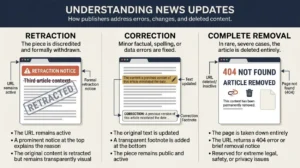
Source removal refers to eliminating or restricting the original webpage containing the image. Search result removal refers to reducing the visibility of indexed content without necessarily deleting the original publication. These mechanisms operate independently but interact within search ecosystems. Source removal produces broader indexing changes because search engines recrawl unavailable content over time. Search result removal affects discoverability while leaving the original publication intact where applicable.
Dive Deeper With Our Expert Guides:
What Evidence and Routes Support Removing a Photo From Google in the UK
How to Remove an Image From Google Search in the UK Using Privacy and Copyright
Which reputation management approach produces the most sustainable outcome?
Approaches addressing original sources generally produce more sustainable outcomes because search ecosystems depend upon indexed source content when constructing search results. Reputation management evaluates sustainability by measuring long-term search ranking influence, entity credibility, and digital footprint development. Removing or restricting source content changes the information available for indexing. Search engines gradually recognise these changes during subsequent crawling and evaluation cycles. Sustainable reputation management therefore prioritises underlying information instead of temporary visibility adjustments.
Reactive approaches concentrate on existing content after publication. Privacy requests, moderation requests, and search removal requests all operate reactively because they address already indexed information. These methods produce targeted changes where legal or policy requirements support action. Their effectiveness depends upon evidence quality, eligibility criteria, and the authority controlling the published content. Reputation management therefore analyses each method according to procedural suitability rather than universal effectiveness.
Preventative approaches improve the overall quality of an individual’s digital footprint before future reputation issues emerge. Content enhancement, authoritative profile development, and positive information creation strengthen entity credibility across search ecosystems. Search engines evaluate these broader reputation signals alongside historical information. Preventative strategies therefore contribute to long-term search ranking influence by improving contextual balance instead of focusing exclusively on content removal.
How do search engines evaluate image removal after privacy requests?
Search engines evaluate image removal by reassessing indexed content after receiving updated signals from the original source or approved removal processes. Reputation management examines this mechanism because search visibility depends on indexing rather than legal requests alone. Search algorithms regularly revisit webpages to identify changes in accessibility, metadata, and publication status. Updated indexing occurs only after search systems recognise these changes during recrawling. Consequently, legal requests influence search visibility indirectly through indexing behaviour.
Search engine evaluation process
Search ecosystems process updated information through structured indexing stages.
- Identify content changes by detecting whether source webpages remain publicly accessible.
- Evaluate indexing status through updated crawl information and processing signals.
- Reassess search relevance by comparing revised content against competing indexed information.
- Update search visibility when revised indexing reflects current content availability.
Each stage demonstrates that search visibility depends upon search engine evaluation rather than immediate legal action. Reputation management therefore considers indexing behaviour alongside privacy frameworks.
How do content suppression and content enhancement compare?
Content suppression and content enhancement differ because each influences reputation signals through separate search mechanisms. Content suppression refers to reducing the prominence of negative information by increasing the visibility of stronger competing content. Content enhancement refers to improving the authority, completeness, and relevance of existing positive digital assets. Reputation management evaluates both approaches because they influence SERP composition differently. Their effectiveness depends upon search ranking influence, digital footprint quality, and long-term sustainability.
Content suppression operates by changing competitive search dynamics. Additional authoritative content competes with existing indexed material, influencing how search engines arrange relevant results. This method does not automatically remove original content but changes the balance of visible reputation signals. Search perception therefore improves through adjusted SERP composition rather than deletion. Its effectiveness depends upon the quality and authority of competing information.
Content enhancement focuses on strengthening existing digital assets that already contribute to entity credibility. Improved biographies, professional websites, verified organisational information, and authoritative publications expand positive reputation signals across search ecosystems. Search algorithms interpret these improvements as stronger contextual evidence supporting recognised entities. This creates a more sustainable reputation framework because authority grows through information quality rather than visibility competition alone.
Which approach reduces long-term reputation risk most effectively?
Approaches that address both the source of publication and the wider digital footprint reduce long-term reputation risk most effectively because they influence the information available across search ecosystems rather than a single indexed result. Reputation management measures long-term effectiveness through search ranking influence, entity credibility, and the consistency of reputation signals. A strategy that relies only on search result removal affects discoverability but does not necessarily change the underlying content. By comparison, a strategy that evaluates source removal alongside broader reputation improvements produces a more stable outcome. Long-term reputation management therefore depends upon structural changes within the digital information environment.
Reactive methods provide targeted responses to existing content, while preventative methods strengthen the resilience of future search perception. Privacy rights requests, platform moderation, and search removal requests operate after publication and address specific digital assets. Content enhancement, authoritative publishing, and digital footprint optimisation influence how search engines evaluate an entity over time. Search algorithms compare all available information rather than individual pages in isolation. Combining reactive and preventative approaches therefore improves the sustainability of reputation management.
Comparing short-term and long-term strategies
| Evaluation Factor | Reactive Approaches | Preventative Approaches |
|---|---|---|
| Primary objective | Address existing content | Strengthen future reputation signals |
| Search mechanism | Remove or reduce visibility | Improve authority and contextual relevance |
| Search ranking influence | Targeted and immediate | Progressive and cumulative |
| Sustainability | Depends on ongoing moderation | Builds long-term entity credibility |
| Reputation impact | Resolves individual issues | Improves overall digital footprint |
This comparison demonstrates that long-term reputation protection depends upon strengthening authoritative information while addressing content that qualifies for lawful or policy-based action.
How do UK privacy rights compare with broader reputation management strategies?
UK privacy rights and broader reputation management strategies operate through different but complementary mechanisms. Privacy rights evaluate whether personal information is processed lawfully under applicable legislation, whereas reputation management evaluates how information influences search visibility, entity perception, and online credibility. These approaches intersect because lawful changes to published information influence search engine indexing over time. Their objectives remain distinct despite contributing to the same digital reputation ecosystem. Understanding this distinction improves strategic evaluation.
Privacy rights focus on legal compliance rather than search performance. Requests based on privacy legislation examine whether personal information continues to satisfy lawful processing requirements. Reputation management extends beyond legal assessment by analysing authority signals, sentiment distribution, digital footprints, and SERP composition. Search engines evaluate the resulting information rather than the legal request itself. Consequently, legal compliance represents one component within a broader reputation management framework.
Search ecosystems respond to information changes instead of legal arguments. Once source content changes or indexing updates occur, algorithms reassess search relevance using revised digital signals. Reputation management analyses these changes because search perception develops through cumulative information rather than isolated legal outcomes. This explains why legal rights and search strategies frequently complement one another without performing the same function.
What limitations affect each image removal approach?
Every image removal approach contains limitations because different governance systems evaluate content according to separate criteria. Reputation management measures these limitations by analysing effectiveness, scalability, risk exposure, and sustainability. Privacy-based requests require a valid legal basis supported by relevant evidence. Platform moderation depends upon published community standards. Search engine removal requests depend upon indexing policies rather than direct ownership of the content. These independent frameworks produce different outcomes despite addressing the same image.
Content suppression also contains practical limitations. Additional authoritative content competes for search visibility but does not automatically remove existing indexed images. Success depends upon the quality, authority, and relevance of competing information across search ecosystems. Search ranking influence develops gradually as algorithms reassess available content. Reputation management therefore evaluates suppression as a long-term visibility strategy instead of a removal mechanism.
Content enhancement strengthens entity credibility through improved digital information but does not erase historical publications. Search engines retain authoritative historical content when relevance signals remain strong. Preventative reputation management therefore improves contextual balance rather than rewriting digital history. This analytical distinction helps explain why different strategies produce different search outcomes. Selecting an appropriate method depends on the source, legal position, and indexing status of the image.
Framework for evaluating image removal options
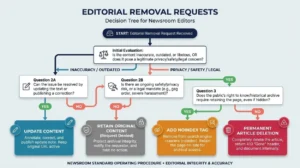
A structured evaluation improves strategic decision-making by comparing the characteristics of each available approach.
- Assess the publication source by determining whether the image appears on a website, social platform, or search index.
- Identify the governing framework by distinguishing between privacy legislation, platform policies, and search engine rules.
- Evaluate supporting evidence by analysing documentation that establishes legal entitlement or policy eligibility.
- Measure long-term impact by comparing effects on search visibility, reputation signals, and entity credibility.
Each stage contributes to a more informed reputation management strategy because it aligns the chosen approach with the mechanism responsible for controlling the content.
How do search engines interpret changes after image removal?
Search engines interpret changes after image removal by reassessing indexed information during future crawling and indexing cycles. Reputation management evaluates this process because search visibility changes only after algorithms detect updated source information. Search engines compare new indexing signals with historical data before adjusting rankings. This reassessment protects search quality by ensuring that displayed information reflects current content availability. Image visibility therefore changes progressively rather than instantly.
SERP composition also evolves as competing content enters search ecosystems. When indexed images disappear or lose contextual support, other authoritative content becomes more prominent during search evaluation. Search algorithms continually measure relevance, authority, and trust signals across available documents. Entity perception therefore changes through cumulative adjustments instead of isolated events. Reputation management analyses this process because it explains the gradual evolution of online reputation.
Removing embarrassing photos from the internet using UK privacy rights involves evaluating legal protections, platform governance, search engine indexing, and broader reputation management strategies. Privacy-based requests, search result removal, content suppression, and content enhancement each operate through different mechanisms and influence search visibility in distinct ways. Long-term reputation management depends upon understanding how search engines interpret reputation signals, digital footprints, and entity credibility across evolving search ecosystems. Comparing these approaches provides a structured framework for evaluating image removal options while recognising the strengths and limitations of each strategy.
Readers examining practical implementation methods often continue by exploring Remove Embarrassing Photos From the Internet With Our Discreet UK Service, which expands on structured image removal processes within a dedicated decision-stage context.
How can UK privacy rights help remove embarrassing photos from the internet?
UK privacy rights can provide a legal basis for requesting the removal of embarrassing photos when the images involve unlawful processing of personal data or infringe privacy rights. The outcome depends on the applicable legal framework, the website hosting the content, and the evidence supporting the request.
Can Google remove embarrassing photos from search results?
Google can remove certain images from search results if they meet its published removal policies or applicable legal requirements. Google Image Removal Services typically begin by assessing whether the image qualifies for removal from search indexing or whether action is required at the original source.
What is the difference between removing an image from a website and removing it from Google?
Removing an image from a website prevents the original content from remaining publicly available, while removing it from Google usually affects only its visibility in search results. Source removal generally has a greater long-term impact on search indexing and online reputation.
What evidence supports a request to remove embarrassing photos online?
Supporting evidence can include proof of identity, documentation showing privacy rights apply, ownership details, or evidence that the content breaches legal or platform policies. Accurate documentation strengthens requests made through legal or policy-based image removal processes.
How does Clear Your Name explain Google Image Removal Services?
Clear Your Name explains that Google Image Removal Services involve evaluating image indexing, privacy rights, and search engine removal policies before determining the appropriate course of action. The process focuses on legal eligibility, content visibility, and online reputation management rather than automatic image deletion.