When personal details are doxxed online, the response focuses on limiting further distribution, assessing publication sources and controlling subsequent search visibility.
Reputation management strategies differ based on whether the objective is content removal, search perception control, or long-term digital footprint management.
Which Doxxing Response Strategy Provides the Strongest Initial Control?
Content removal provides the most direct initial control because it addresses the source where personal information is publicly exposed. Social Media Content Removal Services operate by identifying problematic posts, profiles, comments or other published material and using the relevant platform’s reporting or moderation mechanisms. The effectiveness of this approach depends on the platform’s policies, the nature of the information and whether the content breaches applicable rules. Removal therefore addresses information availability at the publication level rather than attempting to influence how remaining information ranks.
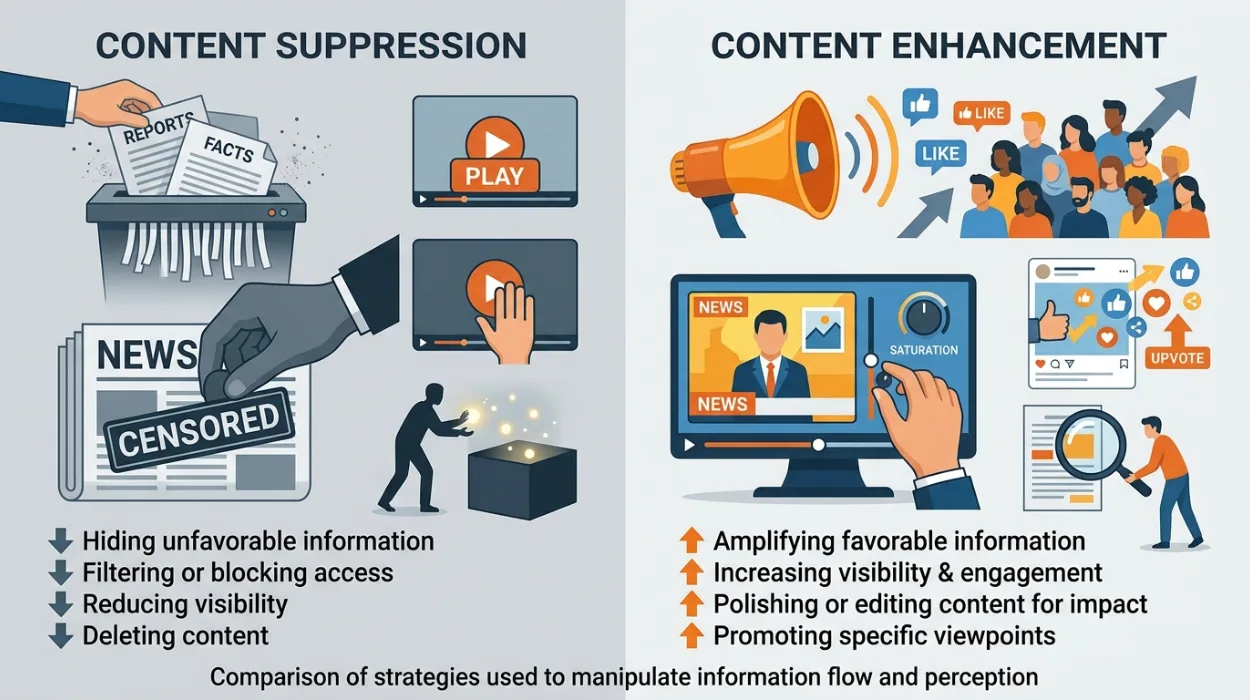
Search suppression represents a different approach because it focuses on reducing the visibility of unwanted information rather than necessarily eliminating the source. Suppression strategies analyse SERP composition and introduce stronger, relevant content that competes for search visibility. This approach has greater relevance when information exists across independent websites that do not respond to removal requests. Its limitation is that the underlying content remains accessible at its original location, creating a continuing source of reputation risk.
Is Content Removal More Effective Than Search Suppression for Doxxing?
Content removal is generally more direct when the exposed information exists on a platform that provides an applicable removal mechanism. Removing the original publication reduces the availability of the specific content and can prevent further engagement with that source. It also reduces the opportunity for search engines to discover or recrawl that particular page when the page becomes unavailable. However, removal does not automatically eliminate copies, screenshots, reposts or independent publications containing the same information.
Search suppression operates by influencing the composition of results rather than deleting the underlying material. Content enhancement creates relevant, authoritative pages that compete with unwanted results for query visibility. This method provides greater relevance to long-term SERP management but requires sustained content development and search ranking influence. The comparison therefore depends on the information environment: removal addresses source availability, while suppression addresses discoverability.
How Does Reactive Content Removal Compare With Organic Reputation Management?
Reactive content removal responds to an existing exposure by addressing specific content after it becomes publicly available. The approach is source-focused and measurable because the analysis can identify individual URLs, posts, profiles or publications requiring attention. Its primary advantage is direct intervention against a defined reputation risk. Its limitation appears when the same information has already propagated across multiple sources and platforms.
Organic reputation management is preventative and developmental because it builds a broader digital footprint before or alongside reputation problems. Content creation, authoritative profiles and relevant publications provide additional reputation signals that influence the information users encounter. Organic methods operate through gradual search visibility rather than immediate source removal. They therefore offer stronger long-term scalability for controlling SERP composition but provide less direct control over a specific exposed post.
Which Approach Has Greater Impact on Search Visibility?
Search suppression has a more direct relationship with search visibility because it specifically evaluates how unwanted pages appear within search engine results. Search visibility measures the prominence and discoverability of information for queries associated with an individual or entity. Content enhancement attempts to increase the ranking potential of relevant pages, changing the balance of visible results. This process influences SERP composition without requiring every unwanted page to disappear.
Content removal influences search visibility indirectly when the removed material was indexed by search engines. Once a page becomes unavailable, its ability to continue generating search visibility can decline as search systems process the change. The impact depends on whether duplicate sources remain indexed and whether other pages contain the same information. Removal therefore produces a stronger source-level effect, while suppression provides a stronger ranking-level framework.
How Do Short-Term and Long-Term Reputation Strategies Differ?
Short-term reputation strategies prioritise immediate reduction of exposure, while long-term strategies focus on maintaining a controlled and credible information environment. Reactive removal operates quickly when a defined source can be identified and addressed through platform procedures. Its measurable outcome is the reduction or disappearance of specific content from its original location. However, the result does not necessarily alter the wider digital footprint created by copies or independent references.
Long-term reputation management focuses on establishing consistent reputation signals across authoritative digital properties. Content enhancement, profile optimisation and organic publication create additional information that contributes to entity credibility. These methods require sustained search ranking influence because new content competes with existing indexed material. Their principal strength is sustainability, while their limitation is the time and monitoring required to maintain a coherent SERP composition.
Does Organic Content Creation Replace Doxxing Content Removal?

Organic content creation does not replace content removal because the two approaches operate at different levels of the reputation ecosystem. Removal addresses the existence or accessibility of a specific piece of information, while content creation adds new information to the digital environment. Removing a doxxing-related post therefore changes the source landscape, whereas publishing authoritative content changes the competitive landscape within search results. Treating the approaches as interchangeable creates an incomplete reputation control strategy.
Content enhancement becomes more relevant when unwanted information remains accessible despite removal efforts. New authoritative pages can provide additional context for search engines and users, increasing the proportion of controlled content within relevant SERPs. However, the original information remains available outside the search results unless its source is separately addressed. This creates a clear distinction between content suppression and content enhancement: suppression concerns reducing unwanted visibility, while enhancement concerns strengthening desirable visibility.
How Do Reputation Signals Influence the Response to Doxxing?
Reputation signals influence how search systems and users interpret information connected to an identifiable person or entity. These signals include source authority, content relevance, contextual consistency, sentiment distribution and relationships between digital properties. Search engines evaluate pages according to ranking systems rather than treating every online statement as an established fact. Consequently, the visibility of doxxing-related information does not itself establish the accuracy or credibility of that information.
Entity credibility develops through the broader information environment surrounding an identifiable subject. Consistent information across authoritative sources creates a stronger entity representation than isolated references from low-quality or unrelated pages. Doxxing introduces personal information into this environment, potentially creating new associations between an identity and unwanted content. Reputation analysis therefore evaluates both the exposed information and the signals surrounding its publication.
Which Strategy Is More Scalable Across Multiple Doxxing Sources?
Content enhancement is generally more scalable for managing a large search environment because one coherent content strategy can influence multiple related queries and SERP positions. A structured digital footprint can contain authoritative pages addressing different aspects of an entity, allowing search visibility to develop across a broader query set. This creates cumulative search ranking influence rather than relying on individual removal actions. The limitation is that each new source still requires separate assessment when the objective involves eliminating the underlying information.
Reactive removal becomes less scalable as the number of independent publications increases. Each source has its own ownership structure, moderation policy, reporting process and indexing behaviour. A single removal therefore addresses one publication rather than automatically addressing every duplicate or derivative reference. Removal remains highly targeted, but the operational workload increases with source fragmentation. Scalability consequently depends on whether the objective is source elimination or broader search perception control.
How Should Risk Exposure Be Evaluated Between Removal and Suppression?
Risk exposure is evaluated by examining the persistence, accessibility and distribution of the information rather than simply measuring whether one page has disappeared. Removal reduces exposure at the source and therefore provides a direct reduction in the availability of the targeted material. The risk remains higher when copies, screenshots or alternative URLs continue to circulate. A removal strategy therefore requires source mapping to determine whether the information exists elsewhere.
Suppression carries a different risk profile because the original material remains available. Its effectiveness depends on maintaining stronger competing content and monitoring changes in search ranking. Algorithmic changes, new publications and increased engagement with unwanted content can alter SERP composition over time. This makes suppression more dependent on continuous search perception analysis than source-level removal.
Dive Deeper With Our Expert Guides:
How to Track and Remove Reposted Screenshots Across Platforms
How to Slow the Spread of a Viral Harmful Post
How Can the Effectiveness of Doxxing Response Methods Be Measured?
Effectiveness is measured by comparing source availability, search visibility and reputation signals before and after an intervention. A removal strategy can be assessed by checking whether identified content remains accessible at its original URL and whether duplicate publications continue to exist. Search suppression can be assessed by monitoring the position and frequency of unwanted results for relevant queries. Organic content strategies can be evaluated through the visibility and ranking stability of authoritative pages.
A structured evaluation framework can compare the approaches through four measurable dimensions:
- Measure source availability by recording whether targeted posts, pages or profiles remain publicly accessible after intervention.
- Compare SERP composition by tracking the proportion of unwanted and relevant results appearing for defined entity-related queries.
- Evaluate reputation signals by analysing source authority, sentiment distribution and contextual relevance across visible results.
- Monitor sustainability by measuring whether visibility changes remain stable over time rather than relying on a single search observation.
This framework separates immediate outcomes from longer-term search performance. It also prevents search position from being treated as the sole indicator of reputation control.
How Does Search Perception Control Complement Content Removal?
Search perception control complements content removal by addressing the information that remains visible after individual sources have been addressed. Removing a social-media post changes the availability of that specific publication, while search perception analysis evaluates what users encounter across the remaining search ecosystem. This distinction becomes important when copies, independent websites or historical references continue to appear. The two approaches therefore address different layers of the same digital reputation problem.
A combined model can establish source control first and then assess the remaining SERP environment. Relevant content can strengthen entity credibility while search monitoring identifies persistent unwanted references. This creates a relationship between content suppression and content enhancement rather than treating either method as a complete solution. The effectiveness of the overall strategy depends on the distribution, authority and persistence of the information involved.
What Is the Most Sustainable Approach to Doxxing-Related Reputation Management?
The most sustainable approach is based on matching the intervention to the source, visibility and persistence of the information. Source-level removal provides direct control when a platform or publisher offers a valid mechanism for addressing the content. Search suppression provides an alternative when unwanted material remains accessible but requires reduced visibility within relevant SERPs. Organic content enhancement supports longer-term entity credibility by establishing a stronger and more coherent digital footprint.
Sustainability also depends on ongoing monitoring because online information environments change continuously. New pages can become indexed, existing content can gain ranking visibility, and previously suppressed results can return to prominent positions. A long-term strategy therefore measures search visibility alongside source availability and reputation signals. This approach recognises that reputation management is an information-control process rather than a single removal event.
Responding to doxxing requires distinguishing between content removal, search suppression and organic reputation development. Removal operates at the source level, suppression operates at the SERP level, and content enhancement operates through the development of stronger digital assets and reputation signals. Short-term reactive methods provide direct intervention, while organic approaches provide broader long-term search visibility and entity credibility. The appropriate evaluation therefore considers effectiveness, scalability, risk exposure and sustainability rather than relying on one universal method.
The relationship between these approaches becomes clearer when search visibility and information availability are treated as separate variables. Removing Doxxing Content From Social Media addresses the publication layer, while search perception control evaluates how remaining information is presented to users. Organic content development then contributes to the wider digital footprint and influences the balance of information within relevant SERPs. This layered framework provides a more precise basis for evaluating reputation management strategies in doxxing-related situations.
What should I do if my personal details are doxxed online?
Start by documenting the affected posts or pages and identifying where your personal information has been published. Then assess the available content removal, platform reporting and search visibility options to limit further exposure.
Can doxxing content be removed from social media?
Doxxing content can sometimes be removed when it violates a platform’s privacy, harassment or personal-information policies. Social Media Content Removal Services focus on identifying relevant content and using the appropriate reporting or removal mechanisms.
Is content removal better than search suppression for doxxing?
Content removal addresses the original publication, while search suppression focuses on reducing the visibility of unwanted information in search results. Removal provides source-level control, whereas suppression addresses SERP composition when the original content remains accessible.
How does doxxing affect online reputation?
Doxxing can expand a person’s digital footprint by connecting personal information with their searchable identity. If the information becomes indexed, it can influence search visibility, entity perception and the reputation signals users encounter.
Can removing a doxxing post remove it from Google search results?
Removing the original post can reduce its availability, but copies, screenshots or references on other websites can remain indexed. Search visibility therefore requires separate assessment of the remaining URLs and search results.