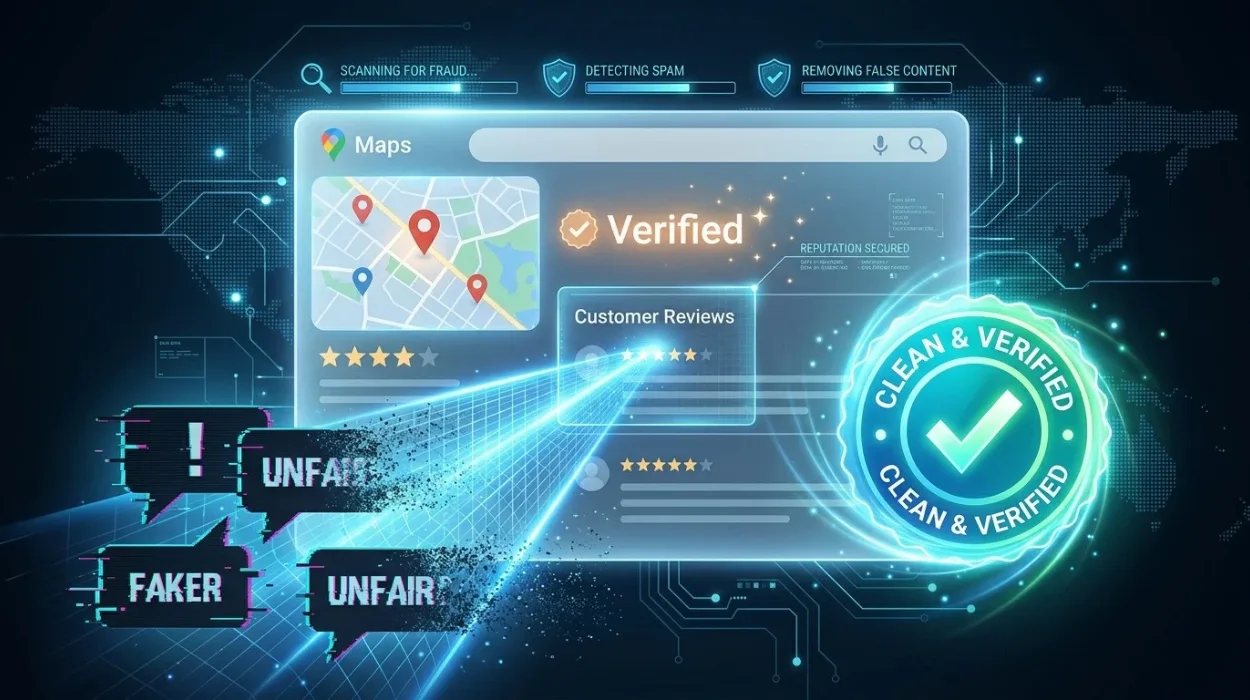
Removing fake ex-employee reviews from Google Maps requires documented evidence, accurate policy assessment and a structured removal process. Clear Your Name’s Google Review Removal Services focus on challenging reviews that breach Google’s content policies, protecting search visibility and strengthening the reputation signals that influence customer decisions.
A negative review does not automatically qualify for removal because its author is a former employee or expresses dissatisfaction. The decisive factor is whether the review violates an applicable Google policy and whether the available evidence supports the report. A professional removal service establishes that distinction, organises the evidence and follows the appropriate escalation route. This approach protects entity credibility without relying on artificial ratings, misleading responses or attempts to suppress legitimate criticism.
Why should you choose a professional Google review removal service?
A professional Google review removal service provides a documented route for identifying policy violations, submitting evidence and managing escalation. This approach improves the quality of removal requests by connecting each allegation to a specific policy and supporting evidence. Businesses gain a clearer record of the review, the grounds for reporting it and the status of the case. That structure also reduces the risk of submitting unsupported accusations or repeatedly reporting the same content without addressing the original issue. Clear Your Name positions its service around evidence-led review assessment rather than promising removal regardless of Google’s decision.
Google Maps reviews function as reputation signals that influence how prospective customers assess a business before making contact. A review describing alleged misconduct, poor management or an unpleasant workplace experience can affect public perception even when its claims are disputed. Search visibility increases the significance of this content when the review appears alongside the business profile in branded searches. Professional review management addresses the specific policy issue while helping the business maintain a credible public presence. The objective is to improve the accuracy of the information presented to customers and reduce the influence of content that breaches platform rules.
How do you determine whether an ex-employee review qualifies for removal?
A review qualifies for removal when its content or behaviour breaches Google’s applicable content policies, not simply because the business disputes the allegations. Relevant concerns include demonstrably fake engagement, harassment, prohibited personal information, spam and content that violates rules governing conflicts of interest. A former employee’s review requires careful assessment because genuine first-hand experiences can remain permissible even when the author criticises management or describes an employment dispute. Evidence of a policy violation therefore carries more weight than disagreement with the review’s tone or conclusions. A structured assessment establishes whether reporting, responding publicly or pursuing another reputation management measure is the appropriate course.
Businesses investigating fraudulent ex-employee reviews on Google Maps benefit from separating verifiable facts from assumptions about the reviewer’s identity or motivation. Relevant records include employment timelines, documented communications, evidence of a fabricated customer transaction and indications of coordinated or repetitive review activity. These records help establish context, but a former employment relationship alone does not prove that a review is fake. The strongest complaint identifies the specific content at issue and explains how it conflicts with a published policy. This evidence-led distinction strengthens the credibility of the report and reduces the risk of making unsupported allegations against an identifiable individual.
What does a professional Google review removal service include?
A professional Google review removal service combines policy assessment, evidence preparation, submission management and appropriate escalation into a traceable workflow. Each stage addresses a different source of risk, from misclassifying legitimate criticism to submitting an incomplete report. The process also establishes a record of actions taken, decisions received and any outstanding requirements. This creates operational clarity for business owners who need to protect their online reputation without spending time repeatedly investigating the same review. The service focuses on content eligible for removal rather than promising control over Google’s moderation decisions.
The process follows four practical steps:
- Identify the review URL, publication date, reviewer profile and exact statements that raise a policy concern.
- Document relevant screenshots, business records and supporting evidence that establish the context of the suspected violation.
- Submit a policy-specific report explaining the issue clearly and linking the allegation to the applicable rule.
- Escalate an eligible rejected case through Google’s available review management or appeal process, adding relevant evidence where necessary.
This structured approach also supports documenting and escalating policy-violating Google reviews when an initial report fails to resolve the issue. A complete case file prevents important details from being lost between assessment, submission and appeal. It also makes it easier to identify whether a rejection reflects insufficient evidence, an incorrect policy classification or a decision that requires further review. Each escalation needs a clear purpose rather than simply repeating the original complaint. The result is a more accountable process, even when Google ultimately retains the review.
How does review removal improve search visibility and customer trust?
Removing a review that Google confirms violates its policies eliminates that particular item from the relevant Google surface, reducing its direct influence on the business profile. The effect on overall rankings, customer enquiries and conversion rates depends on other factors, including review volume, rating distribution, search competition and customer behaviour. No removal service can guarantee a particular ranking increase or a fixed improvement in revenue from one deleted review. However, resolving policy-violating content improves the accuracy of the review information customers encounter. This creates a stronger foundation for reputation recovery and informed purchasing decisions.
Search perception influence extends beyond a single star rating because customers interpret review text, recency, owner responses and patterns of feedback together. A highly visible allegation can shape a reader’s initial impression before they examine the company’s website, credentials or other customer experiences. When an ineligible review is removed, that specific negative signal no longer contributes to the visible review record on the affected surface. Businesses can then strengthen their wider reputation through authentic customer feedback, consistent service quality and accurate business information. This combination supports entity credibility without manufacturing positive sentiment or attempting to manipulate Google’s ranking systems.
Negative content suppression serves a different purpose from review removal and is relevant when disputed content remains online or appears across other search results. It involves strengthening accurate, useful and authoritative information so that users encounter a more balanced representation of the business. A coordinated approach can include improving owned web pages, maintaining consistent business profiles and publishing credible evidence of expertise. These activities influence content visibility over time, but they do not erase the original review or guarantee that negative pages disappear from search results. Combining legitimate removal efforts with sustainable reputation development provides broader SERP control than relying on a single complaint.
How quickly can a fake ex-employee review be removed?

The timeline depends on Google’s assessment, the clarity of the evidence and the availability of an appropriate appeal route. Submitting a report does not guarantee immediate action, and an unsuccessful decision can require further documentation or escalation. A professional service improves process readiness by preparing the case correctly and keeping track of its progress, but it cannot dictate Google’s moderation schedule. Businesses need to distinguish between the time required to prepare a complaint and the time Google takes to reach a decision. This distinction supports realistic expectations and prevents rushed actions that weaken the case.
The first measurable milestones are operational rather than ranking-based. A business can record the date of initial assessment, the completeness of its evidence file, the submission date and any subsequent response from Google. Further milestones include whether the report receives a decision, whether an appeal is available and whether the review remains visible after the decision. These records help establish accountability and identify avoidable delays. Changes in star ratings, search visibility and customer enquiries require separate monitoring because they depend on factors beyond the removal process.
Is professional review removal worth the cost?
Professional review removal is valuable when the cost of handling a complex case internally exceeds the cost of structured assessment, evidence preparation and escalation support. A business owner can report a review independently through Google’s available tools, making self-management a reasonable option for a straightforward case with clear evidence. Professional assistance becomes more relevant when the policy grounds are difficult to establish, the review has significant reputational consequences or an earlier report has been rejected. The commercial decision rests on case complexity, staff time, reputational exposure and the quality of support provided. A credible provider explains the work involved before the business commits to a service.
Cost assessment must also account for the limits of the outcome. A removal fee does not purchase a guaranteed deletion, a predetermined star-rating increase or preferential treatment from Google. Businesses need clarity on the service scope, reporting and escalation stages, communication arrangements and any additional charges before proceeding. Clear terms reduce financial uncertainty and help distinguish genuine casework from unsupported promises. Long-term value comes from a defensible process, transparent reporting and better management of reputation risks rather than a guaranteed result that no external provider can control.
Dive Deeper With Our Expert Guides:
Hire Our Experts to Remove Fake Google Reviews and Protect Your Local Rank
Protect Your Google Business Profile by Removing Harmful Reviews Professionally
How can you reduce the risk of future Google review problems?
Sustainable reputation management combines policy-compliant reporting with routine monitoring, accurate business information and genuine customer feedback. Removing one eligible review does not prevent another policy violation, nor does it resolve underlying service problems that generate legitimate criticism. A documented monitoring process helps businesses identify suspicious review activity promptly and preserve relevant evidence before details become difficult to verify. Consistent records also reveal whether incidents are isolated or part of a repeated pattern requiring further investigation. This improves operational readiness without treating every negative comment as fraudulent.
Businesses can strengthen their ongoing review management by taking the following actions:
- Monitor new Google Maps reviews at regular intervals and record suspicious activity with dates and URLs.
- Preserve original screenshots and relevant correspondence before reporting content that appears to breach a policy.
- Respond professionally to legitimate criticism without disclosing confidential employee information or personal data.
- Encourage authentic customer feedback through neutral requests that do not reward positive reviews or discourage negative ones.
- Audit business profile details and customer-facing information to maintain consistency across branded search results.
Risk mitigation also requires careful communication when a review relates to a former employee. Public accusations about an identifiable reviewer can create additional reputational and legal exposure, particularly when the business cannot substantiate its claims. A measured response acknowledges the concern without confirming confidential employment details or escalating a personal dispute. Businesses must preserve the distinction between an employment grievance and a demonstrable breach of Google’s policies. This discipline protects trust while keeping the removal request focused on verifiable facts.
Why choose Clear Your Name to manage fake ex-employee reviews?
Clear Your Name provides a structured approach to Google review removal, centred on policy assessment, evidence quality and appropriate escalation. The service helps businesses distinguish reviews that qualify for reporting from legitimate criticism that requires a professional response. This distinction protects the credibility of the removal request and reduces the risk of pursuing unsupported claims. Businesses also benefit from clearer case documentation, defined process stages and a more consistent approach to review-related reputation risks. The final removal decision remains with Google, making transparent expectations an essential part of reliable service delivery.
Choosing a provider requires examining the process rather than relying on headline promises. Confirm that the service explains its assessment criteria, identifies the evidence required, describes the escalation procedure and communicates what happens if Google rejects the request. Avoid providers that guarantee deletion, promise manipulated ratings or suggest that negative reviews disappear automatically after payment. These claims do not establish policy compliance or demonstrate a credible removal method. A transparent service gives businesses a defensible basis for making decisions and measuring progress.
When a review meets the reporting criteria, Google Review Removal Services offer a focused route for challenging the content while maintaining a wider reputation management strategy. Clear Your Name connects review assessment with practical evidence preparation and escalation support, helping businesses manage the process without confusing suspected misconduct with proven policy violations. The appropriate next step is to assess the review, identify the applicable policy and establish whether the evidence supports a removal request. This approach prioritises process clarity, risk reduction and realistic outcomes over unsupported guarantees.
What is the next step towards removing a fake ex-employee review?
Start with a review-specific assessment that establishes what the content says, why it appears questionable and which Google policy applies. Gather the available evidence before submitting a report, then retain a record of the submission and any decision received. If the initial request fails, examine the reason and determine whether further evidence or an eligible appeal supports escalation. If the review does not breach Google’s policies, focus on a professional response and wider reputation management instead. This decision-led process protects credibility while ensuring that each action has a clear purpose.
For businesses dealing with persistent review disputes, a professional assessment provides a clearer understanding of the available options, the evidence required and the limitations of the removal process. Clear Your Name supports an evidence-led approach that prioritises accurate reporting, responsible escalation and sustainable reputation protection. Effective reputation management does not depend on removing every negative opinion; it depends on addressing policy violations appropriately and ensuring that customers encounter reliable information when evaluating a business.
Can fake ex-employee reviews be removed from Google Maps?
Yes, Google Maps reviews can be removed if they violate Google’s content policies, including rules on fake engagement, harassment or prohibited content. A former employee’s negative opinion alone does not justify removal; the report must identify a specific policy violation.
How do I report a fraudulent ex-employee review on Google?
Locate the review in your Google Business Profile review management tools, select the reporting option and choose the reason that best matches the suspected violation. Include relevant evidence, such as screenshots, review URLs and records supporting the complaint, then monitor Google’s decision.
What evidence is needed to remove a fake employee review from Google Maps?
Useful evidence includes screenshots, review links, relevant employment records, documented communications and information indicating fake engagement or another policy breach. Evidence must support the specific violation because an employment relationship alone does not prove that a review is fraudulent.
How long does Google take to remove a policy-violating ex-employee review?
The timeframe depends on Google’s review process, the evidence provided and whether an appeal is necessary. Google does not guarantee removal or a fixed resolution time, but accurate documentation helps businesses submit clearer reports and manage escalation effectively.
Can Clear Your Name help remove fake ex-employee reviews from Google Maps?
Clear Your Name offers Google Review Removal Services to help businesses assess suspected policy violations, organise supporting evidence and manage appropriate escalation requests. Removal depends on Google’s policies and final decision, so professional assistance cannot guarantee that a review will be deleted.