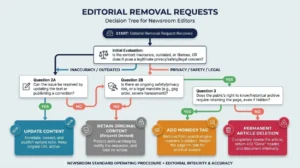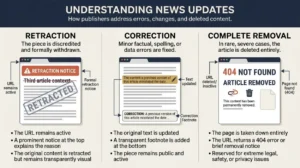
Documenting and escalating policy-violating Google reviews requires a structured record of the disputed content, relevant evidence and the specific platform policy involved. Reputation management strategies differ based on whether a review qualifies for removal, requires a formal escalation or needs a broader approach to managing search visibility and public perception.
How Should Businesses Compare Evidence Collection and Direct Review Reporting?
Evidence collection establishes the factual basis for a complaint, while direct review reporting submits suspected violations to the platform for assessment. Evidence collection operates by recording the exact review text, publication date, reviewer profile information and any verifiable details relevant to the suspected breach. Direct reporting operates through the platform’s review-reporting process, where the submitted content is assessed against applicable policies. Both approaches address the same problem, but they perform different functions within the review dispute process. Documentation improves the specificity of a report, whereas reporting places the concern within the platform’s moderation system.
The effectiveness of evidence collection depends on accuracy, relevance and traceability. A dated screenshot preserves the wording and visible context of a review at a particular point in time, while a record of the relevant policy explains why the content is being challenged. Supporting documents add value when they directly contradict a factual assertion or demonstrate a prohibited relationship or form of manipulation. Evidence that establishes only a disagreement between the reviewer and the business does not independently demonstrate a policy violation. A precise evidence record therefore reduces ambiguity without guaranteeing that the platform will remove the review.
Direct reporting offers a defined route for requesting moderation, but its outcome depends on the applicable policy and the platform’s assessment. A report that identifies a specific prohibited behaviour is easier to evaluate than a general statement that the review is unfair or damaging. The distinction is important because negative sentiment, criticism and factual disagreement are not automatically grounds for removal. Businesses also need to distinguish between evidence that a claim is inaccurate and evidence that the review falls within a platform’s removal criteria. The strongest evaluation connects each reported element to a clear policy concern rather than relying on the overall tone of the review.
What Is the Difference Between Policy-Based Escalation and Legal Action?
Policy-based escalation asks a platform to assess content against its published rules, while legal action evaluates whether the content breaches an applicable law or creates a legally actionable claim. Policy escalation operates within the platform’s moderation procedures and focuses on issues such as fake engagement, prohibited conflicts of interest or other restricted content. Legal action operates through relevant legal processes and requires an assessment of jurisdiction, evidence, applicable law and available remedies. The two routes are not interchangeable because a review can violate a platform policy without being unlawful, and a potentially unlawful statement requires a separate legal analysis. Choosing between them depends on the nature of the allegation, the evidence available and the outcome being sought.
Platform escalation is generally more directly connected to the removal of content hosted within a review service. It avoids the need to establish every element of a legal claim, but the platform remains responsible for applying its own policies. Legal action can address issues that extend beyond a platform’s content rules, including certain defamatory statements, but it involves legal standards that vary by jurisdiction. Legal processes also introduce questions of cost, evidence preservation, proportionality and enforcement. A review’s damaging effect on reputation does not, by itself, establish that legal action is justified or that a court would order removal.
When Is a Platform Policy Route More Appropriate?
A platform policy route is more appropriate when the available evidence points to a specific breach of the review platform’s rules. Examples include demonstrable fake engagement, content that misrepresents a prohibited relationship or other material expressly restricted by the platform’s policies. The reporting party needs to identify the relevant content and explain how it relates to the policy category. This approach keeps the complaint focused on moderation criteria rather than broader disagreements about business reputation. Its principal limitation is that the platform decides whether the evidence meets its standards for enforcement.
When Does a Legal Assessment Become Relevant?
A legal assessment becomes relevant when a review contains identifiable factual allegations that raise a substantive legal concern, rather than merely expressing an unfavourable opinion. The assessment considers the wording, its meaning, the available evidence, the relevant jurisdiction and any applicable defences or public-interest considerations. Preserving the original review and related records helps maintain an accurate account of the disputed material. Legal advice is particularly important where a response risks escalating a dispute or disclosing confidential employment information. A legal assessment does not guarantee removal because the available remedy depends on the law, the evidence and the circumstances of the case.
How Do Content Removal and Content Enhancement Compare?
Content removal seeks to eliminate material that violates an applicable policy or legal standard, while content enhancement improves the quality, accuracy and completeness of the wider information associated with a business. Removal operates by addressing the disputed source directly, whereas enhancement operates by strengthening relevant information that users encounter across the digital footprint. The first approach targets a specific item; the second improves the surrounding context in which the business is evaluated. Their effects on search visibility differ because removing one review does not necessarily change other search results or the overall sentiment distribution. Likewise, publishing accurate information does not remove a policy-violating review from its original location.
Removal is most directly relevant when the disputed content meets a recognised removal criterion. Its effectiveness depends on the platform’s decision, the status of the content and whether the complaint is supported by sufficient evidence. Content enhancement is more suitable for addressing gaps in the wider digital footprint, such as incomplete business information, outdated pages or a lack of authoritative descriptions of the organisation’s activities. This approach supports entity credibility by making relevant, accurate information easier for users to find and interpret. However, enhancement cannot substitute for the removal of material that independently qualifies for moderation.
The two approaches also differ in scalability and risk exposure. A review-specific complaint can be assessed against a defined policy, while content enhancement requires ongoing editorial quality control, factual consistency and maintenance across relevant platforms. Removal efforts become inefficient when every negative statement is treated as a violation without examining its content. Enhancement efforts become inefficient when they generate large volumes of repetitive or low-value pages without adding useful information. A balanced strategy separates content that warrants a removal assessment from content that requires better context or more complete representation.
How Do Reactive and Organic Reputation Strategies Differ?
Reactive reputation management responds to an existing event, such as a newly published review, a sudden rating change or a disputed allegation. Organic reputation management develops accurate, useful information and credible digital references over time, helping users form a broader understanding of the business. Reactive activity operates through targeted investigation, evidence preservation, platform reporting and proportionate responses. Organic activity operates through maintained business information, relevant website content, accurate profiles and legitimate customer feedback. The difference is primarily one of timing and purpose rather than a strict division between separate systems.
Reactive strategies are valuable when immediate documentation is needed to preserve the details of a disputed review. Their effectiveness depends on the speed and quality of the investigation, but an urgent response without sufficient evidence increases the risk of inaccurate accusations. Organic strategies contribute to long-term search visibility by strengthening relevant information about the entity, although search engines retain control over indexing and ranking. Publishing accurate information does not guarantee that a particular page will outrank a negative result. Organic activity also does not establish that an existing review is false or remove the need for a valid policy complaint.
A comparison of these approaches must account for the different outcomes being measured. Reactive performance can be assessed through the completeness of the evidence record, reporting status and the resolution of a specific policy concern. Organic performance can be assessed through the accuracy of business information, relevant search-result coverage and changes in the visibility of authoritative sources. Neither measurement alone proves that public perception has improved. Evaluating both helps distinguish operational progress from changes in customer behaviour or search ranking influence.
How Does Review Escalation Affect Search Visibility and SERP Composition?

Review escalation affects search visibility most directly when a platform removes, restricts or otherwise changes the availability of the disputed content. SERP composition refers to the combination of results displayed for a query, including business listings, websites, directories, news coverage and other relevant sources. A review report does not automatically change that composition because submitting a complaint is different from obtaining a moderation decision. Even after a review is removed from Google Maps, related references or separate web pages can remain discoverable. The effect therefore depends on the location of the content, the platform’s decision and the relationship between the review and other indexed information.
Search engines interpret reputation signals within the context of the query and the information available about an entity. These signals include relevance, source consistency, content quality and other contextual features, but no single signal provides a complete measure of credibility. A business can have accurate official information alongside critical third-party reviews, and search systems do not simply treat the official source as automatically authoritative for every disputed claim. The resulting search presentation reflects the systems’ assessment of relevance and other ranking factors. Consequently, review escalation and search visibility management require separate monitoring because success in one area does not guarantee an equivalent change in the other.
Does Removing a Review Automatically Improve Local Rankings?
Removing a review does not automatically improve a business’s local search ranking. Google’s local results are influenced by relevance, distance and prominence, while review information also affects how users assess businesses. A successful removal changes the availability of the particular review, but the effect on rating calculations, user behaviour or ranking positions depends on the circumstances. Search position can also change because of competition, query context and other factors unrelated to the disputed review. A sound evaluation records moderation outcomes separately from ranking and customer-response metrics.
When Is Content Suppression Different from Content Enhancement?
Content suppression aims to reduce the prominence or discoverability of unwanted material, while content enhancement increases the usefulness and visibility of accurate, relevant information. Suppression can involve legitimate measures such as correcting inaccurate listings, addressing policy-violating content and improving the relevance of authoritative pages. Enhancement focuses on creating or maintaining information that answers users’ questions and accurately represents the entity. Neither approach guarantees control over the composition of search results. Their relative value depends on whether the central problem is a removable item, an information gap or the broader prominence of existing third-party content.
How Can Businesses Measure the Effectiveness of Review Escalation?
Businesses can measure review escalation by tracking evidence quality, reporting progress, platform decisions and changes in the visibility of disputed content. Evidence quality can be assessed by checking whether each complaint identifies the exact review, the suspected policy category and the relevant supporting information. Reporting progress can be recorded through submission dates, case references where available and subsequent platform communications. Moderation outcomes distinguish between removal, retention and cases awaiting assessment. These operational measures establish what happened during the process without implying that every complaint will succeed.
Search visibility requires a separate measurement framework because the status of a review and its prominence in search results are different variables. A consistent monitoring record can capture relevant queries, the visible search-result composition, listing details and changes over time. Sentiment distribution can be monitored through the overall pattern of legitimate feedback, but it must not be interpreted as a direct measure of factual accuracy. Changes in average ratings also need context because the arrival of new reviews, changes in review availability and differences in customer activity can affect the result. Separating these indicators prevents a single metric from being used as evidence of total reputation recovery.
Scalability depends on whether the assessment process can be repeated consistently without lowering evidential standards. A documented framework defines how reviews are classified, what evidence is retained, which policy categories are considered and when legal advice is required. This reduces duplicated effort and limits the risk of inconsistent reporting across multiple business locations. It also supports proportionate decisions by distinguishing a clear policy concern from criticism that does not meet a removal criterion. Sustainable measurement combines process records with ongoing monitoring rather than treating a single moderation outcome as the final measure of reputation.
Dive Deeper With Our Expert Guides:
Google’s Review Policies vs. Legal Defamation: What Qualifies for Takedown?
What the Google Business Review Removal Process Involves From Start to Finish
Which Review Management Approach Is More Sustainable Over Time?
The most sustainable approach depends on the source of the reputation problem and the type of outcome being measured. Evidence-led removal assessment is appropriate for content that appears to breach platform rules, while legal assessment addresses distinct questions about potential legal violations. Content enhancement supports the accuracy and completeness of the digital footprint, and ongoing monitoring identifies changes in visibility and public feedback. These methods address different layers of the same reputation system rather than serving as interchangeable alternatives. Their effectiveness depends on aligning each action with the nature of the content and the evidence available.
Short-term measures focus on preserving records, submitting specific reports and assessing immediate risks associated with disputed content. Long-term measures focus on information accuracy, consistent entity details, useful content and the ongoing interpretation of search results. A removal decision can resolve the status of one review without correcting wider information gaps, while organic content development cannot guarantee the disappearance of a harmful third-party result. Sustainable reputation management therefore combines clearly defined responsibilities with realistic expectations about platform control. The distinction between removing prohibited material and improving the wider information environment remains central to evaluating any review management method.
When suspected fraudulent reviews involve former employees, the employment relationship is contextual evidence rather than conclusive proof of a policy breach. The relevant assessment examines whether the review misrepresents a customer experience, involves prohibited conduct or otherwise violates the platform’s rules. The next step depends on the specific evidence, the available reporting route and the risks associated with the disputed claims. This evaluation framework also provides context for removing fake ex-employee reviews from Google Maps, where the central question is whether the content meets the criteria for action rather than whether it is simply negative. Clear documentation, proportionate escalation and separate monitoring of search visibility provide a more reliable basis for assessing outcomes.
How do you document a policy-violating Google review?
Document the review by saving its URL, screenshots, publication date, reviewer name and the specific Google review policy it appears to breach. Keep supporting evidence, such as proof of a fake customer interaction or abusive language, to make the removal request more precise.
How do you report a Google review that violates Google’s policies?
Use Google Business Profile to report the review and select the reason that best matches the suspected policy violation. Provide accurate supporting details and monitor the request through Google’s review management tools.
What evidence is needed to get a policy-violating Google review removed?
Useful evidence includes screenshots, review links, transaction records, communication history and documentation showing why the content breaches Google’s policies. Evidence should relate directly to the reported violation, such as spam, harassment, fake engagement or an irrelevant review.
How do you escalate a Google review removal request if Google rejects it?
Review Google’s decision, check the original report against the relevant content policy and gather any missing evidence before pursuing an available appeal. Eligible reviews can be escalated through Google’s review management process, although removal depends on whether the content violates its policies.
Can Clear Your Name help document and escalate policy-violating Google reviews?
Clear Your Name can assist with documenting suspected policy violations, organising supporting evidence and preparing review removal or escalation requests. Professional assistance does not guarantee removal, as Google makes the final decision based on its review policies.