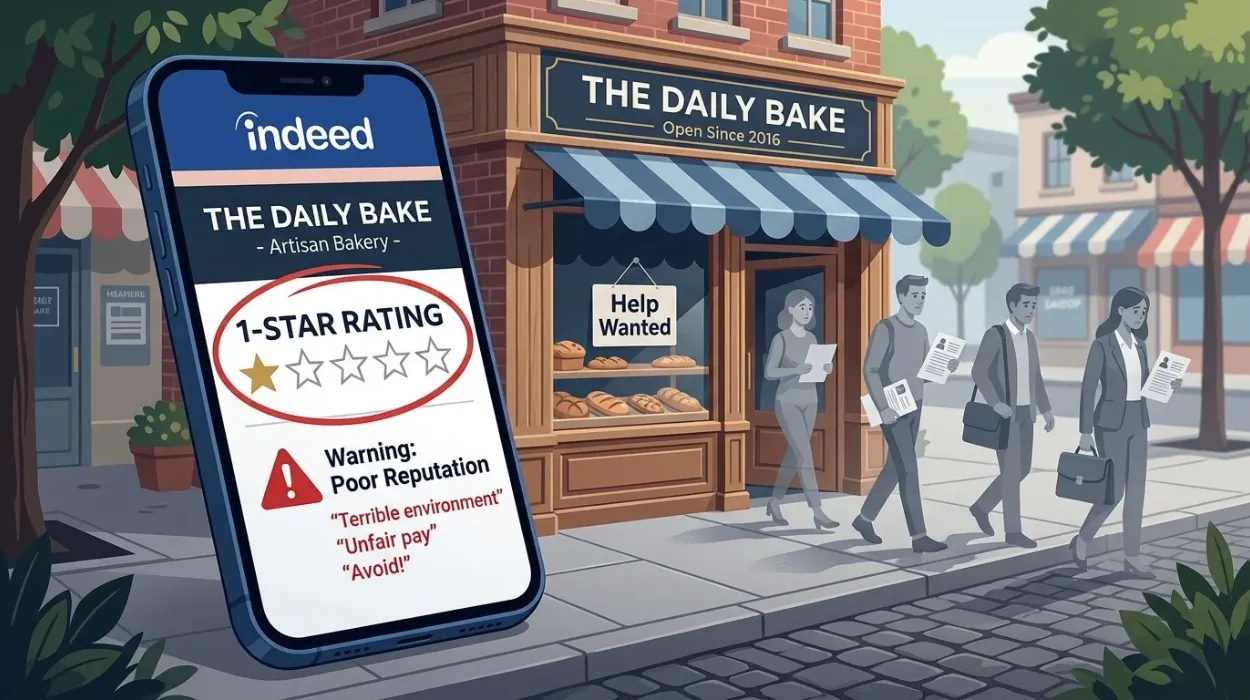
Small businesses are vulnerable to harmful Indeed reviews because a limited number of employee opinions can represent a larger share of their visible review profile.
Reputation management is the structured analysis of information that influences how an organisation is perceived across search engines, review platforms and other digital environments.
Online reputation refers to the collection of publicly accessible information, opinions and reputation signals associated with an organisation. For small businesses, review content forms an important part of this digital footprint because prospective employees and other users can encounter reviews during search and research processes. The effect of an individual review depends on its visibility, relevance, sentiment and relationship to other information about the organisation. Understanding these mechanisms explains why review content can have a disproportionate effect on a smaller entity’s online perception.
Why Do Harmful Reviews Have a Greater Effect on Small Businesses?
Harmful reviews have a greater proportional effect when a small business has a limited volume of published reputation signals. A large organisation often has a broader digital footprint containing reviews, news coverage, corporate information, professional profiles and other authoritative sources. A smaller business has fewer independent sources competing for attention within its search environment. A negative review therefore occupies a larger proportion of the available reputation information. This changes the overall sentiment distribution that users encounter when researching the organisation.
Review impact is also connected to recency and visibility. A newly published review can become a prominent information source when competing content has limited search ranking influence. Search engines evaluate pages according to relevance, content characteristics, authority and other ranking signals rather than simply counting positive and negative opinions. Users then interpret the visible results according to the context presented by those sources. Small businesses therefore face a reputation environment where individual review pages can have greater relative visibility.
How Do Indeed Reviews Become Part of a Business’s Digital Footprint?
Indeed reviews become part of a business’s digital footprint when review information is publicly accessible, discoverable and associated with the relevant organisation. A digital footprint is the collection of online information connected to an entity across websites, platforms and indexed resources. Employee reviews contribute to this footprint because they provide direct commentary about workplace experiences and organisational characteristics. The information can then become part of how users evaluate the entity before making decisions. The review therefore functions as both platform content and a reputation signal.
The relationship between a review and an organisation also affects entity perception. Search systems attempt to understand relationships between names, organisations, websites and other identifiable entities. Clear associations increase the probability that relevant content appears for entity-related searches. Review content with a strong organisational association therefore becomes more relevant to reputation analysis. The resulting search environment reflects not only the review itself but also the wider network of information connected to the business.
How Do Search Engines Interpret Harmful Employee Reviews?
Search engines interpret harmful employee reviews primarily through relevance, content quality, authority, context and other ranking factors rather than assigning an automatic reputation score to a business. A review page can rank because it satisfies a user’s query and provides relevant information about an organisation. Search ranking influence determines where that page appears within the SERP rather than whether the underlying claims are automatically verified. This distinction separates algorithmic visibility from factual validation. A highly visible review therefore represents searchable information, not an automatic confirmation of every statement contained within it.
Content indexing is another important part of this mechanism. Before a page participates in organic search results, search systems generally need to discover and index the content. Once indexed, ranking systems evaluate its relevance to particular queries. A review containing an organisation’s name can therefore become visible when users search for information about that business. The resulting SERP composition influences what information users encounter first.
Why Does Review Sentiment Matter to Small Business Reputation?
Review sentiment matters because it describes the evaluative direction of content associated with an organisation. Sentiment distribution refers to the balance of positive, negative and neutral evaluations across a collection of reputation sources. A single negative review has a different significance when surrounded by a large volume of balanced information than when it represents a substantial portion of the available review content. This makes review context important when evaluating online credibility. Sentiment therefore functions as one component of broader reputation analysis rather than an isolated ranking factor.
Negative sentiment also influences user perception independently of search algorithms. Users often evaluate review content by examining language, ratings, consistency and the perceived credibility of the source. A strongly negative review can attract attention when it contains specific claims or appears prominently for an organisation-related query. The perceived authority of the platform can further influence how the information is interpreted. Review sentiment therefore interacts with source credibility and search visibility to shape entity perception.
How Does Review Volume Influence Reputation Signals?

Review volume influences reputation signals by changing the proportion of information represented by individual opinions. A small review profile contains fewer data points from which users can assess sentiment and consistency. Each additional review therefore has greater statistical and perceptual significance within the overall profile. A single negative review represents a larger percentage of total feedback when the review count is low. This creates a structural vulnerability for businesses with limited review activity.
Volume also affects how users interpret consistency. A broader collection of reviews provides more information for evaluating recurring themes, workplace experiences and sentiment distribution. A limited collection provides less contextual information and places greater attention on individual entries. Search engines do not simply rank pages according to review volume, but review pages can still become important reputation sources when they match relevant queries. Review quantity and search visibility therefore operate as related but distinct reputation concepts.
What Makes Small Business Reviews More Visible in Search Results?
Small business reviews become more visible when their content strongly matches queries involving the organisation and the information users seek. Search relevance connects the content of a page with the meaning and intent of a search query. An employee review containing the business name, workplace terminology and detailed commentary has strong semantic connections to employment-related searches. If the review page is indexed and receives sufficient ranking signals, it can appear within relevant SERPs. This process increases the review’s influence over search perception.
The wider information environment also affects visibility. When a small organisation has limited authoritative content, review pages face less competition from other entity-related sources. Corporate pages, professional profiles, industry publications and other resources can occupy search positions alongside review content. Their presence contributes to a more complete entity representation. Where the digital footprint is narrow, review content can occupy a greater share of the visible information environment.
How Do Authority and Trust Signals Affect Review Perception?
Authority and trust signals influence how users interpret review information by providing contextual indicators about the source. A recognised review platform has an established information architecture and a strong connection to employment-related search intent. This does not establish that every individual review is factually correct. Instead, the platform provides a context in which users interpret the published information. Source authority therefore influences perception without functioning as direct evidence of the accuracy of an individual claim.
Trust also operates through consistency across the wider digital footprint. When information about an organisation is consistent across authoritative sources, users receive a clearer entity representation. Contradictory information creates a more complex perception environment. Review content forms one component of this ecosystem alongside official information, professional profiles, news coverage and other sources. Reputation analysis therefore evaluates relationships between sources rather than examining a review in isolation.
Dive Deeper With Our Expert Guides:
Why Encouraging Genuine Positive Indeed Reviews Helps Employer Branding
How Employers Can Prevent Future Negative Indeed Reviews
Can One Harmful Review Change a Small Business’s Online Reputation?
One harmful review can influence online reputation when it receives disproportionate visibility within a limited information environment. The effect depends on factors including review prominence, search relevance, sentiment strength, source authority and the quantity of competing information. A review appearing on the first page for a business-related query has greater potential perceptual influence than an equivalent page with limited visibility. Search position therefore acts as an important intermediary between published content and user perception. The underlying content and its visibility need to be evaluated separately.
The same review also has a different significance depending on the organisation’s existing reputation signals. If users encounter a balanced collection of authoritative sources, one negative entry represents a smaller portion of the overall information environment. If the search landscape contains limited information, the same entry becomes more prominent within the available evidence. This demonstrates why small-business reputation analysis requires contextual evaluation. The number of reviews alone does not establish the level of reputation risk.
How Does Indeed Review Content Differ From Other Reputation Signals?
Indeed review content represents employee-generated workplace information, while other reputation signals include official business information, professional profiles, editorial coverage and third-party references. Each source contributes different information about an entity. Employee reviews provide experiential commentary, whereas official sources generally communicate organisational information directly. Editorial sources provide another layer of external authority and context. These differences affect how users evaluate the credibility and relevance of each source.
Search engines organise these sources according to query relevance and ranking systems. A review page can compete with official pages for searches related to employment or workplace reputation. The resulting SERP composition determines which information users encounter during their research. Reputation analysis therefore considers the relative visibility of different source types. This creates a broader framework for understanding online credibility beyond review ratings alone.
How Should Businesses Analyse Harmful Reviews Before Taking Action?
Businesses need to analyse the source, visibility, relevance and reputation impact of harmful review content before determining its significance. The first step is to identify the exact review URL and establish its relationship with the relevant business entity. The next step is to evaluate how prominently the page appears for relevant branded and employment-related queries. Sentiment analysis then determines the evaluative character of the content and its relationship to the wider review profile. This creates an evidence-based assessment of the actual search-reputation impact.
A structured review analysis can follow five stages:
- Identify the review source by recording the exact page, platform and business association.
- Evaluate search visibility by checking whether the review appears for relevant organisation-related queries.
- Analyse sentiment by examining the review’s evaluative language, claims and relationship to the wider review profile.
- Compare reputation signals by assessing the review alongside official information, professional profiles and other authoritative sources.
- Monitor changes by tracking indexing, ranking position and the wider SERP composition over time.
This framework separates content characteristics from search visibility. It also establishes a consistent basis for evaluating whether a review represents an isolated signal or a broader reputation issue.
Does Removing Harmful Content Change Search Perception?
Removing harmful content changes search perception when the targeted material is publicly accessible and contributes directly to the visible information environment. Content removal addresses the source rather than attempting to change the meaning of the information through additional content. The effect therefore depends on whether the material becomes unavailable, deindexed or otherwise inaccessible to users. Search engines then process changes through their own crawling and indexing systems. This means source-level changes and search-result changes represent connected but distinct outcomes.
Removal also needs to be evaluated against the wider digital footprint. Eliminating one review does not automatically change every reputation signal associated with an organisation. Other review pages, professional profiles and indexed resources remain part of the SERP composition. This is why What Small UK Businesses Should Know About Indeed Review Removal provides useful consideration of the relationship between source-level removal and broader reputation control. The underlying objective is to understand how individual content changes affect the complete search environment.
How Can Small Businesses Build Stronger Online Credibility?
Small businesses build stronger online credibility by developing a consistent and authoritative digital footprint across relevant information sources. Consistency provides users with clearer signals about the organisation and reduces reliance on isolated pieces of content. Accurate business information, professional profiles and relevant authoritative resources contribute to entity understanding. Review content then forms one part of this wider information ecosystem. The objective is not to eliminate negative sentiment but to create a more complete and accurately represented entity profile.
Content relevance also affects long-term search visibility. Authoritative resources with clear relationships to the organisation provide search systems with additional context for entity interpretation. This can influence SERP composition by increasing the number of relevant sources available for organisation-related queries. The resulting environment gives users more information from which to evaluate credibility. Reputation therefore develops through the interaction of content, authority, relevance and visibility.
Small businesses are particularly exposed to the proportional impact of harmful Indeed reviews because limited review volume and a narrower digital footprint give individual reputation signals greater relative visibility. Search engines evaluate review pages through relevance, indexing, authority and ranking systems, while users interpret them through sentiment, source credibility and context. The resulting SERP composition connects published review content with broader entity perception.
Understanding this system requires separating review sentiment from search visibility and source authority from factual verification. A harmful review represents one information source within a wider digital ecosystem containing official content, professional profiles, reviews and other reputation signals. Evaluating these relationships provides a clearer understanding of online credibility and digital footprint development. What Small UK Businesses Should Know About Indeed Review Removal offers the next level of analysis by examining how businesses evaluate removal considerations within this broader reputation framework.
Why are harmful Indeed reviews a problem for small businesses?
Harmful Indeed reviews can influence how potential employees and customers perceive a small business. Negative or misleading review content may affect employer reputation, recruitment decisions, and overall online credibility.
Can a small business remove a harmful Indeed review?
A business may be able to report an Indeed review if it violates Indeed’s review guidelines or contains inappropriate or prohibited content. Removal is generally subject to the platform’s review process and policies.
How can a business respond to a negative Indeed review?
A business should respond professionally, address factual concerns where appropriate, and avoid revealing confidential information. A clear and respectful response can provide additional context for people researching the company online.
What should a small business do about a false Indeed review?
If an Indeed review contains false, defamatory, or policy-violating claims, the business can document the content and report it through the appropriate platform process. Keeping evidence of the review and any supporting facts can help when requesting an assessment.
How does online reputation management help with harmful Indeed reviews?
Online reputation management can involve monitoring review platforms, assessing potentially harmful content, responding appropriately, and addressing policy-violating reviews. Services such as Clear Your Name may also focus on broader search reputation and online information management.