Content qualifies for legal removal only when it satisfies specific statutory, regulatory, or judicial criteria rather than personal preference. Reputation management strategies differ based on the legal basis for removal, while online reputation control methods are evaluated through privacy rights, data protection obligations, copyright law, defamation principles, and search engine indexing policies.
Online information influences digital reputation because search engines continuously analyse content indexing, authority signals, user engagement, and legal relevance. When individuals seek to remove harmful information, the first step is determining whether the content meets recognised UK legal removal standards. This assessment separates legally actionable material from content that remains protected by freedom of expression or legitimate public interest. Understanding these distinctions provides a clearer evaluation framework before pursuing removal, de-indexing, or reputation management strategies.
What determines whether online content meets UK legal removal standards?
Legal removal standards are defined by statutory rights, judicial interpretation, and platform obligations rather than personal disagreement with published material. Different categories of online content operate under different legal mechanisms, meaning eligibility depends on the legal basis supporting the request.
Privacy-related requests focus on whether personal information is processed lawfully and proportionately. Defamation claims evaluate whether false factual statements cause serious reputational harm. Copyright disputes examine ownership of protected works, while data protection legislation considers whether personal information is inaccurate, excessive, or unlawfully processed. Each framework operates independently, although they all influence search visibility and entity credibility.
Search engines evaluate these legal outcomes differently from publishers because they control content indexing rather than publication itself. This distinction affects search ranking influence and determines whether removal, correction, or de-indexing represents the appropriate response.
How do privacy rights compare with defamation claims when evaluating removal eligibility?
Privacy rights and defamation claims represent distinct legal approaches that operate through different legal standards. Privacy protects personal information and private life, whereas defamation protects reputation from false factual allegations.
Privacy-based requests assess whether publication interferes disproportionately with an individual’s rights under UK data protection and human rights legislation. The evaluation considers necessity, proportionality, and public interest before determining whether continued publication remains justified.
Defamation claims operate differently because they require evidence that published factual statements are false and have caused, or are likely to cause, serious harm to reputation. Legal assessment focuses on accuracy, available defences, and evidential standards rather than privacy expectations.
From a reputation management perspective, both mechanisms influence search visibility, but they produce different outcomes. Privacy decisions frequently affect content indexing, while successful defamation actions often lead to corrections, removals, or judicial remedies that subsequently influence SERP composition.
Which forms of personal information are more likely to satisfy legal removal criteria?
Personal information satisfies legal removal criteria when publication conflicts with recognised legal protections rather than merely causing inconvenience. UK data protection legislation distinguishes between information that serves legitimate public purposes and information that creates unnecessary privacy risks.
Examples frequently evaluated include:
- Identify residential addresses published without lawful justification where privacy risks outweigh public interest.
- Assess identity documentation disclosed without consent, including passport or driving licence details.
- Review financial information where unlawful disclosure creates security or identity fraud concerns.
- Evaluate sensitive personal data according to UK GDPR protections relating to health, ethnicity, or biometric information.
- Compare outdated personal records against current legal obligations governing data accuracy and retention.
Each category influences reputation signals because indexed personal information contributes directly to entity perception within search ecosystems. However, satisfying one criterion does not automatically establish legal eligibility, since proportionality and public interest remain central considerations.
How does content removal compare with search engine de-indexing?
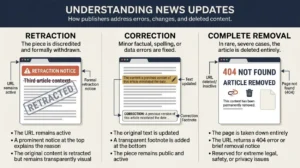
Content removal and search engine de-indexing achieve different objectives despite both affecting online reputation. Removal eliminates material from its originating website, while de-indexing prevents eligible webpages from appearing within search engine results.
Removal changes the availability of information because publishers alter or delete the underlying content. De-indexing changes discoverability by limiting search visibility while leaving the original webpage accessible through direct navigation. Consequently, reputation signals evolve differently depending on which mechanism applies.
Search ranking influence is more directly affected through de-indexing because indexed results disappear from branded searches. Content removal produces broader changes because search engines eventually update content indexing after detecting deleted or substantially modified webpages.
Evaluating the appropriate approach therefore depends on legal eligibility, publication ownership, and the desired reputation management outcome.
Which legal framework provides the strongest basis for removal?

No single legal framework consistently provides the strongest basis for removal because effectiveness depends entirely upon the nature of the published content. Each legal route operates according to specific statutory requirements.
Copyright law provides a comparatively structured framework where unauthorised publication of protected works can often be objectively assessed. Privacy legislation evaluates proportionality and lawful processing, requiring more contextual legal analysis. Defamation claims require substantial evidence regarding falsity and reputational harm, making legal assessment comparatively more complex.
Data protection law frequently addresses inaccurate, excessive, or unlawfully processed personal information rather than publication itself. These distinctions demonstrate why legal removal strategies differ according to the characteristics of the disputed content rather than the individual’s preferred outcome.
Understanding these differences allows more accurate evaluation before pursuing removal requests that influence digital reputation and search visibility.
How do search engines interpret legal removal decisions?
Search engines interpret legal removal decisions through structured review processes that evaluate recognised legal outcomes alongside search ecosystem requirements. They assess whether legal findings justify changes to content indexing without independently determining legal liability.
When publishers remove webpages following legal action, search engines update indexed information during subsequent crawling cycles. Where de-indexing requests are approved, eligible URLs disappear from relevant search results while remaining available through direct website access unless separately removed.
Search engines also evaluate authority signals, content relevance, and entity credibility throughout this process. Changes in indexed information therefore influence SERP composition because algorithms reassess the remaining authoritative content associated with an individual or organisation.
This interaction demonstrates how legal removal decisions and search ranking influence operate together while remaining governed by different technical and legal mechanisms.
How do public interest and privacy compare when assessing removal requests?
Public interest and privacy operate as competing legal principles that require balanced evaluation rather than automatic priority. Privacy protects individuals from disproportionate interference, while public interest supports continued access to information that contributes to transparency, accountability, or informed public understanding.
Information concerning public officials, criminal proceedings, consumer protection, or significant financial misconduct often carries greater public interest value. Conversely, outdated, excessive, or irrelevant personal information receives stronger consideration where continued indexing provides limited public benefit. This comparative analysis demonstrates why identical requests frequently produce different legal outcomes depending on context.
Within search ecosystems, these legal decisions influence reputation signals because search engines reassess indexed content after recognised legal changes. Entity credibility therefore evolves according to the interaction between lawful publication, search visibility, and changing legal relevance.
Dive Deeper With Our Expert Guides:
How to Use GDPR to Remove Personal Data From UK Websites and Search Engines
How the Right to Be Forgotten Request Process Works in Practice in the UK
Which reputation management approach provides greater long-term sustainability?
Proactive reputation management provides greater long-term sustainability because it improves the overall quality and balance of reputation signals instead of responding only after harmful content appears. Reactive approaches address immediate issues, whereas proactive strategies strengthen digital authority before significant reputation risks develop.
Reactive methods often involve legal removal requests, publisher engagement, or search engine de-indexing where specific legal criteria are satisfied. These actions resolve individual problems but do not necessarily improve the broader digital footprint. Proactive strategies focus on strengthening authoritative information, improving content quality, and maintaining consistent entity credibility across indexed platforms.
Search ranking influence develops through continuous evaluation rather than isolated interventions. Sustainable reputation management therefore depends upon maintaining authoritative, relevant, and trustworthy digital assets that continue supporting positive SERP composition over time.
How do organic reputation strategies compare with legal removal methods?
Organic reputation strategies operate by improving the quality, relevance, and authority of positive online information, while legal removal methods operate by eliminating or reducing the visibility of qualifying content. Both approaches influence reputation management, although they achieve different objectives within search ecosystems.
Organic strategies strengthen entity credibility by expanding authoritative content that search engines recognise as valuable. Legal removal strategies reduce visibility only where statutory or regulatory requirements justify intervention. Consequently, organic optimisation improves sentiment distribution across indexed results, whereas legal action focuses on resolving individual legal issues.
These approaches are complementary rather than competing. Legal removal addresses content that qualifies under recognised standards, while ongoing reputation development strengthens long-term search visibility through positive authority signals.
Why do some removal requests satisfy legal standards while others fail?
Removal requests succeed only when supporting evidence satisfies the legal framework governing the disputed content. Requests fail where published information remains accurate, proportionate, lawfully processed, or protected by freedom of expression and public interest.
Common factors influencing unsuccessful requests include:
- Demonstrate insufficient evidence supporting allegations of unlawful publication.
- Identify continuing public interest that justifies ongoing availability.
- Confirm factual accuracy within published material despite reputational concerns.
- Evaluate lawful processing under UK data protection legislation.
- Recognise publisher protections available through established legal defences.
Each factor contributes to legal assessment because search visibility alone does not determine eligibility. Search engines and publishers evaluate different aspects of the dispute, producing outcomes that vary according to applicable legal obligations.
Which evaluation framework helps determine whether legal removal is appropriate?
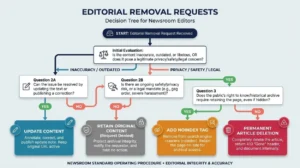
A structured evaluation framework provides a consistent method for determining whether online content satisfies recognised UK legal removal standards. This process analyses legal eligibility before considering technical or reputation management responses.
An effective framework includes:
- Identify the legal category governing the disputed content, such as privacy, defamation, copyright, or data protection.
- Assess whether statutory legal requirements are supported by objective evidence.
- Compare privacy interests against legitimate public interest considerations.
- Evaluate whether removal or de-indexing represents the legally appropriate mechanism.
- Measure the likely impact on search visibility, entity credibility, and SERP composition.
Applying this framework improves decision quality because every stage is supported by legal analysis rather than assumptions. It also reduces unnecessary disputes by identifying cases where legal standards are unlikely to be satisfied.
Understanding content legally removed provides additional context when comparing available legal mechanisms and determining whether specific online material qualifies for removal or de-indexing under UK law.
Assessing whether online content meets UK legal removal standards requires careful evaluation of the legal framework governing publication, indexing, privacy, and public interest. Different categories of content operate under different statutory requirements, making legal eligibility dependent upon evidence rather than reputation concerns alone.
Privacy law, defamation, copyright, and data protection each provide distinct mechanisms that influence search visibility and reputation signals. Likewise, content removal and search engine de-indexing achieve different outcomes because one changes publication while the other changes discoverability within SERPs.
A structured legal assessment provides the most reliable basis for determining whether removal, de-indexing, or alternative reputation management strategies represent the appropriate course of action. Understanding these differences improves evaluation quality while supporting more accurate interpretation of UK legal removal standards.
How can I tell if online content meets UK legal removal standards?
Online content meets UK legal removal standards only if it satisfies specific legal criteria under laws such as data protection, defamation, copyright, or privacy legislation. The assessment depends on evidence, legal context, and whether the content infringes recognised rights.
What is the difference between content removal and de-indexing in the UK?
Content removal deletes information from the original website, while de-indexing removes eligible webpages from search engine results without deleting the source content. Both methods affect search visibility but follow different legal and technical processes.
Can Personal Information Removal Services help determine legal eligibility?
Personal Information Removal Services evaluate whether personal information may qualify for removal or de-indexing under UK legal standards. Clear Your Name helps assess applicable legal routes based on privacy rights, data protection law, and search visibility considerations.
Does all harmful online content qualify for legal removal?
No. Harmful content does not automatically qualify for removal simply because it affects reputation. UK law considers factors such as accuracy, public interest, lawful publication, and legal rights before determining whether removal or de-indexing is appropriate.
Why are some UK legal removal requests refused?
Removal requests may be refused if the content is accurate, serves the public interest, complies with legal requirements, or lacks sufficient evidence to support removal. Search engines and publishers evaluate each request according to the relevant legal framework rather than personal preference.