Removing harmful Facebook group content at source provides the strongest form of reputation control because it addresses the material before it continues influencing users within the platform. Search visibility control then limits the wider reputation signals that shape entity credibility, trust, and decision-making across digital search ecosystems.
Why is professional Facebook group content removal the right reputation strategy?
Professional Facebook group content removal provides a structured source-level response when harmful material affects an individual or organisation’s digital reputation. The process focuses on identifying the relevant content, assessing the applicable platform rules, preparing an appropriate removal request, and tracking the outcome. This differs from relying exclusively on search suppression, which addresses visibility after content has already entered a search ecosystem. Source-level intervention targets the origin of the reputation signal rather than only its position in search results. For reputation-sensitive content, this distinction directly affects risk management because removing the source reduces the opportunity for continued circulation within the original environment.
Clear Your Name approaches social media content removal as a reputation control process rather than an isolated reporting action. Each case requires an assessment of the content type, publication context, platform environment, available evidence, and potential reputation impact. This creates a defined pathway from identification to action and subsequent monitoring. The objective is to reduce exposure to harmful material while preserving accurate information about the affected entity. A structured process also provides clearer expectations around what is being addressed, why it qualifies for review, and which reputation signals require continued monitoring.
How does a UK Facebook group takedown process work?
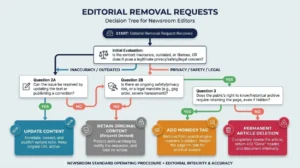
A UK Facebook group takedown process works through structured identification, evidence assessment, policy analysis, submission, and outcome monitoring. The first stage identifies the exact post, comment, image, profile reference, or other material creating the reputation risk. The next stage evaluates the content against relevant platform rules and determines the strongest basis for a removal request. Supporting information is then organised so that the issue is presented clearly rather than as a general reputation complaint. The request enters the platform’s review process, after which the outcome is monitored and assessed against the original objective.
Process clarity is important because platform reporting and reputation management are separate functions. A platform determines whether content breaches its applicable rules, while a reputation management team evaluates the broader effect of that content on search perception and entity credibility. This separation prevents unrealistic expectations about what a single report accomplishes. It also establishes a measurable framework for assessing whether the original content remains available, whether duplicate material exists, and whether related information continues influencing public perception. The result is a controlled process rather than an unstructured attempt to report content repeatedly.
Which harmful Facebook group content warrants professional intervention?
Content warrants professional intervention when its publication creates a material reputation risk and the available evidence supports a legitimate platform-based complaint. Relevant content includes defamatory claims, impersonation, privacy-related material, harassment, misleading representations, or other content that conflicts with applicable platform policies. The assessment focuses on the content itself, its context, its accessibility, and its relationship to the affected entity. This approach distinguishes actionable policy concerns from ordinary negative opinions or legitimate criticism. Accurate classification strengthens the quality of a removal request and reduces unnecessary reporting.
Professional assessment also evaluates the content’s wider search and reputation implications. A private group post has a different visibility profile from publicly indexed content, but information can move between these environments through screenshots, reposts, quotations, or references. Understanding why harmful private Facebook group posts are hard to track helps establish why platform monitoring alone does not provide a complete reputation assessment. The source, accessibility, replication, and subsequent indexing pathway all contribute to risk. This broader evaluation ensures that source removal forms part of a wider reputation control strategy rather than functioning as an isolated technical action.
How does Facebook content removal improve search perception?
Facebook content removal improves search perception most directly when the affected material or its derivatives contribute to publicly visible reputation signals. Removing the original post eliminates that specific source from the platform environment when enforcement succeeds. This does not automatically alter search rankings, but it reduces one potential source of information that can be reproduced, referenced, or connected with an entity elsewhere. Search engines evaluate accessible information through relevance, authority, context, and other ranking signals rather than assigning a simple positive or negative reputation score. Source removal therefore works as one component within a broader SERP control strategy.
The relationship between removal and search perception becomes stronger when harmful content has already migrated into public search environments. Copies, articles, screenshots, discussion pages, or other references can create independent URLs and ranking signals. In such cases, removing the original Facebook source addresses the origin while separate search visibility analysis addresses remaining indexed material. This is where negative content suppression complements source-level intervention. Removing harmful content reduces source availability, while suppression and content enhancement address the composition and visibility of information that users encounter in search.
Why does search visibility matter when removing Facebook group content?

Search visibility matters because users frequently evaluate individuals and organisations through information presented in search results before engaging further. Search results form an important part of the digital information environment surrounding an entity, particularly when branded or name-based queries display negative or misleading material. Reputation signals therefore influence perception through a combination of source credibility, visibility, relevance, and sentiment. A harmful Facebook post that remains inside a restricted group has a different search impact from content that has been reproduced on an indexed website. Evaluating both environments provides a more accurate picture of reputation risk.
A professional removal strategy therefore considers what happens before and after source intervention. Before removal, the team identifies the source and assesses its visibility and potential reach. After intervention, monitoring evaluates whether the content remains accessible and whether related sources continue appearing in relevant searches. This process connects platform-level action with measurable search outcomes. The objective is not to manipulate search results artificially but to reduce legitimate sources of harmful information and strengthen the accuracy of the wider digital footprint.
How does social media content removal compare with negative content suppression?
Social media content removal and negative content suppression operate at different levels and deliver different forms of reputation control. Content removal targets the original source by seeking action against material hosted on a social platform. Negative content suppression focuses on reducing the prominence of harmful indexed information relative to more relevant and authoritative content. Removal therefore provides source-level control, while suppression provides search-level visibility control. Combining the two approaches creates a more comprehensive framework when harmful information exists across both social platforms and search results.
The distinction also affects measurement. Removal can be measured through source availability, accessibility, and enforcement outcomes. Suppression can be evaluated through changes in search-result composition, ranking position, visibility, and the prominence of relevant authoritative sources. Neither measurement replaces the other because source removal does not guarantee a change in SERP composition. Likewise, suppression does not necessarily remove the underlying source. Effective reputation management evaluates both variables independently before determining the appropriate intervention.
Dive Deeper With Our Expert Guides:
Remove a Damaging LinkedIn Post With Our UK Removal Service
Remove a Harmful Reddit Thread With Our UK Specialist Team
What outcomes can a Facebook content removal strategy deliver?
A structured Facebook content removal strategy delivers measurable outcomes across source availability, visibility, control, and reputation risk. The precise outcome depends on the content, evidence, platform rules, and surrounding information environment. A professional process establishes defined indicators rather than relying on subjective impressions about whether a reputation has improved. This makes the intervention easier to evaluate and supports more accurate decision-making.
Key outcomes include:
- Reduce source availability by pursuing removal of content that breaches applicable platform policies.
- Monitor search visibility by tracking whether related public pages, references, or copies continue appearing for relevant queries.
- Identify duplicate material by locating reposts, screenshots, quotations, or derivative references across accessible platforms.
- Strengthen entity credibility by supporting accurate and authoritative information within the wider digital footprint.
- Measure reputation risk by comparing source exposure, search visibility, sentiment distribution, and relevant reputation signals over time.
These outcomes demonstrate why professional intervention extends beyond submitting a report. The value lies in establishing a complete evidence trail, applying the correct removal pathway, monitoring the result, and assessing residual visibility. This creates greater process clarity and reduces the risk of treating one successful takedown as the end of the reputation issue.
How does a professional takedown process reduce reputation risk?
A professional takedown process reduces reputation risk by replacing fragmented reporting with structured evidence assessment and source-level intervention. Risk increases when harmful content remains unidentified, when duplicate sources are overlooked, or when reporting does not clearly establish the relevant policy concern. A systematic process addresses these variables before action is taken. The approach also separates legitimate content-removal grounds from general dissatisfaction with negative information. This distinction protects the credibility of the reporting process while directing attention towards content with a defensible basis for intervention.
Risk reduction also requires monitoring after the initial submission. Content can remain available through copies or related sources even after the original post is removed. Search results can also retain references to information that originated elsewhere, particularly when independent webpages have already indexed the material. Continuous monitoring therefore identifies residual reputation signals and separates source-level success from search-level outcomes. This creates a more reliable risk-control framework than relying on one reporting event.
Is professional Facebook content removal worth the long-term value?
Professional Facebook content removal provides long-term value when the reputation risk involves persistent, accessible, or repeatedly referenced material that requires structured intervention. The value is not determined solely by the cost of submitting a report because the wider risk includes continued exposure, duplicated content, search visibility, and potential damage to entity credibility. A structured service reduces the administrative burden of identifying relevant content, organising evidence, selecting appropriate reporting pathways, and monitoring outcomes. This creates operational value as well as reputation value. The financial assessment therefore needs to consider both intervention cost and the ongoing exposure created by unresolved harmful content.
Long-term value also depends on sustainability. A single removal does not create permanent protection against future reputation issues, so monitoring and digital-footprint management remain important. Accurate public information, authoritative sources, and consistent entity references provide a stronger foundation for long-term search perception. Source removal addresses immediate content risk, while ongoing reputation management addresses the broader information ecosystem. The combination provides a more sustainable framework for protecting search visibility and maintaining credible entity representation.
How quickly can harmful Facebook group content be removed?
The speed of Facebook content removal depends on platform review processes, the nature of the content, the strength of the supporting evidence, and the applicable policy framework. No legitimate takedown process can guarantee a fixed platform decision time because the platform controls its own review and enforcement procedures. A professional process nevertheless reduces avoidable delays by identifying the correct content, documenting the relevant context, and presenting the complaint through the appropriate channel. This improves process efficiency without misrepresenting platform-controlled outcomes. Speed is therefore measured through the quality and readiness of the intervention rather than an unsupported promise of instant removal.
Time also needs to be assessed against the wider reputation objective. Removing a source quickly has limited value if duplicate content continues circulating elsewhere or related pages remain highly visible in search results. Conversely, search visibility work requires a longer evaluation period because ranking systems respond to the broader information environment. A reliable strategy therefore distinguishes immediate source-level action from longer-term search perception influence. This creates realistic measurement across both short-term intervention and sustained reputation improvement.
Why choose Clear Your Name for social media content removal?
Clear Your Name provides a structured approach to social media content removal by combining source assessment, evidence preparation, platform reporting, and reputation-focused monitoring. The process is designed around the specific content and its relationship to the affected entity rather than relying on generic reporting language. This creates greater clarity around the reason for intervention and the expected outcome at each stage. It also connects content removal with wider search visibility analysis where public copies or related sources exist. The result is a process centred on evidence, control, transparency, and measurable reputation outcomes.
The decision becomes stronger when content removal is treated as part of a complete reputation management framework. Platform-level intervention addresses the original source, while search monitoring identifies residual visibility and related reputation signals. Where harmful content has already affected public search perception, complementary suppression and content enhancement strategies provide additional control over the information environment. Readers seeking further decision validation can review how Facebook group content reporting and removal works before selecting an intervention. This creates a logical progression from understanding the mechanism to evaluating the appropriate professional response.
How can businesses evaluate a Facebook content removal service before choosing it?
Businesses can evaluate a Facebook content removal service by examining process transparency, evidence standards, communication, outcome measurement, and the distinction between platform enforcement and search visibility. A credible process explains what information is required, how the content is assessed, which reporting pathway applies, and how progress is monitored. It also avoids promising outcomes controlled exclusively by Facebook or another third party. Clear reporting establishes whether the intervention resulted in removal, remained under review, or requires further action. This level of transparency provides a stronger basis for assessing reliability.
Decision-makers can also evaluate whether the service addresses the full reputation environment rather than one URL or post. A comprehensive assessment identifies the original content, potential duplicates, related sources, search visibility, and the entity-level reputation signals surrounding the issue. This matters because content removal without residual monitoring leaves part of the risk unmeasured. A service that connects source-level intervention with search perception analysis provides a more complete framework for reputation control. The strongest decision therefore prioritises evidence, process clarity, measurable outcomes, and sustainable risk reduction.
Removing harmful Facebook group content is most effective when source-level takedown activity forms part of a wider reputation control strategy. Professional intervention provides structured identification, evidence assessment, platform reporting, outcome monitoring, and residual visibility analysis rather than relying on an isolated report. This process reduces exposure to actionable harmful content while supporting stronger control over reputation signals that influence search perception and entity credibility.
Clear Your Name combines content removal with reputation-focused analysis so that source availability, search visibility, and residual reputation risk remain measurable throughout the process. The approach distinguishes platform-controlled enforcement from search-controlled ranking, creating realistic expectations while maintaining a clear focus on outcomes. For organisations and individuals facing harmful social media content, this combination of process clarity, evidence-led action, and ongoing monitoring provides a credible framework for reducing reputation risk and stabilising digital perception.
How can I remove harmful content from a Facebook group?
Harmful Facebook group content can be reported through the platform’s available reporting mechanisms when it breaches applicable policies or group rules. A structured social media content removal process focuses on identifying the content, assessing the relevant policy basis, submitting appropriate evidence, and monitoring the outcome.
Can a professional service remove a Facebook group post?
A professional social media content removal service can manage the reporting and takedown process, but the final removal decision remains with Facebook or an authorised group administrator. The process focuses on presenting a clear, evidence-based request through the appropriate reporting channel.
How long does it take to remove harmful Facebook group content?
The timeframe depends on Facebook’s review process, the type of content, the applicable policy, and the evidence submitted. No legitimate service can guarantee a fixed removal time because enforcement decisions remain under the platform’s control.
Does removing a Facebook group post improve online reputation?
Removing harmful content reduces the availability of the original reputation signal and limits its continued exposure within the source platform. Search visibility requires separate monitoring because copies, screenshots, or related webpages can continue influencing search perception.
What is the difference between Facebook content removal and negative content suppression?
Facebook content removal targets the original social media source, while negative content suppression focuses on reducing the visibility of harmful information within search results. Using both approaches addresses source availability and search perception as separate reputation management factors.