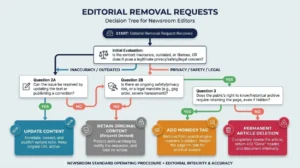
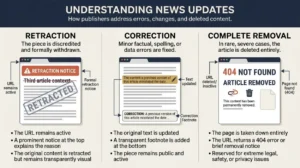
Removing dead links and cached ghost previews immediately restores search perception and stops reputational decay across search engine results pages. Technical URL de-indexing eliminates phantom search snippets, protects brand trust, and secures entity credibility across every primary search touchpoint.
Why Do Dead Links and Ghost Previews Undermine Business Credibility?
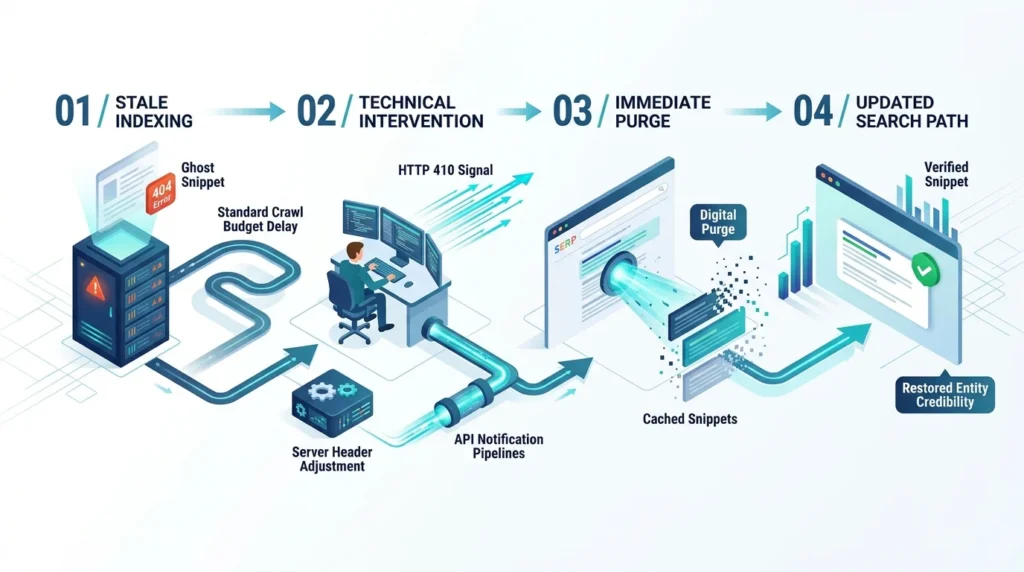
Dead links and lingering ghost previews generate conflicting reputation signals that compromise search perception and destroy consumer confidence at critical decision-making stages. When searchers click a snippet expecting relevant brand information but encounter a 404 error or outdated negative commentary, search engines register a poor user experience while users perceive an untrustworthy, unmanaged brand entity. Phantom metadata stored within search index caches continues to display damaging headlines, inaccurate snippets, and defunct web addresses long after original source pages are taken down. This discrepancy between cached index listings and live destination servers directly impacts brand valuation, customer acquisition rates, and organic conversion funnels.
Search engines evaluate domain authority and entity trust based on the consistency and accuracy of indexed metadata across public databases. Persistent ghost previews signal structural abandonment or unverified information, prompting search algorithms to degrade overall domain visibility and entity confidence scores. When prospect buyers perform brand discovery, encountering a ghost link in search results creates immediate friction that drives potential clients directly to competitor alternatives. Resolving these orphaned search snippets requires specialized technical suppression and direct cache invalidation protocols rather than standard content publication. Clear Your Name removes these residual index errors, aligning live server statuses with search engine caches to ensure search results reflect accurate corporate positioning.
How Does Technical Removal Eliminate Phantom Search Snippets?
Technical removal eliminates phantom search snippets by using direct HTTP status code verification, server header adjustments, and structured engine notification pipelines to purge invalid cached records. Standard web crawlers revisit pages periodically based on calculated crawl budgets, meaning obsolete preview snippets often linger in search indexes for months without targeted technical intervention. By transmitting precise headers—such as HTTP 410 Gone statuses—and utilizing verified webmaster tools, technical specialists force search engine crawlers to re-evaluate broken paths immediately. This direct intervention updates index tables, purges cached page bodies, and removes stale snippet text from active search result layouts without delay.
Executing a structured cleanup protocol requires systematic validation of index headers, canonical tag alignment, and cache flush requests across Google, Bing, and secondary search indices. When managing complex enterprise removal workflows, understanding how Google processes outdated content ensures every submission satisfies algorithm-specific criteria for automated approval and expedited index deletion. Strategic removal protocols eliminate lingering snippet fragments that damage brand perception during sensitive commercial evaluations. Clear Your Name handles these technical submission processes, preventing residual search data from compromising online authority or commercial partnerships.
Which Technical Removal Strategy Guarantees Long-Term SERP Control?
A comprehensive technical removal strategy guarantees long-term SERP control by combining server-level header configuration, canonical index purging, and continuous search engine re-indexing requests. Relying solely on temporary search engine removal tools leaves brand entities vulnerable to snippet re-indexing whenever crawler algorithms update their historical database records. Permanent suppression requires confirming that target URLs consistently return definitive HTTP 410 Gone status codes or non-indexable robots directives, followed by submission through authorized search console channels. This dual-action methodology ensures search engine indexers register the permanent removal of underlying assets and purge associated metadata from display caches.
Implementing verified URL removal workflows protects corporate search perception by enforcing complete alignment between live host servers and search engine databases. Technical teams audit external backlinks, XML sitemaps, and internal redirection pathways to prevent orphaned page URLs from regenerating cached previews during future site crawls. This systematic containment strategy stabilizes search results, protects brand reputation, and prevents historical content from diluting search visibility. Clear Your Name deploys these structured removal workflows, securing search environments against persistent preview re-indexing and stabilizing digital brand equity.
How Fast Can Technical Experts Clear Expired Links and Preview Metadata?
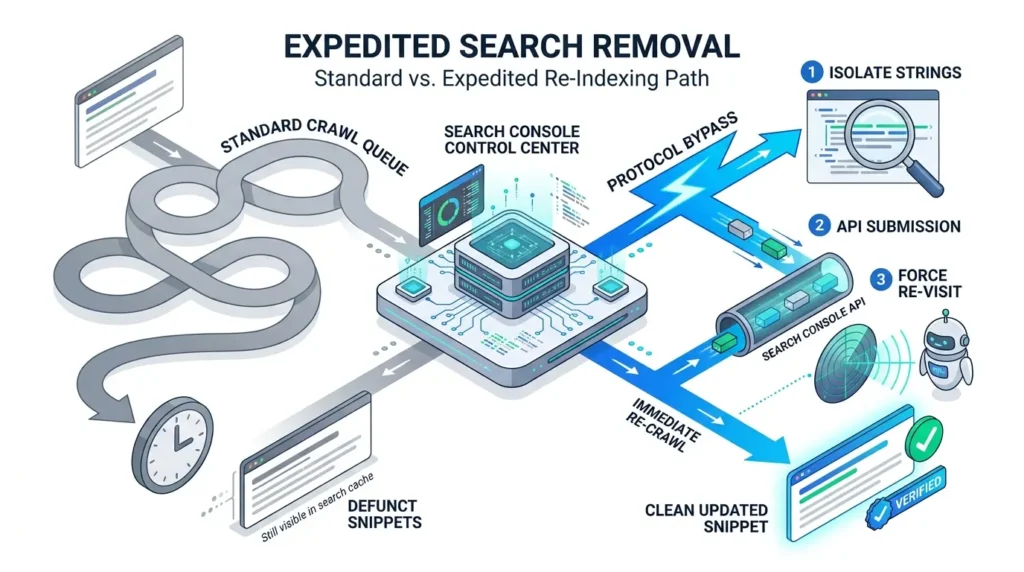
Technical removal experts clear expired links and preview metadata within 24 to 72 hours by applying precise cache invalidation protocols and direct webmaster tool integrations. Standard search engine re-crawling cycles depend on domain authority and page update frequencies, often leaving defunct or damaging snippets visible in search results for extended periods. Expedited removal requires isolating exact text strings from search caches, submitting verified removal requests through search console APIs, and forcing immediate bot re-visits via server ping protocols. This targeted approach bypasses standard crawl queues, ensuring search engines update display indexes rapidly.
Rapid removal mitigates ongoing commercial risk, protecting enterprise decision-making processes, executive profiling, and brand sentiment metrics from outdated public records. When corporate clients require swift SERP stabilization, selecting a dead link removal service provides access to automated index tracking tools and direct engine escalation channels. Accelerating snippet removal restores public search perception, minimizes negative narrative exposure, and preserves conversion rates across primary acquisition channels. Clear Your Name provides rapid technical remediation, removing broken URLs and obsolete cached metadata to restore full brand narrative control.
What Is the Business Return on Investment for Removing Dead Search Links?
The return on investment for removing dead search links manifests as preserved commercial revenue, protected organic conversion rates, and optimized domain authority metrics. Outdated search results and broken preview snippets introduce friction during high-intent decision phases, prompting potential buyers to question business stability and operational reliability. Eliminating these negative search signals increases organic landing page click-through rates, reduces brand bounce rates, and strengthens corporate entity trust across prospective client cohorts. Protecting brand search perception directly secures sales pipelines, contract approvals, and enterprise valuations.
Investing in systematic technical suppression delivers sustainable brand equity protection compared to ongoing public relations campaigns or continuous promotional ad spend. Clean search engine result pages ensure branded search traffic lands directly on high-converting corporate assets rather than broken 404 pages or outdated negative commentary. Removing obsolete metadata stabilizes search engine rankings, enhances entity credibility scores, and ensures digital assets reflect active, positive corporate positions.
- Preserves Commercial Revenue: Eliminates negative conversion friction during prospect decision-making cycles.
- Protects Brand Equity: Prevents historical, irrelevant, or inaccurate content from defining current market perception.
- Optimizes Organic Traffic: Redirects branded search traffic away from broken pages toward high-converting corporate assets.
- Strengthens Entity Trust: Ensures search engine algorithms evaluate clean, consistent, and fully verified domain metadata.
Process Summary and Strategic Conclusion
Managing search perception requires proactive technical oversight of indexed web assets, cached previews, and server headers. Unmanaged ghost links and broken search snippets degrade entity trust, compromise conversion pipelines, and erode brand credibility across digital channels. Partnering with technical specialists ensures rapid cache invalidation, precise server header alignment, and permanent index clearance.
Clear Your Name delivers technical URL removal, direct cache purging, and search engine reputation management solutions tailored for modern enterprises. Contact our technical team today to audit your branded search engine result pages, eliminate dead links, and regain full control over your digital search footprint.
What is a ghost preview in Google search results?
A ghost preview, or ghost link, is an outdated search snippet or cached result that continues to appear in Google search results after the underlying webpage has been deleted or changed. These lingering index entries occur because search engine crawlers have not yet re-indexed the URL to reflect its updated status or HTTP 410 removal header. Specialized technical remediation from services like Clear Your Name can expedite the purge of these obsolete search records directly from search engine caches.
How long does it take to remove a dead link from Google?
Standard automated search engine re-crawling can take anywhere from several weeks to months to drop a dead link organically from search indexes. However, using direct search console tools, HTTP header adjustments, and targeted cache invalidation requests can accelerate URL de-indexing to within 24 to 72 hours. Utilizing a dedicated dead link removal service ensures broken paths and cached metadata are permanently cleared without delay.
Why do broken or 404 links still appear in search results?
Broken or 404 links remain in search engine results because search engines store page titles, descriptions, and snippets in temporary index caches to serve search results efficiently. Until search bots re-crawl the specific URL and verify a permanent removal status, the search engine continues to display the historical metadata to users. Technical removal protocols force search indexers to re-evaluate these paths immediately and update SERP listings accordingly.