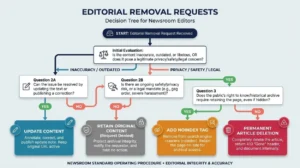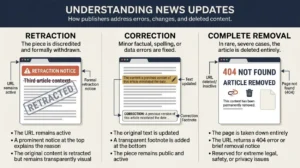

Expert help provides a structured way to assess, respond to, and manage damaging Indeed reviews while protecting employer reputation and public credibility. Effective review management focuses on search visibility, reputation signals, factual communication, and risk reduction rather than simply attempting to remove criticism.
Why does professional help matter when responding to damaging Indeed reviews?
Professional review management creates a controlled process for assessing damaging feedback before a public response is published. The review is evaluated according to its factual claims, sentiment, relevance, and potential reputational impact. This separates legitimate criticism from content that requires further review or removal assessment. It also prevents reactive responses that introduce additional negative information into the public record.
A professional response becomes part of the same reputation environment as the original review. Readers evaluate both pieces of content when forming an opinion about an organisation. A measured response adds relevant context without attempting to erase legitimate criticism. This makes response quality an important component of entity credibility and employer reputation.
Which reputation management approach works best for damaging Indeed reviews?
A structured combination of review assessment, professional response management, removal evaluation, and search monitoring provides the most comprehensive approach. Each mechanism addresses a different part of the reputation ecosystem. Response management adds context to the original source, while removal assessment examines whether platform rules provide a legitimate basis for source-level action. Search monitoring then evaluates how the review and response appear within the wider SERP environment.
For organisations requiring source-level assessment, Indeed Review Removal Services represent a distinct intervention from ordinary response management. Removal focuses on the status and eligibility of the original content, whereas response management focuses on how the organisation communicates publicly. Treating these mechanisms separately improves strategic clarity and prevents removal and reputation enhancement from being treated as identical processes.
How does a professional response influence employer reputation?
A professional response influences employer reputation by giving readers additional information through which to evaluate the organisation. The original review represents one reputation signal, while the response creates another source of information connected to the same entity. A factual response demonstrates communication standards without requiring the organisation to accept every claim made in the review. This creates a more complete information environment for prospective employees and other search users.
The response also forms part of the organisation’s digital footprint. When an Indeed page is indexed, its surrounding content becomes available within the search ecosystem. The response does not guarantee a ranking change, but it adds context to the indexed page. This distinction is important because reputation management influences perception through information quality rather than direct manipulation of search algorithms.
Why does responding publicly to a negative Indeed review matter?
The importance of public responses lies in the additional context they provide around negative sentiment. A response gives an organisation an opportunity to communicate factual information while maintaining a professional tone. Readers can then evaluate both the criticism and the organisation’s communication behaviour. This makes why responding publicly to a negative Indeed review matters a relevant consideration when assessing employer reputation.
Public responses also contribute to perceived transparency. A concise and factual response avoids unnecessary repetition of damaging claims while addressing the central issue. It does not remove negative sentiment or guarantee improved search rankings. Instead, it improves the completeness of the information available to people evaluating the organisation.
When is review response management preferable to content removal?
Review response management is preferable when the content represents legitimate criticism that does not qualify for removal under applicable platform rules. A response preserves the original review while adding the organisation’s factual perspective. Content removal operates differently because it depends on an identifiable policy or eligibility basis. These approaches therefore solve different reputation problems.
Removal is a source-level intervention, while response management is a contextual intervention. Attempting to treat every negative review as a removal issue creates an inaccurate assessment of the available options. A structured reputation process evaluates the content first and then identifies the appropriate mechanism. This approach reduces unnecessary risk and keeps the response aligned with the nature of the content.
How should a professional response to a damaging Indeed review be prepared?

A professional response begins with factual assessment rather than immediate publication. The organisation identifies the central criticism, checks relevant facts, removes confidential information from consideration, and establishes the appropriate communication objective. The final response then focuses on relevant context, professional language, and information that readers can understand. This process limits unnecessary escalation.
The quality of the response depends on both wording and information selection. Repeating inflammatory statements adds additional exposure, while unsupported counterclaims weaken credibility. A professional response therefore prioritises factual accuracy, concise explanation, and appropriate boundaries. This creates a consistent communication standard that can be applied across future reviews.
What makes expert Indeed review response management reliable?
Reliability comes from process consistency, evidence-based assessment, and clear separation between review analysis and publication. Each review receives the same core evaluation criteria, reducing inconsistent responses across different situations. The process also identifies whether the issue relates to response management, removal eligibility, or broader search visibility. This creates a defined pathway from assessment to action.
Clear Your Name applies this reputation-focused approach by treating damaging reviews as part of a wider digital trust environment. The emphasis remains on factual communication, controlled information exposure, and reputation risk reduction. This provides a more structured alternative to spontaneous responses. It also creates a framework for monitoring outcomes after publication.
How does professional review management affect search visibility?
Professional review management affects the information available around an organisation rather than directly controlling search rankings. Search engines evaluate pages using multiple signals, and an Indeed review page can form part of the indexed information associated with an entity. A professional response adds relevant text to that page and gives search users additional context. The effect therefore relates primarily to information completeness and perception.
Broader search visibility also depends on the rest of the digital footprint. Company pages, professional profiles, authoritative publications, directories, and review platforms collectively contribute to entity representation. A damaging Indeed review therefore needs to be evaluated within the complete SERP composition. This prevents a single review from being analysed in isolation from other reputation signals.
Dive Deeper With Our Expert Guides:
Get a Transparent Quote for Indeed Review Removal Today
Speed Up Your Indeed Review Removal With Our UK Team
How can a professional response reduce reputational risk?
A professional response reduces reputational risk by controlling what information the organisation contributes to the public discussion. Poor responses can disclose confidential details, introduce factual inconsistencies, or repeat damaging terminology unnecessarily. A structured process limits the response to relevant and defensible information. This reduces the probability of creating an additional source of reputational exposure.
Risk reduction also depends on consistency. When different people respond without a shared methodology, tone and factual standards become inconsistent. A defined response framework establishes clear requirements for accuracy, confidentiality, relevance, and professionalism. This improves long-term reputation governance rather than addressing only one review.
What role does negative content suppression play alongside review responses?
Negative content suppression operates at the level of SERP composition rather than directly changing the original review. It focuses on strengthening relevant and authoritative information within the digital footprint so that search users receive a broader representation of the organisation. This differs from responding to the review itself. Response management provides context at the original source, while suppression addresses relative search visibility.
These mechanisms therefore work at different levels of reputation control. A response does not erase the review, and suppression does not necessarily remove the source. Combining source-level assessment with broader search-perception analysis creates a more complete understanding of reputation risk. The effectiveness of each approach is measured through its specific objective rather than through a single ranking metric.
How does expert support compare with handling damaging reviews internally?
Internal management can work effectively when an organisation has established review policies, trained communicators, and sufficient monitoring capacity. Expert support provides a dedicated analytical process for situations involving complex claims, significant reputation exposure, or broader search visibility concerns. The distinction relates to process depth rather than simply the ability to write a response. A structured external assessment also creates separation between immediate organisational reactions and reputation strategy, particularly when developing a professional response to a negative Indeed review.
The decision therefore depends on the complexity and potential impact of the review. Straightforward criticism requires a different level of analysis from content involving sensitive information or substantial search visibility concerns. A professional process evaluates these factors before determining the appropriate response. This reduces unnecessary escalation and improves decision quality.
How does long-term reputation management support Indeed review control?
Long-term reputation management extends beyond individual responses by strengthening the organisation’s wider digital footprint. Accurate company information, authoritative profiles, relevant professional content, and consistent organisational details create additional reputation signals. These sources provide context beyond a single review platform. The objective is not to manufacture a positive identity but to ensure that accurate information remains clearly represented across the search ecosystem.
Monitoring then measures changes over time. Relevant indicators include indexed review pages, response visibility, duplicate information, sentiment distribution, and the composition of branded search results. These measurements provide a more reliable assessment than checking a single search result once. Long-term monitoring also identifies new reputation risks before they become dominant search signals.
What outcomes can professional Indeed review management deliver?
Professional Indeed review management delivers outcomes through improved communication quality, stronger information control, reduced response risk, and clearer reputation monitoring. The immediate outcome is a structured public response that provides factual context without unnecessary escalation. A secondary outcome is greater consistency across future reviews. A broader outcome involves improved control over how the organisation’s information is represented across its digital footprint.
These outcomes require realistic measurement. A response does not guarantee review removal, ranking improvement, or disappearance from search results. Instead, measurable progress involves response quality, removal eligibility assessments, indexed-source monitoring, duplicate-content discovery, and changes in search perception. This evidence-based approach provides a clearer basis for evaluating reputation-management effectiveness.
Why is process clarity important when managing damaging Indeed reviews?
Process clarity ensures that each reputation problem receives an appropriate intervention. Review assessment identifies the nature of the content, response management addresses public communication, removal assessment evaluates platform eligibility, and search monitoring measures visibility. Separating these stages prevents one mechanism from being presented as a solution to every reputation problem. It also makes outcomes easier to evaluate.
A clear process supports sustainable reputation control because it can be repeated as new reviews appear. Organisations gain consistent standards for factual verification, confidentiality, response quality, and monitoring. This reduces dependence on improvised decisions. It also creates a stronger foundation for protecting entity credibility across the wider search ecosystem.
Professional management of damaging Indeed reviews combines factual assessment, controlled communication, removal evaluation, and search-perception monitoring. The objective is not to manipulate legitimate criticism but to ensure that public information surrounding the organisation remains accurate, contextual, and professionally managed.
Clear Your Name positions this process around reliability, risk reduction, and measurable reputation outcomes. By separating response management from content removal and broader search visibility strategies, organisations gain clearer control over each stage of reputation management. This structured approach supports stronger entity credibility and more sustainable digital trust.
How can I respond professionally to a damaging Indeed review?
Address the main criticism factually, maintain a professional tone, and avoid confidential employment information. A structured response provides context while protecting employer reputation and entity credibility.
Can professional help improve the impact of a negative Indeed review?
Professional review management adds relevant context and helps control the information presented alongside damaging feedback. It does not guarantee removal or improved rankings, but it can strengthen communication quality and reputation signals.
Can a damaging Indeed review be removed?
Removal depends on whether the review meets the platform’s applicable policies or removal criteria. When removal is not available, a professional response can provide factual context without attempting to delete legitimate criticism.
Does responding to an Indeed review affect Google search results?
A response does not directly guarantee changes to Google rankings. If the review page is indexed, the response becomes part of its content context and contributes to the information users can evaluate.
When should I get expert help responding to an Indeed review?
Expert support is useful when a review creates significant reputation risk, contains complex claims, or requires careful handling of confidential information. A structured process can evaluate response, removal, and broader reputation-management options.