
Fake Indeed reviews are created through fabricated or manipulated employee feedback that imitates genuine workplace experiences. They are particularly difficult to detect because review platforms evaluate behavioural patterns, trust signals, account authenticity, and contextual data rather than relying solely on the written content.
Reputation management is the process of understanding how digital information shapes trust, search visibility, and public perception across search ecosystems. Within employment review platforms, reputation is influenced by review authenticity, content indexing, credibility signals, and the way search engines interpret information associated with an organisation.
What Are Fake Indeed Reviews?
Fake Indeed reviews are fabricated pieces of employee feedback that misrepresent workplace experiences within an online review ecosystem. They exist to manipulate employer perception instead of documenting authentic employment experiences. A fake review can contain exaggerated praise, fabricated criticism, or entirely fictional employment histories that distort how an organisation is perceived online.
Within search ecosystems, employee reviews function as reputation signals because they become part of an organisation’s publicly available digital footprint. Search engines index review pages alongside official websites, news articles, and other authoritative resources to develop a broader understanding of an entity. Although an individual review does not independently determine search rankings, the overall review environment contributes to entity perception and influences how users interpret credibility before visiting official sources.
Authenticity distinguishes genuine reviews from fabricated content. Genuine reviews originate from real employment experiences, regardless of whether the sentiment is positive or negative. Employees often evaluate identical workplace environments differently because their responsibilities, expectations, and experiences vary. Fake reviews lack this authentic foundation and instead introduce artificial sentiment into the reputation ecosystem.
The challenge lies in the fact that fabricated reviews often resemble legitimate employee feedback. Well-structured language, realistic workplace terminology, and balanced opinions do not automatically indicate authenticity. Modern review systems therefore examine behavioural and contextual trust signals rather than judging credibility through writing style alone.
Dive Deeper With Our Expert Guides:
Why Indeed Reviews Are Difficult to Remove and What the Platform Requires You to Prove
How Indeed Handles Removal Requests and What Its Community Guidelines Cover
Why Do Fake Indeed Reviews Influence Online Reputation?
Fake Indeed reviews influence online reputation because employment review platforms contribute directly to an organisation’s digital footprint. Every indexed review becomes part of the searchable information available to prospective employees, researchers, journalists, and search engines, affecting how trust is formed across digital environments.
Online reputation refers to the collective perception created by publicly accessible digital information. Search engine results pages (SERPs) organise this information according to relevance, authority, and search intent. Employment review platforms frequently appear within branded search results, allowing users to compare official organisational information with independent employee feedback before forming an opinion.
Reputation signals develop through cumulative information rather than isolated content. Consistent review sentiment, publication frequency, topical relevance, and contextual authority all contribute to entity perception within search ecosystems. Search algorithms analyse these relationships to organise information efficiently without independently verifying every statement contained within user-generated content.
Fake reviews disrupt this process by introducing inaccurate reputation signals into the indexed information environment. Positive fabricated reviews artificially inflate perceived employer credibility, while fabricated negative reviews diminish trust by presenting fictional workplace experiences as factual accounts. In both situations, search users encounter altered information that influences perception before direct interaction with an organisation occurs.
The impact extends beyond the review platform itself. Search visibility reflects the broader ecosystem of indexed information, meaning fabricated reviews contribute to overall digital perception whenever users research an employer through search engines.
How Are Fake Indeed Reviews Created?
Fake Indeed reviews are created through deliberate manipulation of review submission processes designed to imitate authentic employee behaviour. The objective is not simply to publish misleading content but to produce information that appears sufficiently credible to pass behavioural and technical evaluation systems.
Several mechanisms contribute to the creation of fabricated reviews.
- Creating synthetic reviewer accounts. Fraudulent contributors establish accounts that resemble authentic users by completing profile details, maintaining realistic activity patterns, and delaying review publication to avoid immediate detection.
- Constructing believable employment histories. Fabricated reviews frequently reference departments, workplace procedures, management structures, employment durations, and role-specific terminology to imitate genuine employee experiences.
- Balancing sentiment strategically. Instead of publishing exclusively positive or negative statements, fabricated reviews often combine praise with criticism to mirror authentic employee opinions and reduce behavioural anomalies.
- Distributing review publication over time. Coordinated submissions across extended periods reduce identifiable patterns that automated moderation systems commonly evaluate when detecting suspicious activity.
These mechanisms demonstrate that fake reviews imitate credibility through behavioural consistency rather than through language alone. Detection systems therefore evaluate account history, interaction patterns, submission timing, device characteristics, and platform integrity signals before determining whether review activity appears authentic.
Once a fabricated review becomes publicly available, search engines treat it as indexable content unless platform moderation removes or restricts accessibility. Consequently, misleading information enters the searchable ecosystem regardless of its factual accuracy, contributing to digital footprint expansion until moderation processes intervene.
Why Are Fake Indeed Reviews Particularly Hard to Detect?

Fake Indeed reviews are particularly hard to detect because authentic and fabricated employee experiences often display similar linguistic characteristics. Review moderation systems therefore depend on behavioural analysis and contextual trust evaluation instead of relying exclusively on textual interpretation.
Authentic employees express workplace experiences differently according to their responsibilities, expectations, communication styles, and professional backgrounds. Two genuine employees working within the same organisation frequently publish contradictory opinions while accurately describing their personal experiences. This natural variation limits the effectiveness of language-based detection models because inconsistency does not necessarily indicate fabrication.
Modern review platforms evaluate behavioural trust signals including account age, submission history, interaction consistency, geographical indicators, technical identifiers, and engagement patterns. Reviews submitted from accounts demonstrating realistic long-term behaviour generally produce fewer immediate anomalies than content generated through newly created or coordinated accounts. Consequently, behavioural authenticity becomes a stronger indicator than writing style.
Content moderation and search indexing also operate as separate processes. Review platforms assess authenticity according to internal moderation policies, while search engines evaluate whether publicly available pages satisfy indexing requirements related to accessibility, relevance, and technical quality. A disputed review may therefore remain visible within search results while moderation systems continue evaluating its authenticity.
The complexity increases because fraudulent contributors continuously adapt their behaviour to resemble genuine users. As moderation technology evolves, fabricated review strategies also evolve, creating an ongoing cycle in which detection systems evaluate increasingly sophisticated behavioural patterns rather than obvious indicators of manipulation.
How Do Search Engines Interpret Review Signals?
Search engines interpret review signals as one component of broader entity evaluation rather than as standalone ranking factors. Their objective is to organise publicly available information into meaningful representations of organisations, allowing users to access comprehensive information relevant to their search intent.
Review pages contribute to entity understanding because they provide contextual information alongside official websites, industry publications, news coverage, and other authoritative sources. Search algorithms analyse relationships between these information sources to establish topical relevance, authority, and consistency across the indexed web. This interconnected evaluation strengthens search engines’ understanding of organisational identity without independently verifying every factual statement contained within user-generated reviews.
Trust signals emerge from consistency rather than volume alone. Stable patterns across authoritative information sources strengthen entity perception, whereas irregular review behaviour introduces ambiguity into search evaluation. Significant shifts in review sentiment, publication frequency, or contextual relevance influence how users interpret credibility, even when search algorithms continue treating review pages as indexable documents.
User behaviour further contributes to reputation perception. Search queries, click behaviour, comparative research, page engagement, and information refinement reveal how individuals interpret review content when evaluating an employer. Although these behavioural indicators do not determine factual accuracy, they influence how search ecosystems understand user intent and organise information accordingly.
What Role Do Trust Signals Play in Review Credibility?
Trust signals are measurable indicators that help review platforms and search ecosystems evaluate the credibility of user-generated content. They provide contextual evidence that supports authenticity without relying solely on the wording of a review. Trust signals include account history, behavioural consistency, profile completeness, review frequency, interaction patterns, and technical data associated with the submission process.
Search ecosystems interpret trust through relationships between multiple signals rather than isolated indicators. A review supported by consistent behavioural evidence aligns more closely with expected user activity, whereas conflicting behavioural patterns reduce confidence in authenticity. This evaluation process defines credibility through observable digital behaviour instead of subjective opinion.
Content indexing also depends on the broader quality of information available online. Reviews that exist within a stable and consistent information environment contribute to stronger entity understanding because search engines identify relationships between authoritative sources. Trust therefore develops through interconnected reputation signals rather than individual pieces of content viewed independently.
As digital footprints expand over time, trust signals become increasingly important for maintaining information quality. Continuous evaluation allows platforms to reassess previously indexed content whenever new behavioural or contextual information becomes available, ensuring that credibility remains an evolving assessment rather than a fixed conclusion.
How Does Content Indexing Affect the Visibility of Fake Reviews?
Content indexing is the process through which search engines discover, process, and organise publicly accessible information for inclusion within search results. Once a review page satisfies indexing requirements, it becomes eligible to appear in search engine results pages (SERPs) regardless of whether its authenticity has been fully evaluated by the review platform.
Indexing determines visibility rather than accuracy. Search engines organise information according to relevance, accessibility, authority, and technical quality instead of conducting manual verification of every user-generated statement. As a result, fake reviews can remain searchable until moderation systems remove, update, or restrict the content.
The relationship between indexing and reputation is significant because searchable information contributes directly to digital perception. Users frequently encounter review pages during branded searches, employment research, and company-related queries. Indexed reviews therefore become part of the information environment that shapes first impressions and influences credibility assessments.
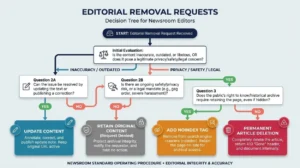
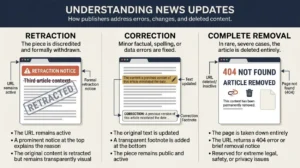
Changes in moderation status also influence indexed content over time. When review platforms remove fabricated reviews, search engines eventually update their indexes through recrawling processes. Until those updates occur, search visibility reflects the most recently indexed version of the available information, illustrating the distinction between platform moderation and search engine indexing.
Why Does Digital Footprint Influence Employer Reputation?
A digital footprint refers to the complete collection of publicly accessible information associated with an entity across online platforms. It includes official websites, employee reviews, news coverage, business listings, social profiles, published documents, and all indexed digital assets that contribute to online visibility.
Employer reputation develops from the interaction between these information sources rather than from any single platform. Search engines evaluate relationships across the digital footprint to strengthen entity understanding and organise information according to user intent. Consistent information enhances credibility, while conflicting or manipulated content introduces uncertainty into reputation signals.
Employment review platforms occupy a distinctive position within this ecosystem because they present independent user-generated information that users frequently compare with official organisational messaging. This comparison influences perception by allowing individuals to evaluate multiple perspectives before reaching conclusions about workplace credibility.
The digital footprint also evolves continuously as new information becomes available. Fresh content, updated reviews, additional publications, and changes in indexed pages all contribute to ongoing reputation development. Consequently, employer reputation represents a dynamic information environment rather than a static collection of opinions.
How Is Reputation Evaluated Across Search Ecosystems?
Reputation is evaluated across search ecosystems through the analysis of interconnected information rather than isolated documents. Search engines organise information by examining topical relevance, authority, consistency, contextual relationships, and user intent to construct a comprehensive understanding of entities represented within indexed content.
Entity perception develops from semantic relationships established between multiple information sources. Official websites, review platforms, news publications, business directories, and independent references collectively define how an organisation is represented across search results. No single document independently establishes reputation because search evaluation depends on cumulative information architecture.
Review content contributes to this evaluation by expanding the contextual information associated with an entity. Authentic reviews reinforce search understanding through genuine workplace experiences, while fabricated reviews introduce conflicting reputation signals that complicate entity interpretation. Search ecosystems therefore process reviews as contextual information rather than definitive statements of organisational quality.
Information consistency remains central to reputation evaluation because coherent relationships strengthen confidence in entity understanding. Stable topical relevance, accurate contextual references, and trustworthy information sources collectively improve search interpretation, whereas inconsistent or manipulated content weakens the reliability of reputation signals.
Fake Indeed reviews represent a form of manipulated user-generated content that affects digital perception by introducing inaccurate reputation signals into searchable information environments. Their influence extends beyond individual review platforms because indexed content contributes to broader entity perception, digital footprints, and search visibility across interconnected ecosystems.
The difficulty of detecting fabricated reviews arises from the distinction between language and behaviour. Modern review systems evaluate behavioural trust signals, contextual consistency, and technical indicators rather than relying exclusively on written content. Search engines simultaneously organise publicly available information according to relevance, authority, and indexing quality instead of independently verifying every user-generated claim.
Understanding how review authenticity, trust signals, content indexing, and entity perception interact provides a clearer explanation of how online reputation develops within search ecosystems. Reputation is ultimately defined by the quality, consistency, and credibility of publicly accessible information that search engines organise and users interpret during the evaluation of an organisation.
How can you tell if an Indeed review is fake?
Fake Indeed reviews often show inconsistencies in employment details, unusual posting patterns, or repetitive sentiment that does not align with normal employee feedback. Review platforms evaluate behavioural signals, account activity, and contextual credibility rather than relying only on the wording of a review.
Why are fake Indeed reviews difficult to detect?
Fake Indeed reviews are difficult to detect because fabricated content can closely resemble genuine employee experiences. Detection systems analyse trust signals, account history, submission behaviour, and authenticity indicators, as realistic language alone does not confirm credibility.
Do fake Indeed reviews affect online reputation and search visibility?
Yes, fake Indeed reviews can influence online reputation because review pages contribute to an organisation’s digital footprint and public perception. When indexed by search engines, misleading reviews may affect reputation signals and how users interpret credibility in search results.
Can search engines identify fake Indeed reviews automatically?
Search engines primarily organise and index publicly available information rather than verifying the authenticity of every review. Review authenticity is generally assessed by the platform itself, while search engines evaluate relevance, authority, and content accessibility.
What evidence is usually required to report a fake Indeed review?
Evidence commonly includes proof that the reviewer was never employed by the organisation, documentation showing factual inaccuracies, or information demonstrating policy violations. Clear supporting evidence helps platforms evaluate whether a review should be investigated or removed.