

A long-term positive Indeed review pipeline develops through consistent, authentic employee feedback supported by a structured review process. It depends on legitimate participation, balanced sentiment, accurate information and sustained monitoring rather than short-term attempts to increase review volume.
Reputation management is the structured process of monitoring, interpreting and influencing how an organisation is represented across digital environments. Online reputation refers to the collection of information, opinions, ratings and content that shape an organisation’s perceived credibility within search ecosystems. On Indeed, employee reviews form part of this digital reputation because they provide publicly accessible signals about workplace experience, management, culture and employment conditions.
What is an Indeed review pipeline?
An Indeed review pipeline is a repeatable process through which authentic employee feedback is generated, published, monitored and analysed over time. It connects employee experience with the public review environment without treating individual reviews as isolated reputation events. The pipeline begins with genuine workplace interactions and continues through feedback collection, review publication and subsequent sentiment analysis. Its purpose is consistency rather than artificial volume because review patterns become more meaningful when they reflect ongoing organisational experience.
The pipeline also creates a relationship between operational reputation and search perception. Reviews contain language that describes working conditions, leadership, communication, progression, workload and organisational culture. Search systems can index this content and associate recurring concepts with an organisation’s entity. A sustained review pattern therefore contributes to the broader digital footprint surrounding the organisation.
How are positive Indeed reviews formed over time?
Positive reviews are formed when genuine workplace experiences produce favourable perceptions that employees voluntarily express in their own words. The underlying reputation signal comes from the experience itself rather than from the act of requesting a particular opinion. Employees assess factors such as management quality, workplace communication, career development, recognition and organisational consistency before expressing their views. These experiences influence sentiment, terminology and themes appearing in review content.
A long-term pipeline therefore begins with the conditions that generate credible feedback. If workplace experiences remain consistent, subsequent reviews can reinforce related themes without requiring identical wording. This produces a more natural distribution of sentiment and subject matter. Search perception is influenced by this accumulated information because repeated descriptions provide contextual evidence about how an organisation is represented online.
How does Indeed review activity affect online reputation?
Indeed review activity affects online reputation by adding publicly accessible evidence about an organisation’s employment environment. Reviews contribute to the information available to prospective candidates, researchers and search systems when evaluating an entity. Positive, neutral and negative statements collectively form a reputation signal rather than operating independently. The overall pattern includes review volume, ratings, recency, sentiment and recurring subject matter.
Content indexing also determines how review information enters search ecosystems. When review pages or review-related content are indexed, search engines can associate relevant terms with the organisation’s entity. Repeated references to leadership, flexibility, pay, culture or progression contribute semantic context around that entity. Consequently, review management involves understanding how individual feedback becomes part of a larger information environment.
What makes an Indeed review strategy sustainable?
A sustainable Indeed review strategy relies on authentic participation, consistent employee experience and continuous reputation monitoring. Sustainability means maintaining a legitimate flow of feedback rather than concentrating activity into short periods. A sudden increase in reviews without a corresponding organisational reason can create an unusual review pattern. A stable process produces information at a pace that reflects normal employee activity.
The Sustainable Indeed Review Generation Strategy concept therefore relates to the systems supporting review continuity rather than simply the number of reviews collected. It connects employee feedback mechanisms with workplace experience, review timing, content diversity and sentiment distribution. This approach treats reputation as an ongoing information system instead of a one-time campaign. The resulting review profile provides a broader representation of organisational experience.
How do review signals influence SERP evaluation?
Review signals influence SERP evaluation by contributing information about an entity that exists across indexed digital sources. Search engines evaluate content through systems that analyse relevance, relationships, language and other signals rather than relying on a single review attribute. Reviews can provide contextual information about the organisation, its workplace and the experiences associated with its name. This information forms part of the wider content environment surrounding branded and employment-related searches.
Search visibility also depends on whether review content is indexed and how it relates to search queries. A review mentioning management practices has a different semantic relationship to an organisation than a review discussing career development or salary. When related concepts repeatedly appear across indexed content, they contribute to the entity’s surrounding topical context. This demonstrates why reputation signals extend beyond star ratings.
How does review sentiment shape employee perception?
Review sentiment shapes employee perception by influencing how readers interpret the balance of positive and negative information associated with an organisation. Sentiment analysis evaluates language expressing approval, criticism, satisfaction or dissatisfaction and can identify recurring themes across review content. Readers also interpret sentiment through rating distributions, review recency and the consistency of statements. These elements combine to create a broader perception of workplace credibility.
Sentiment does not operate as a simple positive-versus-negative calculation. A review containing positive comments about career development and negative comments about workload communicates a more complex perception. Search systems can process these different concepts within the textual content, while human readers interpret them in relation to the organisation’s broader review profile. The semantic context therefore matters alongside the numerical rating.
Why does review authenticity matter for reputation signals?
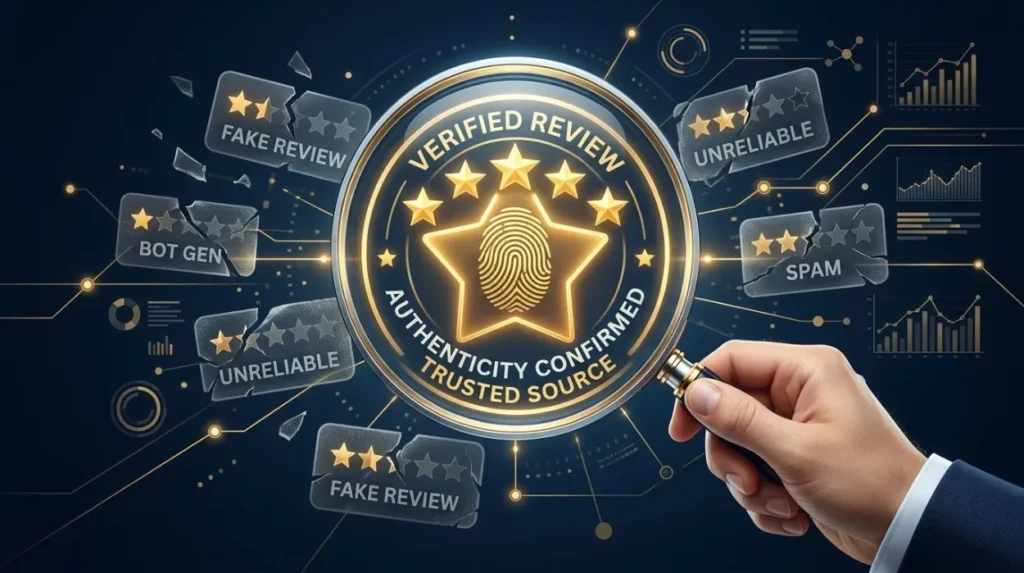
Review authenticity matters because credible reputation signals depend on information that accurately represents real experiences. Authentic reviews contain individual language, distinct observations and context associated with the employee’s experience. Artificially generated or manipulated feedback can distort the information environment and weaken the reliability of the resulting reputation profile. Authenticity therefore forms a fundamental component of sustainable online credibility.
A legitimate review pipeline also creates greater content diversity. Employees describe similar organisational characteristics through different vocabulary, perspectives and levels of detail. This variation produces a more representative semantic footprint than repetitive or coordinated wording. For search ecosystems, content diversity helps distinguish naturally occurring information from patterns that lack meaningful contextual variation.
How can organisations maintain a consistent review feedback process?
Organisations maintain consistency by establishing a transparent feedback process connected to normal employee communication and workplace review opportunities. The process needs clear participation rules, accurate expectations and separation between feedback collection and editorial control. Employees retain responsibility for the substance of their reviews, while the organisation can focus on creating conditions that support legitimate feedback. This distinction protects the credibility of the review ecosystem.
A structured process also enables systematic monitoring. Review frequency, ratings, sentiment, recurring themes and unusual changes can be recorded as reputation indicators. Monitoring does not require controlling employee opinions; it provides an analytical view of how workplace perception is represented publicly. The resulting data can identify changes in entity perception and reveal whether review themes remain consistent over time.
How should organisations interpret negative Indeed reviews?
Negative Indeed reviews are best interpreted as individual reputation signals within a wider body of evidence. A single criticism does not establish the complete reputation of an organisation, while repeated criticism around the same issue can indicate a recurring perception pattern. Analysis therefore considers review frequency, recency, subject matter, rating distribution and consistency across sources. This approach separates isolated feedback from broader reputation trends.
Negative content also provides semantic information about how an organisation is perceived. Terms relating to management, workload, compensation, communication or workplace culture identify specific dimensions of employee perception. Analysing these themes provides more useful information than treating every negative rating as an identical reputation problem. The resulting interpretation supports a clearer understanding of the organisation’s digital footprint.
Dive Deeper With Our Expert Guides:
Why Employers Should Monitor New Indeed Reviews Proactively
What Counts as Hate Speech Under Indeed’s Review Policy
What role does review monitoring play in long-term reputation?
Review monitoring provides the continuous observation required to understand changes in an organisation’s public reputation. It tracks new reviews, rating movements, sentiment changes and recurring themes across the available review environment. Monitoring also identifies shifts in the frequency or character of published feedback. These measurements create a historical record that helps distinguish normal variation from meaningful changes in reputation signals.
Long-term monitoring is important because online reputation is dynamic. New reviews enter the indexed environment while older content remains accessible, changes in search rankings alter visibility, and employee perceptions develop over time. A reputation profile therefore represents an evolving information system rather than a fixed score. Continuous analysis keeps the organisation’s understanding of its digital footprint aligned with current indexed content.
How does a positive review pipeline support online credibility?
A positive review pipeline supports online credibility when it reflects genuine workplace experiences consistently across time. Repeated authentic feedback can establish recurring reputation signals around organisational characteristics such as communication, management, development and workplace culture. These signals contribute to entity perception because they provide publicly accessible evidence about how employees describe the organisation. Credibility therefore develops through consistency between experience and published information.
The process also demonstrates the relationship between reputation management and search perception. Search engines organise information from multiple sources, while users interpret that information according to relevance, recency, sentiment and perceived credibility. A sustained review profile becomes one component of this broader ecosystem. Its value comes from the accuracy and continuity of the information rather than from review quantity alone.
How can review data be analysed as a reputation system?
Review data can be analysed by examining its primary reputation signals and the relationships between them. A structured analysis can evaluate rating distribution, sentiment, review recency, recurring topics, content diversity and changes in publication patterns. These variables reveal how workplace perception is represented over time. They also distinguish temporary fluctuations from persistent themes within the organisation’s digital footprint.
The analysis becomes more useful when review information is connected with other indexed reputation sources. Employment discussions, corporate pages, professional profiles and news content can create additional context around the same entity. Comparing these sources reveals whether review themes align with or differ from the wider online representation. This cross-source perspective provides a more complete understanding of entity credibility and search perception.
What is the long-term objective of an Indeed review pipeline?
The long-term objective is to maintain an accurate, authentic and continuously developing representation of employee experience. A review pipeline achieves this through legitimate feedback opportunities, consistent monitoring, sentiment interpretation and analysis of recurring reputation signals. The objective is not simply to increase the number of positive reviews but to ensure that public information remains representative of the organisation’s evolving workplace environment.
A sustainable reputation system treats every review as part of a larger information structure. Review content contributes to sentiment signals, semantic associations, entity perception and search visibility. Over time, these components create a digital footprint that influences how an organisation is interpreted by readers and search systems. Understanding these relationships provides the foundation for managing online reputation as a continuous process rather than a short-term activity.
A long-term positive Indeed review pipeline is built through authentic employee feedback, consistent workplace experiences and continuous analysis of reputation signals. Indeed reviews contribute to an organisation’s digital footprint through ratings, sentiment, language, recency and recurring themes. Search engines can index this information and connect it with broader entity-level content, while readers interpret the resulting signals as evidence about workplace credibility.
The central principle is continuity with authenticity. A sustainable review environment reflects real employee experiences, maintains diverse content and monitors changes in sentiment and search visibility over time. Understanding these mechanisms explains how review content becomes part of wider reputation management, entity perception and online credibility systems.
How can a business build a long-term positive Indeed review pipeline?
A long-term positive Indeed review pipeline starts with consistent employee experience, clear feedback processes and regular monitoring of Indeed reviews. Businesses can encourage genuine employees to share honest feedback without offering incentives or pressuring them to leave positive reviews.
How can businesses encourage employees to leave genuine Indeed reviews?
Businesses can invite employees to share honest experiences through neutral review requests after appropriate workplace milestones. The process should be voluntary and avoid asking employees to provide only positive feedback, helping maintain authentic Indeed reviews.
How often should a business monitor its Indeed reviews?
Businesses should monitor Indeed reviews regularly to identify new feedback, recurring themes and changes in employee sentiment. Consistent monitoring also helps organisations respond to legitimate concerns and identify potentially suspicious or policy-violating content.
What makes a positive Indeed review strategy sustainable?
A sustainable Indeed review strategy depends on genuine employee experiences rather than short-term campaigns to increase positive ratings. Improving workplace communication, addressing recurring concerns and maintaining a consistent feedback process creates a stronger foundation for authentic reviews.
Can Indeed review management help maintain a positive online reputation?
Indeed review management involves monitoring employee feedback, responding appropriately and addressing reviews that violate platform policies. For businesses using Clear Your Name, this can form part of a broader reputation management process alongside review monitoring and evidence-based content removal requests.




